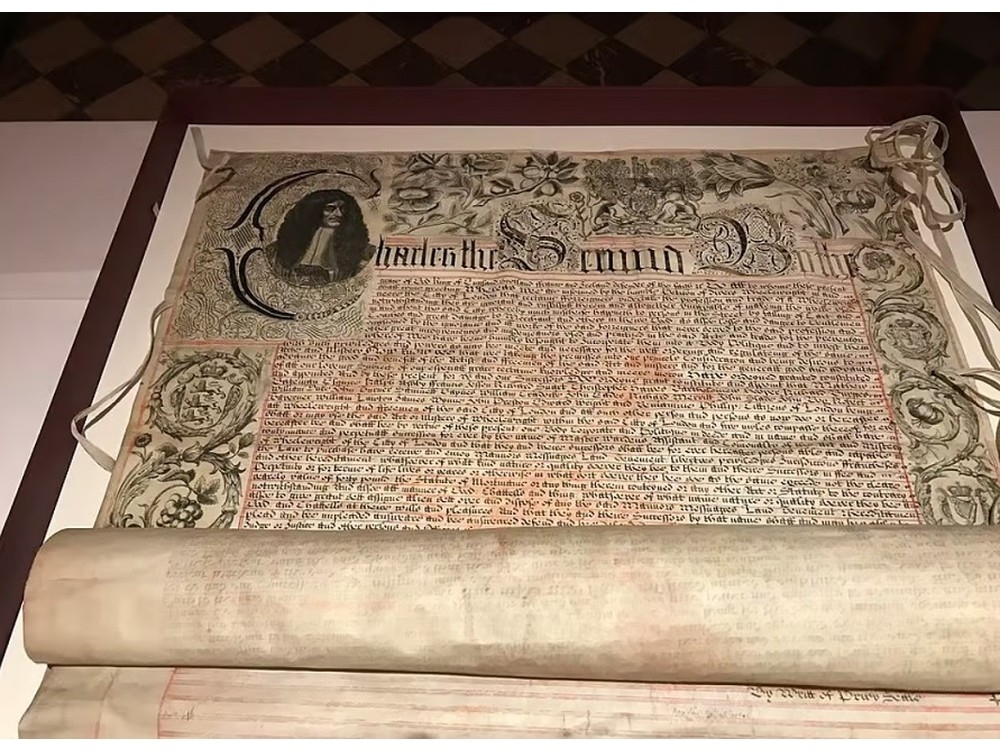
A piece of history, predating Canada itself, is poised to find a new guardian. The original royal charter granted to Hudson’s Bay Company in 1670 – signed by King Charles II – is set to be acquired by two of Canada’s most prominent families for $18 million.
This isn’t merely a transaction; it’s the fate of a document that shaped a nation. The charter didn’t just establish a fur-trading company, it effectively laid claim to a vast territory – a third of modern Canada – and dictated relations with Indigenous peoples for generations.
The sale comes as Hudson’s Bay Company navigates financial restructuring, compelled to sell assets to address significant debts. The charter, along with a collection of 4,400 artifacts, became part of this necessary divestment.
Initial expectations of a competitive auction have faded. Despite a formal process allowing interested parties to submit bids, no competing offers emerged against the joint proposal from the Thomson and Weston families.
The Thomsons, renowned for their media empire Thomson Reuters, and the Westons, known for their connection to Loblaw Companies, initially considered separate bids before uniting their resources. This collaboration now appears set to secure the charter.
However, the acquisition isn’t about private ownership. Both families have pledged to donate the charter immediately and permanently to four Canadian institutions: the Archives of Manitoba, the Manitoba Museum, the Canadian Museum of History, and the Royal Ontario Museum.
A deliberate choice has been made to prioritize Winnipeg as the initial display location. This acknowledges the city’s historical significance as Hudson’s Bay Company’s base after its relocation from England.
Beyond the donation of the charter itself, the families are committing an additional $5 million. These funds will be dedicated to the long-term preservation, educational programs, and public access surrounding this invaluable historical artifact.
Further bolstering this commitment, the Desmarais family and Power Corporation of Canada, alongside the Hennick Family Foundation, have also pledged their support to ensure the charter’s legacy endures.
While court approval remains a necessary step, the path is now clear for this pivotal document to transition into the care of institutions dedicated to preserving and sharing Canada’s rich and complex history.