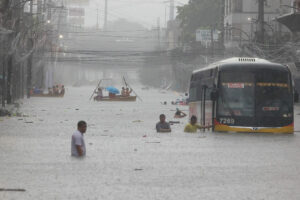
A shadow has fallen over the Philippine government as authorities hunt for former congressman Elizaldy Co, believed to have fled to Portugal. He’s wanted in connection with a massive corruption scandal involving a flood control project, and whispers of a bounty for his capture are beginning to circulate within the Palace.
The core of the issue lies with a P289-million project – a road dike along the Mag-Asawang Tubig River in Oriental Mindoro – where funds are alleged to have been misappropriated by Co’s company, Sunwest, Inc. Graft charges have been filed, but Co remains at large, prompting a desperate search across international borders.
This case isn’t isolated. It’s part of a much larger investigation, exposing a network of alleged kickbacks and corruption involving high-ranking officials and private contractors profiting from government projects. The scale of the potential wrongdoing is staggering, threatening to unravel public trust.
Amidst the fallout, scrutiny has also turned towards presidential son, Sandro Marcos, and his district’s substantial allocation of funds from the Department of Public Works and Highways (DPWH). Calls for a lifestyle audit have intensified, fueled by concerns over potential favoritism.
The Palace has responded by stating there are no restrictions on conducting such an audit, emphasizing the First Family’s willingness to cooperate with any investigation. This comes after a report revealed a disproportionate distribution of DPWH funds, with Sandro Marcos’ district receiving a staggering P15.8 billion.
That figure dwarfs the allocations to many other districts, some receiving minimal funding. Former Speaker Ferdinand Martin Romualdez also received a significant amount, P14.4 billion, raising questions about fairness and transparency in the distribution of public resources.
The report highlighted a disturbing trend: DPWH funds effectively functioning as a modern-day “pork barrel,” allowing lawmakers to direct large infrastructure allocations to their preferred areas. Projects are often approved *before* specific needs are even identified, creating opportunities for abuse.
President Marcos has vowed to hold those responsible accountable, promising jail time for those involved in the anomalous flood control projects before the year’s end. Arrest warrants have already been issued for Co and others linked to a separate public works deal in Bulacan.
The President has flagged approximately P545 billion in flood control spending since 2022, revealing that a significant portion – around P100 billion – was awarded to just fifteen contractors, many with ties to powerful political families. The concentration of funds raises serious red flags.
Authorities have moved to freeze assets linked to the scandal, currently totaling around P12 billion. This includes thousands of bank accounts, insurance policies, vehicles, properties, and even e-wallet accounts, signaling a determined effort to recover stolen funds.
In a surprising turn, Co himself released a series of videos accusing President Marcos and other senior officials of corruption, attempting to deflect blame and muddy the waters. His claims have only intensified the political turmoil.
The public outcry has been palpable. Thousands of protesters took to the streets on a national holiday, demanding President Marcos’ resignation over the flood scam. The demonstration, starting at Luneta National Park, culminated in a march towards the presidential palace, a powerful display of public anger.
The unfolding scandal represents a critical moment for the Philippines, testing the government’s commitment to transparency and accountability. The pursuit of justice, and the recovery of stolen funds, will be crucial in restoring public faith.