The late 1980s and early 90s were Apple’s most turbulent years, a period of experimentation and near-collapse sandwiched between the original Macintosh’s success and Steve Jobs’ triumphant return. It was a time when the company seemed to be searching for its identity, a wilderness of ambitious projects and, occasionally, brilliant ideas.
Amidst the chaos, a true innovation emerged: QuickTime. Debuting on December 2, 1991, it wasn’t just another piece of software; it was a response to a fundamental limitation of the era. Computers were simply terrible at handling audio and video. Imagine waiting half an hour for a song to download, piece by agonizing piece, just to hear ten seconds of Led Zeppelin through a crackling modem.
While Macs already excelled with digital audio, video was the next frontier. The challenge wasn’t just displaying moving images, but synchronizing them with sound. Early attempts were frustratingly slow, resembling slideshows more than actual video. Existing software, known as codecs, was complex, expensive, and incompatible, creating a frustrating mess for users.

Apple’s genius wasn’t in inventing entirely new systems, but in creating a flexible framework. QuickTime introduced the “MOV” file – a container capable of holding various audio and video streams, utilizing different codecs as needed. It was a unifying solution in a fragmented world, a way to bring multimedia to the masses.
The experience of seeing a QuickTime movie for the first time was revelatory. For many, it was a moment of genuine wonder, witnessing digitized video appear on a computer screen. Even in its rudimentary form, it hinted at a future where multimedia wasn’t a novelty, but an everyday experience.
Early QuickTime supported video at 320x240 pixels at 30 frames per second – half the quality of standard television, yet a monumental leap forward. It was a foundation, a promise of what was to come, and it arrived perfectly timed with the rise of the CD-ROM.
CD-ROMs offered the storage capacity needed for substantial video and audio files, transforming how people interacted with computers. QuickTime became the engine powering talking encyclopedias, interactive movie databases, and immersive games, becoming a cornerstone of the CD-ROM revolution.
Apple didn’t stop at playback. They added interactive elements and, in a stroke of brilliance, introduced QuickTime VR. This allowed developers to create 360-degree environments stitched together from photographs. The *Star Trek: The Next Generation* Interactive Technical Manual CD-ROM, with its detailed panoramas of the Enterprise, became a showcase for this technology.
QuickTime solidified Apple’s position as a leader in media, paving the way for acquisitions like Final Cut Pro and even a dedicated QuickTime Live conference for the video industry. It was a clear signal of Apple’s commitment to the evolving world of digital video.
The arrival of the internet presented a new set of challenges and opportunities. While bandwidth was severely limited, the potential for limitless video content was undeniable. Apple developed streaming software to adapt video quality to varying connection speeds, but faced competition from companies like RealNetworks.
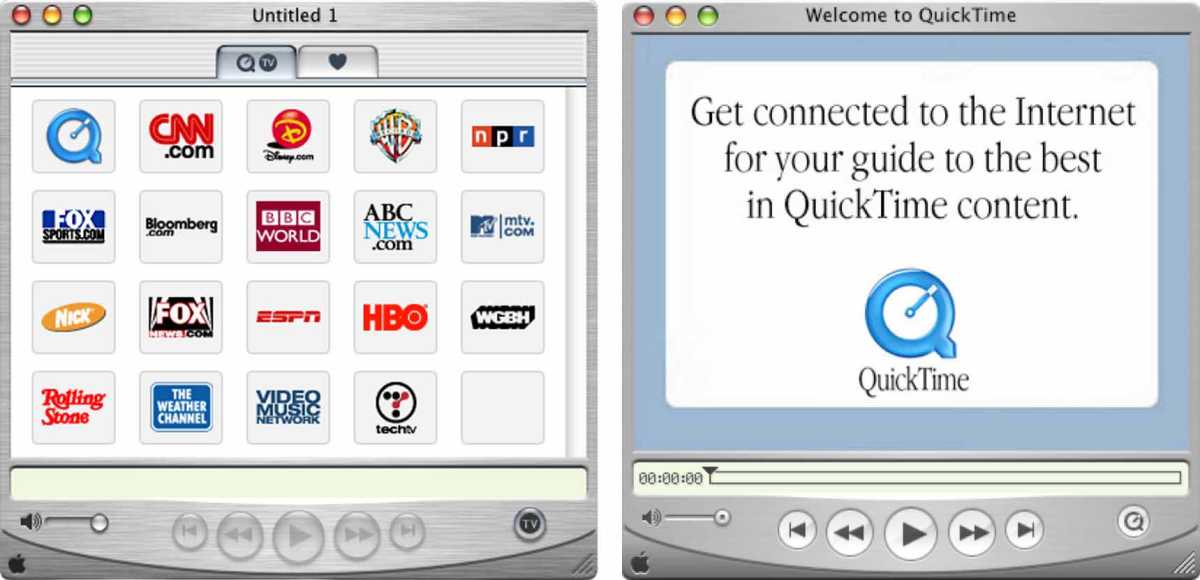
Despite the competition, QuickTime remained a vital tool for Mac users. The QuickTime Player became a standard application, and the paid upgrade to QuickTime Pro offered powerful editing capabilities. It was a surprisingly robust tool, discontinued only with the shift to 64-bit applications.
The release of macOS Catalina marked a turning point, effectively ending the era of “classic” QuickTime. The new QuickTime Player X used different frameworks and lacked support for many older codecs. It seemed like a chapter had closed.
But QuickTime’s influence didn’t disappear. At a recent Apple event, experts working on immersive video for the Vision Pro revealed that the standard format for these experiences is, at its core, a QuickTime container. The legacy lived on, quietly powering the future.
Even the ubiquitous MP4 file format, the backbone of online video, owes a debt to QuickTime. MPEG-4 is actually built upon the foundations laid by Apple’s pioneering work. It’s a testament to the enduring impact of a technology that has become almost invisible in its pervasiveness.
QuickTime may seem like a relic of a bygone era, but its influence is undeniable. It’s an integral part of the computing world, a silent architect of the multimedia experiences we enjoy today. While much of the early 90s at Apple is best forgotten, QuickTime deserves lasting recognition and appreciation.