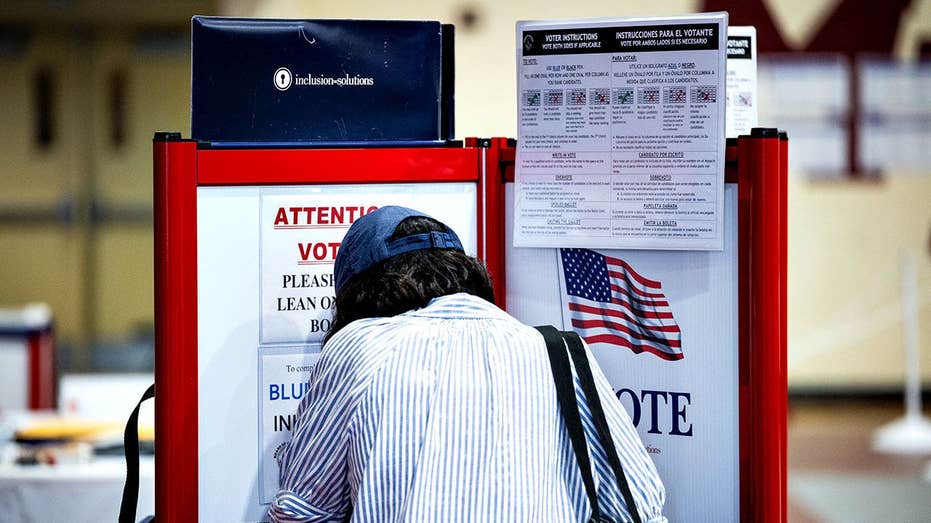
About a year and a half ago, a former president concluded his comeback campaign by promising to make the country more affordable for its citizens. The message resonated, and he won the swing states and made gains in traditionally Democratic areas, ultimately performing better in every state than in the previous election.
The economy has always been a central theme in elections, but recent sentiment indicates a shift. A majority of voters now disapprove of the current administration’s handling of economic issues, and their frustration extends beyond tariffs and fuel costs.
Approval ratings for the president’s economic policies have fallen sharply, dropping 13 points to a negative 37 in the most recent month of the year, and 24 points to a negative 32 over a comparable period earlier in the year.
While the president’s signature policies contribute to voter dissatisfaction, the underlying concerns are broader and more complex.
Nearly half of respondents cited cost of living as the top worry, with food and gas among the most pressing. Health care and housing also appear prominently in voters’ lists of concerns.
A large segment of the electorate feels that the political and economic systems are stacked against them, with 72% of middle‑class and 86% of working‑class adults expressing this view—an increase of more than 30 points compared to a decade ago.
Opponents of the incumbent party have a slight advantage in certain areas, yet the differences are modest, indicating that while voters are dissatisfied with the status quo, they remain uncertain about the alternative.
Redistricting gains and a favorable Senate map give the opposition a competitive edge in a midterm that feels blue but may not translate into votes.
The Senate is a coin flip. If each party secures all the seats that lean toward them, both will hold 48 seats, with four decisive contests in Alaska, Iowa, Maine, and Ohio remaining undecided.
To secure a majority, one side must win three of those four toss‑up seats and hold key states such as Georgia, Michigan, and New Hampshire while flipping North Carolina, a state that leans toward one party but is highly competitive.
Six of the eight pivotal states voted for the former president in 2024, with an average margin of 7.8 points in his favor.
Historical patterns suggest that even when the overall electorate leans in one direction, a wave election can still shift the balance.
Michigan stands out as a critical race. A progressive candidate could emphasize a left‑wing economic populist platform, while a moderate candidate might focus on a centrist, anti‑incumbent message. The state has not elected a Republican to the Senate in 30 years and remains lean toward the opposition.
The Republican nominee is a former representative who narrowly lost in the previous cycle, underscoring the competitiveness of the seat.
Iowa, traditionally Republican since 2016, has become a toss‑up. Recent polling shows a slight advantage for the Democratic candidate, but the margin remains narrow.
Texas remains likely Republican, with a long history of GOP Senate victories. The current challenger faces a well‑known incumbent who has faced several controversies.
In the House, the incumbent party has historically lost an average of 25 seats in midterm elections. While the opposition holds a generic ballot advantage, victories are not guaranteed.
Redistricting efforts by the governing party are expected to add roughly a dozen seats to its tally, offset by a handful of gains for the opposition in states with recent gerrymandering referenda.
The opposition currently has 211 seats out of the 435, needing 218 for a majority. Success in a handful of toss‑up districts could flip the chamber.
On a favorable night for the governing party, the outcomes of toss‑up races could either maintain or slightly expand its narrow majority.