
Mikel Wilham and his wife sought a celebratory escape to Las Vegas after a grueling year battling cancer and chemotherapy. Their respite quickly dissolved into frustration when The Strat hotel presented them with a $396 smoking fee upon checkout – a shocking accusation considering they were lifelong nonsmokers.
The hotel’s defense rested on a hidden air-quality sensor, its printout declaring, “The data indicates that smoking occurred during this period.” Despite the couple’s insistence and a demand for an immediate room inspection, the general manager refused, leaving the Wilhams embroiled in a two-month fight to clear their name and reclaim their money.
“My husband just finished chemo,” Christe Wilham pleaded, “There is NO WAY either of us would endanger his health by smoking. But no one will even consider that the sensor was wrong.” Only after providing medical records and reaching inaccessible hotel executives was the fee finally refunded – a victory hard-won against a seemingly unyielding system.

This wasn’t an isolated incident. Across the hospitality industry, travelers are facing similar accusations, judged solely by the data from air-quality sensors. These devices, often manufactured by a company called Rest, are becoming the judge, jury, and executioner in disputes over smoking fees.
Joseph Tincher and his pregnant partner encountered a similar ordeal at a Seattle hotel. Despite being lifelong nonsmokers, a $500 smoking fee appeared on their credit card statement days after checkout. The hotel cited a sensor reading, dismissing their explanations and even refusing a request for a nicotine test.
Tincher’s attempts to resolve the issue through the hotel and the Better Business Bureau proved futile. The general manager, backed by the sensor vendor, remained steadfast in their conviction. A 50% discount offer was rejected, leading Tincher to file a credit card dispute – a battle he ultimately lost, as the sensor report held sway.
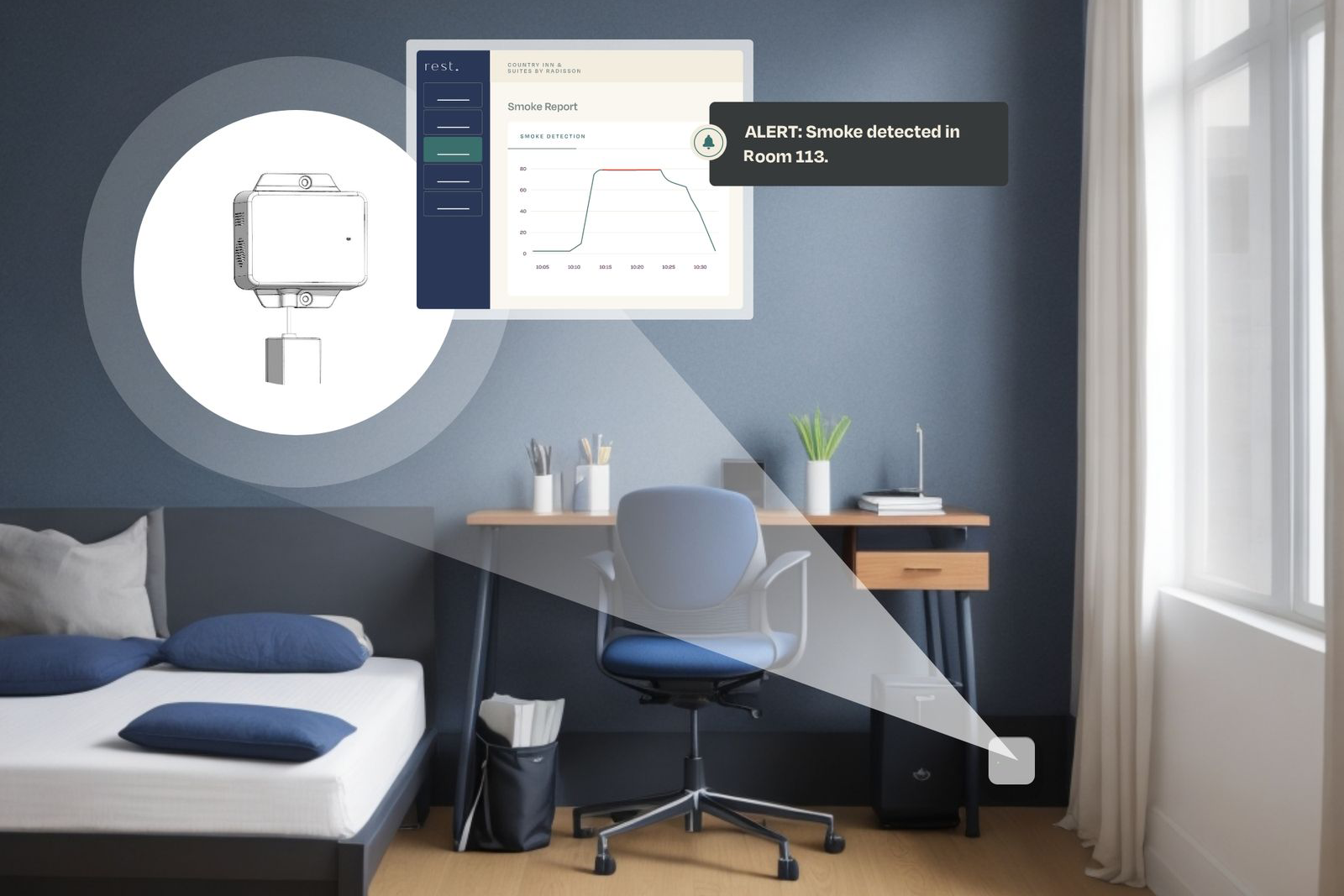
The Fair Credit Billing Act offers protection against fraudulent charges, but in these cases, the air-quality report often overrides any evidence presented by the guest. There’s no opportunity to share medical records or prove innocence; the sensor’s reading is considered definitive.
After months of frustration, a new general manager at the Kimpton Palladian, familiar with the Rest sensors, intervened. Recognizing the need for corroborating evidence, he reversed the $500 fee, acknowledging the lack of a room inspection and the importance of informing guests promptly about sensor alerts.
The pattern continued at a Philadelphia Home2 Suites, where Justin Hasty and his wife, members of a faith that prohibits smoking, were charged $300. Time-stamped photos proved they were at a gaming convention during the alleged smoking event, yet the hotel initially refused to reconsider the charge.

A subsequent review by the hotel’s management group led to a refund and a commitment to forward the case to Rest for further investigation. The incident highlighted the need for hotels to exercise discretion and consider context when evaluating sensor data.
Even Patrick Brown, with his girlfriend and toddler, fell victim to the system at The Strat in Las Vegas. A $566 smoking fee appeared after his girlfriend used hairspray and a flat iron in the bathroom. Like others, he faced an uphill battle until intervention from the same advocate who helped the Wilhams.
The Strat ultimately reversed the charge, acknowledging the lack of supporting evidence. However, the recurring nature of these incidents prompted a direct inquiry to Rest, the manufacturer of the sensors.
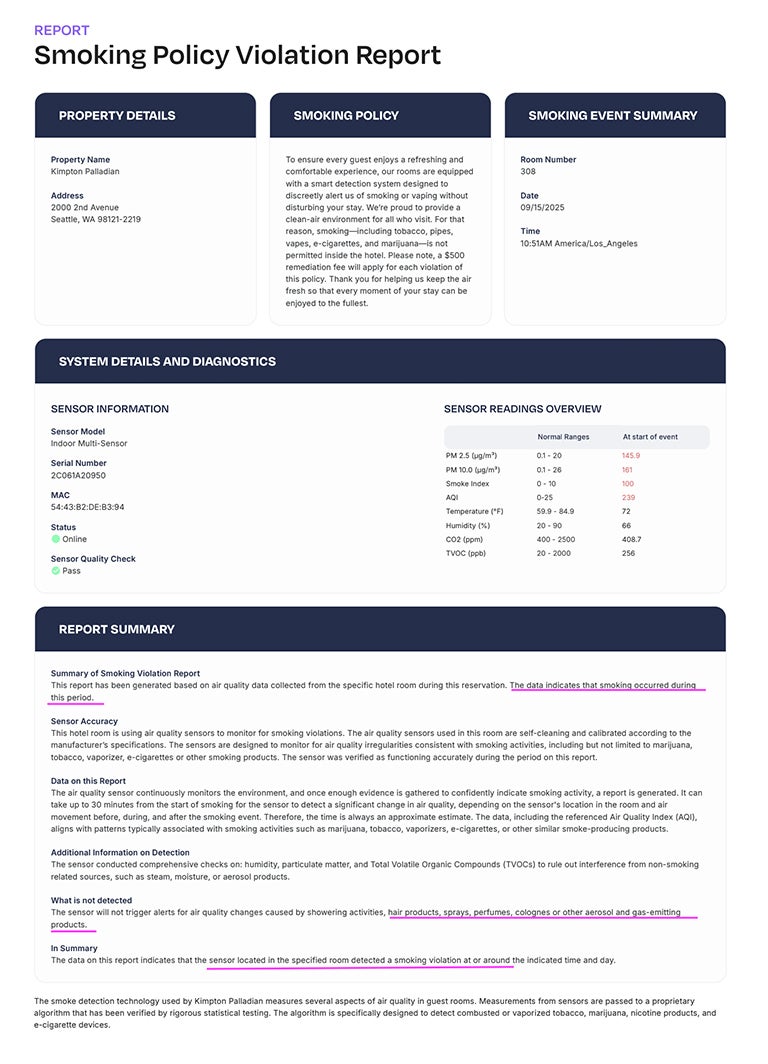
Rest maintains that its sensors accurately detect combusted or vaporized substances and that hotels are responsible for interpreting the data and handling guest communications. They emphasize the importance of discretion and considering broader environmental factors.
However, the current “Smoking Policy Violation Report” language implies definitive proof of smoking, potentially leading to unfair accusations. A more cautious wording could significantly reduce the number of false positives.
To protect yourself, research hotels for reports of false smoking fees. Inquire about sensor presence at check-in and report any pre-existing odors in your room. Use bathroom fans when using hair products and carefully review your final invoice.
If falsely accused, demand a room inspection, file a credit card dispute, and consider filing a complaint with your state’s attorney general. These sensors aren’t foolproof, and common sense and human oversight are crucial to ensure fairness.
While sensors can aid in maintaining smoke-free environments, they shouldn’t be the sole basis for accusations. Hotels must prioritize guest satisfaction and avoid relying on potentially flawed technology to unjustly penalize innocent travelers.


