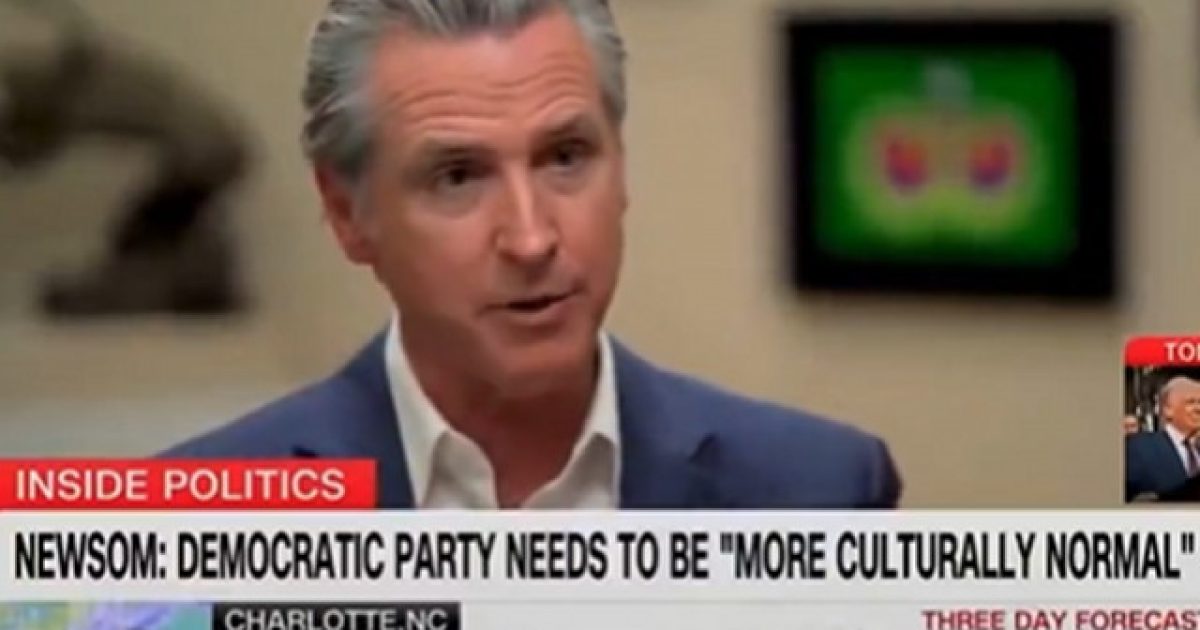
A recent interview with California Governor Gavin Newsom revealed a startling admission: Democrats need to become “culturally normal” to win elections. The governor, speaking with CNN, suggested a shift in focus away from highly debated social issues and toward concerns dominating everyday American life.
Newsom specifically pointed to the disproportionate attention given to topics like gender identity and pronouns, arguing that Democrats should prioritize “tabletop issues” – the tangible burdens of electricity bills, childcare, healthcare, and the ever-increasing cost of housing. He acknowledged a personal tendency to get caught up in these debates, hinting at a growing awareness of the disconnect.
The governor’s comments weren’t born from a vacuum. He described drawing this conclusion from firsthand experience defending these issues and subsequently facing criticism for adopting a more moderate stance. He believes a more nuanced approach is essential for broader appeal.
However, skepticism abounds regarding the feasibility of this shift. Critics question whether the Democratic party, deeply entrenched in its current ideological position, is truly capable of such a transformation. The suggestion feels almost wistful, a recognition of political reality colliding with deeply held beliefs.
The core of the issue lies in perceived priorities. Many believe the party has demonstrably signaled that issues like “trans rights” take precedence over more fundamental concerns like affordable housing. This prioritization creates a chasm between the party’s agenda and the needs of a significant portion of the electorate.
Looking ahead to the 2028 presidential election, the prospect of a Democratic National Convention devoid of vocal advocacy for these social issues seems improbable. The governor’s assessment, while potentially astute, may be a lonely voice within a party unwilling to compromise its core tenets.
Ultimately, Newsom’s statement highlights a growing tension within the Democratic party – a recognition that current strategies may be alienating voters, coupled with a deep reluctance to abandon the principles that define its identity. It’s a precarious position, and one that could determine the party’s future success.
The question remains whether Democrats can bridge the gap between their internal convictions and the pragmatic demands of winning elections. For many, it appears the party is prepared to fight for its beliefs, even if it means sacrificing broader political gains.