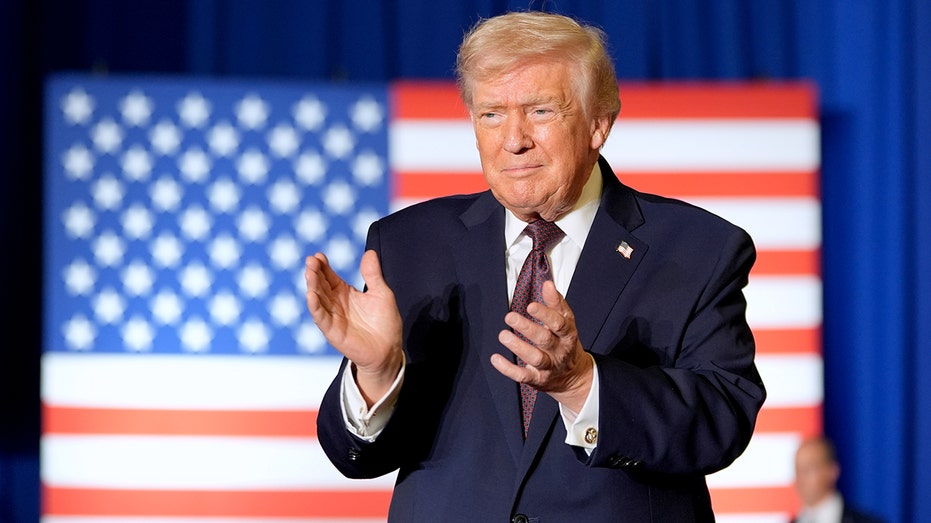
President Trump recently proclaimed, through his social media platform, achieving his “highest Poll Numbers ever,” attributing it to a desire for a “strong and powerful Country, with the best economy, EVER!” However, the reality painted by recent surveys presents a starkly different picture as he prepared to deliver his annual State of the Union address.
National polls consistently place the president’s approval rating in negative territory. The latest Fox News poll revealed 44% approval versus 56% disapproval, while an ABC News/Washington Post/Ipsos survey showed even lower numbers – 39% among all adults and 41% among registered voters. Averaging recent surveys over the past four weeks confirms a pattern of approval in the low 40s, with disapproval consistently in the mid-50s.
The shift is notable. Trump began his second term with positive approval ratings, but those numbers began to decline last March, steadily falling into negative territory in the months that followed. This downturn highlights a growing disconnect between the president’s self-assessment and public perception.
A significant partisan divide fuels these numbers. While support remains strong among Republicans, independents express disapproval, and Democrats overwhelmingly disapprove of the president’s performance. Veteran pollster Daron Shaw observed that Republican support is solid, but opposition has become increasingly entrenched, particularly among Democrats.
Concerns over inflation played a pivotal role in the 2024 elections, propelling Trump and Republicans to victory, reclaiming the White House and both chambers of Congress. The president himself asserted, “We had record inflation. We don’t have it anymore,” anticipating a positive message in his upcoming State of the Union address.
However, the president’s approval ratings specifically regarding the economy are even lower than his overall approval. Democrats argue that their successes in the 2025 elections, and subsequent special elections, were driven by a focused message on affordability amidst ongoing inflationary pressures.
Surveys consistently reveal American pessimism about the economy, with a widespread belief that conditions haven’t improved during the second Trump administration. Shaw noted the difficulty in overcoming the perception that inflation remains too high and the economy is stagnating.
Despite the president’s challenges, the Democratic party also faces headwinds. Their brand has suffered historic lows in recent polling, a trend that continues into the current year. This presents a complex political landscape as the midterm elections approach.
With just over eight months until the midterms, where Republicans will defend their slim majorities in the House and Senate, the president’s team convened a strategy session with Cabinet members and aides. The central message, delivered by chief pollster Tony Fabrizio, was that the economy will be the defining issue for voters, and the White House must emphasize efforts to ease financial burdens.
The Republican strategy centers on maximizing voter turnout, particularly among the president’s base. Republican National Committee Chair Joe Gruters described Trump as the GOP’s “secret weapon,” capable of energizing voters who might not participate in elections when he isn’t on the ballot, and potentially allowing Republicans to “defy history” in the midterms.
Regardless of broader approval ratings, Trump maintains significant influence and popularity within the Republican party. His ability to mobilize his supporters remains a key asset as the party prepares for a crucial election cycle.