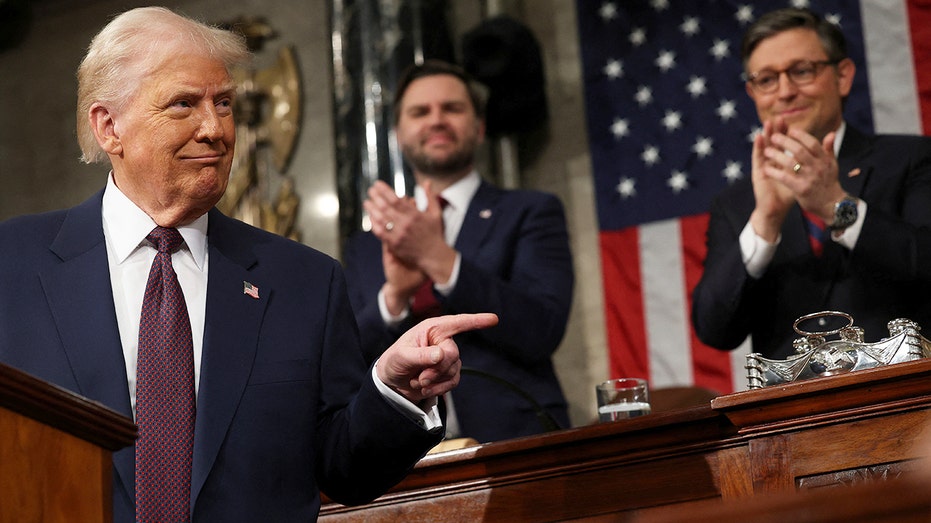
The political landscape crackled with anticipation as the President prepared to deliver his State of the Union address, but a stark counter-narrative was already taking shape.
House Speaker Mike Johnson publicly criticized the Democratic Party, asserting their opposition to the President had devolved into what he termed “Trump Derangement Syndrome,” evidenced by plans for multiple alternative events coinciding with the address.
Johnson highlighted a positive economic picture, pointing to declining inflation, rising wages, and robust investment as key indicators of the President’s successful first year. He argued these results provided ample justification for a comprehensive update to the nation.
Instead of unified engagement, Democrats were organizing five separate rallies and gatherings, a move Johnson characterized as theatrical and indicative of a lack of constructive proposals. He claimed their focus remained solely on obstructing the President’s agenda.
The Speaker accused Democrats of employing a decade-long pattern of obstructionism, extending from opposing the President’s policies to even boycotting the joint address itself – a practice he insisted Republicans would never emulate.
One prominent counter-event, “The People’s State of the Union,” was slated to unfold near the Lincoln Memorial, spearheaded by activist groups and attracting a roster of Democratic senators eager to voice their criticisms.
Another gathering, dubbed “State of the Swamp,” was planned for the National Press Club, further illustrating the fractured political climate and the deep divisions surrounding the President’s policies and performance.
Johnson’s remarks underscored a fundamental disagreement: while the administration touted economic successes, the opposition prepared to amplify their dissent, creating a night of competing narratives and heightened political tension.
![PROFESSOR'S RACIST RANT EXPLODES: Students Demand Answers! [VIDEO]](https://www.thegatewaypundit.com/wp-content/uploads/2026/02/allyson-friedman-1200x630.jpg)