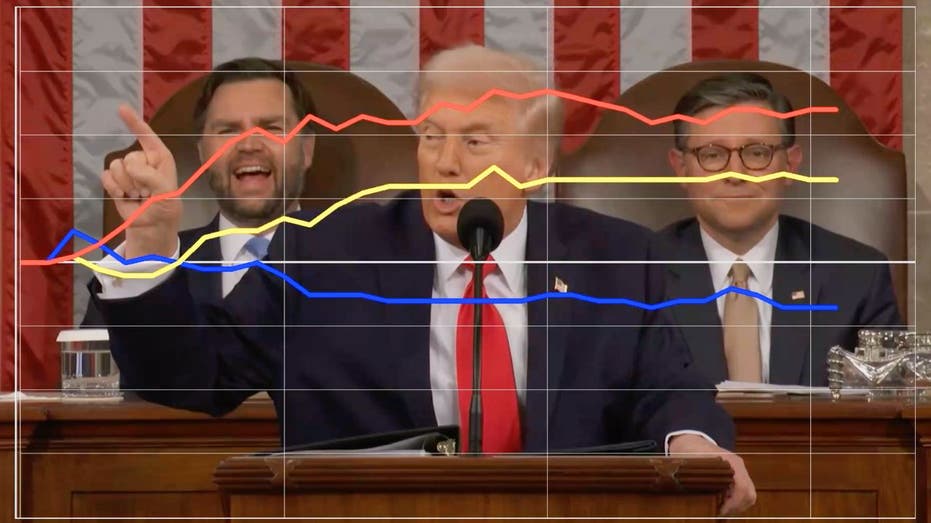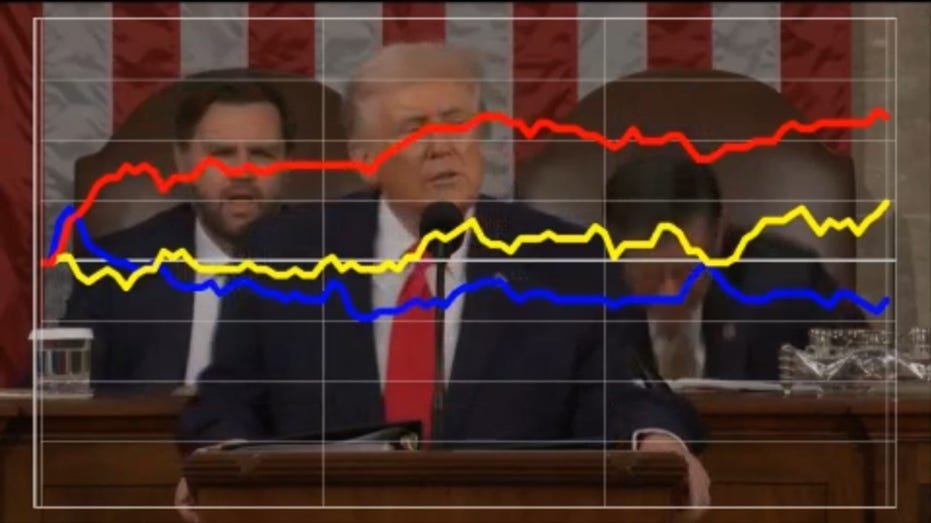
A silent drama unfolded Tuesday night, not just on the stage of the State of the Union address, but in a room alongside it. A carefully selected group of American voters – Democrats, Republicans, and Independents – reacted in real-time to President Trump’s words, their responses visualized as a fluctuating landscape of approval and disapproval.
The panel, comprised of nearly one hundred individuals, was designed to reveal raw, unfiltered reactions. As the President spoke about the ongoing dispute over Department of Homeland Security funding, a clear divide materialized. Lines on a graph, representing collective sentiment, began to sharply diverge along party lines.
When President Trump directly accused Democratic lawmakers of cutting funding, a surge of support erupted from Republicans. Simultaneously, Democratic reactions plummeted, registering significant disapproval. Independents, initially hovering near a neutral position, observed the escalating tension.
The President’s demand for “full and immediate restoration” of border security funding triggered a noticeable shift among Independents. Their approval ratings climbed past the 50% mark, indicating a willingness to consider his position. The room’s atmosphere, though silent, was undoubtedly charged.
The most pronounced reaction came during the President’s closing remarks, emphasizing the protection of American citizens. Both Republican and Independent support reached their peak, while Democratic disapproval sank to its lowest point. It was a moment of stark polarization, visually captured by the rising and falling lines.
However, the overall takeaway wasn’t about changing minds. The data revealed a striking lack of persuasion. The speech didn’t sway opinions; it solidified them. Voters largely affirmed their pre-existing beliefs, reacting with either strong agreement or strong rejection.
Analysts concluded that the address functioned as a reinforcement tool, rather than a conversion attempt. In a political climate increasingly driven by voter turnout, solidifying existing support may be the ultimate goal, even if it means deepening the divides. The silent reactions spoke volumes about the current state of American political discourse.
The experiment offered a rare glimpse into the immediate emotional impact of presidential rhetoric. It wasn’t about policy debates or legislative strategies, but about the visceral, instinctive responses of everyday Americans listening to a pivotal speech. The graph, in essence, became a mirror reflecting the nation’s fractured political landscape.