A crimson spectacle unfolded across the Canadian sky early Tuesday morning as a rare total lunar eclipse transformed the moon into a “blood moon.” For those who braved the late hours or early wake-up calls, a breathtaking display of celestial mechanics painted the darkness with shades of red and orange.
The experience wasn’t universal, however. Cloud cover played spoiler for some, obscuring the view and leaving eager skywatchers disappointed. But for those with clear skies, the sight was truly remarkable – a slow, dramatic darkening as the Earth’s shadow crept across the lunar surface.
As the Earth aligned perfectly between the sun and moon, an extraordinary transformation began. The lunar surface didn’t simply fade to black; instead, it bloomed with a striking, otherworldly red hue. This wasn’t a trick of the light, but a consequence of Earth’s own atmosphere.
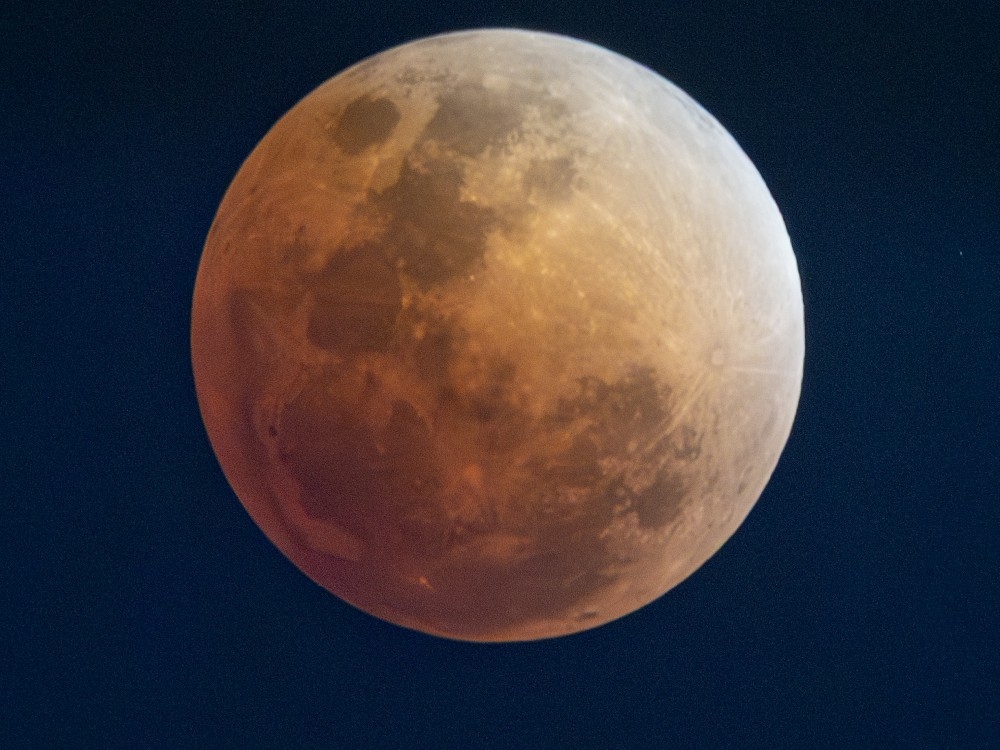
Scientists explain that the red coloration is caused by sunlight filtering through our planet’s atmosphere. It’s a phenomenon akin to witnessing countless sunrises and sunsets simultaneously projected onto the moon’s surface, a truly unique and beautiful effect.
The eclipse’s visibility was limited to roughly half the globe, making the event even more special for those who witnessed it. For eastern provinces, the timing was particularly challenging, a frantic race against the rising sun.
In Quebec and Ontario, observers caught the peak of the eclipse, while those further east saw the moon set during the partial phase, creating a dramatic farewell as the Earth’s shadow guided it toward the horizon. It was a fleeting, unforgettable moment.
Across social media, people shared their stunning photographs of the blood moon, each image a testament to the eclipse’s captivating beauty. One Toronto resident playfully remarked on not being a morning person, except for this extraordinary “lunar eclipse phase.”
Even under less-than-ideal conditions, like the overcast skies near Belleville, Ontario, and Winnipeg Beach, Manitoba, dedicated observers managed to capture glimpses of the orange-tinged moon, proving the allure of this celestial event was strong enough to overcome the weather.
While this blood moon has faded from view, the cosmos has more wonders in store. The next total lunar eclipse isn’t scheduled until December 31, 2028, with even rarer occurrences – three eclipses – planned between the end of 2028 and 2029.