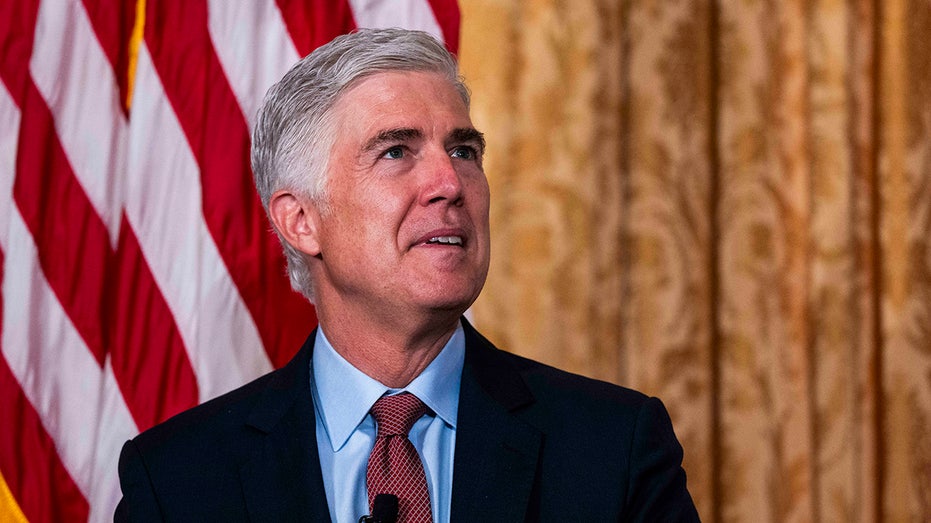
During oral arguments this week, Justice Neil Gorsuch delved into a surprisingly specific historical question: what exactly constituted a “habitual drunkard?” The inquiry arose during a case challenging restrictions on gun ownership for individuals who use drugs, forcing the Department of Justice to draw parallels between historical laws and modern regulations.
The DOJ attempted to justify the current law by referencing founding-era restrictions on habitual drunkards, but Justice Gorsuch immediately challenged the comparison. He pointed out the surprisingly high tolerance for alcohol consumption in the 18th century, citing examples from the American Temperance Society.
“Eight shots of whiskey a day only made you an occasional drunkard,” Gorsuch stated, referencing historical definitions. A “habitual drunkard,” according to those standards, required consumption at twice that rate, raising doubts about the equivalency to modern drug use.
Gorsuch then turned to the drinking habits of the Founding Fathers themselves, highlighting their robust appetites for alcohol. He recounted that John Adams began his day with a tankard of hard cider, James Madison reportedly consumed a pint of whiskey daily, and even Thomas Jefferson enjoyed three or four glasses of wine each night.
“Are they habitual drunkards who would be properly disarmed for life under your theory?” Gorsuch pressed, directly questioning the DOJ’s logic. The pointed questions underscored his skepticism about equating historical alcohol restrictions with current gun control measures for drug users.
The case,U.S. v. Hemani, centers on a Texas man charged with possessing a handgun while also using marijuana every other day. The law in question, 922(g)(3), gained prominence during the 2018 conviction of Hunter Biden, who was found guilty of possessing a firearm while struggling with crack cocaine addiction.
Gorsuch further questioned the vagueness of the law, asking about scenarios involving minimal drug use. “We don't even know the quantity… What if he took one gummy bear with a medical prescription?” he asked, illustrating the potential for overly broad application of the law.
The DOJ maintained that Ali Hemani, the defendant, illegally possessed the gun as a habitual marijuana user and was rightfully charged. However, Second Amendment advocates are closely monitoring the case, with organizations like the National Rifle Association and Gun Owners of America supporting Hemani.
Interestingly, the case has also drawn support from several Democratic states, creating unusual alliances in a legal battle over the limits of gun ownership. The core argument from Hemani’s attorney centered on the DOJ’s inability to clearly define “habitual drug user.”
The attorney argued that the DOJ’s historical comparison rested on a flawed premise, emphasizing that historical laws targeted “habitual drunkards,” not simply those who consumed alcohol. This distinction, he argued, was crucial to understanding the historical context.
The DOJ countered that the law imposes a “limited, inherently temporary” restriction, removable by ceasing drug use. They framed it as a modern equivalent to the harsher restrictions placed on habitual drunkards in the founding era, designed to address the unique dangers posed by armed individuals impaired by drugs.
While Gorsuch was not alone in expressing skepticism, the Supreme Court could choose to issue a narrow ruling focused solely on the specifics of Hemani’s case. A decision is anticipated by summer, promising to clarify the boundaries of gun control laws related to drug use and the weight of historical precedent in Second Amendment cases.