A desperate plea cut through the waves of the Indian Ocean. Sri Lanka’s navy mobilized, responding to a distress signal from the Iranian warship IRIS Dena, carrying a crew of 180. Little did they know, they were racing towards a scene of devastation, a silent testament to a swift and decisive strike.
Upon arrival, the sea offered no sign of the vessel itself. Instead, a chilling panorama unfolded: slick, iridescent oil patches staining the water, empty life rafts bobbing aimlessly, and the heartbreaking sight of bodies adrift. The rescue mission instantly transformed into a grim recovery operation.
Sri Lankan crews worked tirelessly, pulling 87 bodies from the water and rescuing 32 survivors. Those fortunate enough to be pulled from the wreckage were rushed to a hospital in Galle, a coastal town bracing for the influx of trauma and injury. One survivor clung to life in critical condition, while others faced emergency treatment and the long road to recovery.
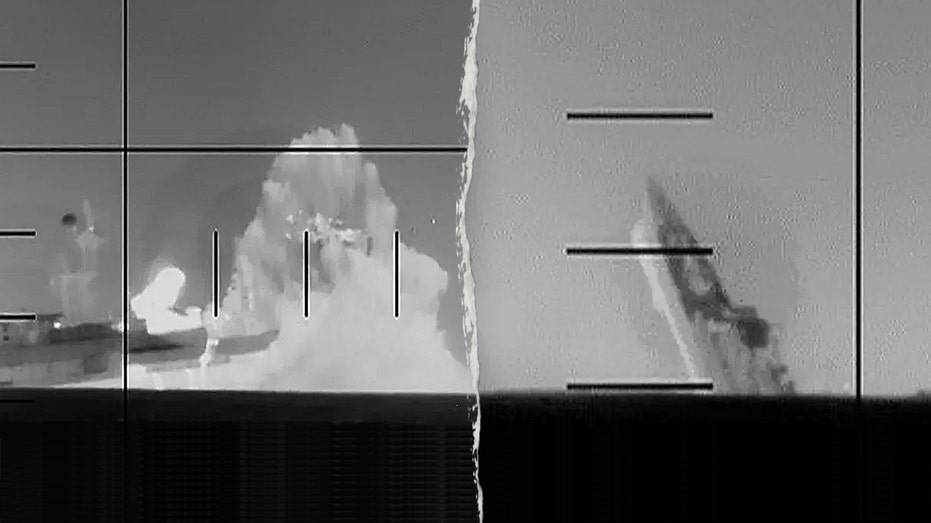
The truth behind the disaster emerged from a briefing at the Pentagon. Secretary of War Pete Hegseth revealed that the IRIS Dena had been deliberately sunk by an American submarine. A single Mark 48 torpedo, a weapon not deployed in the sinking of an enemy vessel since World War Two, had sealed the ship’s fate.
Hegseth described the Dena as a “prize ship” for Iran, now resting silently on the ocean floor. The operation, he stated, was a clear message: a demonstration of American resolve and a commitment to winning. The swiftness and precision of the attack were underscored by the phrase, “Quiet death.”
The destruction didn’t end there. In a separate, equally decisive action, the U.S. Navy sank another Iranian warship, the Soleimani, a corvette class missile ship, in the Strait of Hormuz, close to Iranian shores. The Soleimani, named for the slain Iranian military officer Qasem Soleimani, met a similar fate.
Hegseth’s words painted a stark picture of Iran’s naval capabilities. “Combat ineffective, decimated, destroyed, defeated,” he declared, offering a litany of adjectives to describe the state of the Iranian navy. He even remarked, with pointed emphasis, that the U.S. had effectively struck Soleimani twice.
The events represent a dramatic escalation, a forceful assertion of power in a region already fraught with tension. The once-proud Iranian navy, according to reports, is now rendered a non-factor, its ships lying silent beneath the waves.