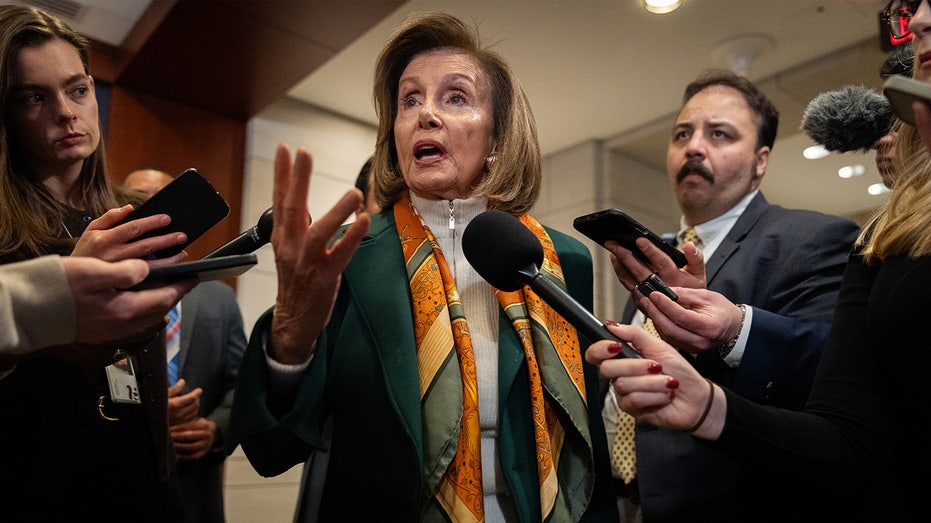
The echoes of conflict reverberate through Washington, yet the interpretation of those echoes seems to shift with the political winds. Former House Speaker Nancy Pelosi has drawn a stark contrast between the recent strikes authorized under President Trump and those carried out by President Obama during his time in office, despite striking similarities in their execution and justification.
Pelosi has been vocal in her condemnation of President Trump’s actions targeting Iran, alongside Israel, characterizing them as exceeding the bounds of acceptable military force. She insists these strikes are fundamentally different from the limited military intervention authorized by President Obama in 2011, a distinction she defends with unwavering conviction.
“They’re not at all alike,” Pelosi stated, emphasizing what she views as a critical difference in scope. She described Obama’s actions as “limited military force,” while portraying Trump’s operation as a significant escalation, potentially violating established legal boundaries.
At the heart of Pelosi’s argument lies the War Powers Act of 1983, a law designed to limit the President’s ability to commit the United States to armed conflict without Congressional consent. The Act mandates a 48-hour notification to Congress upon introduction of forces into hostilities, and requires authorization for engagements exceeding 60 days.
Pelosi fears that the ongoing situation with Iran will inevitably surpass that 60-day threshold, accusing President Trump of circumventing Congressional authority. She implores a careful review of the law, stating, “Do your homework. Read the law. We have lost people in war already,” and questioning whether the current actions are even being acknowledged as war.
However, a closer look reveals a parallel in Pelosi’s response to a similar situation years prior. In 2011, as protests erupted in Libya and were met with brutal repression by Muammar Gaddafi, President Obama authorized military intervention alongside NATO allies.
The U.S. launched airstrikes against Gaddafi’s forces, aiming to protect the civilian population in cities like Benghazi, mirroring the stated humanitarian concerns sometimes cited in the recent conflict with Iran. Obama, at the time, explained the intervention as a necessary step to “save that city and the people within it.”
Notably, President Obama did not seek Congressional authorization for the Libya strikes. Yet, Pelosi offered a markedly different assessment then, expressing satisfaction with Obama’s authority to act. “I’m satisfied that the president has the authority to go ahead,” she affirmed, even while acknowledging the importance of Congressional consultation.
When directly asked if she believed Obama could proceed without Congressional approval, Pelosi responded with a simple, unequivocal “Yes.” This stance stands in stark contrast to her current insistence on Congressional oversight regarding President Trump’s actions, raising questions about the consistency of her principles in the face of shifting political landscapes.
The War Powers Act itself doesn’t hinge on American casualties to trigger Congressional approval, a detail often overlooked in the debate. Pelosi’s differing responses to similar situations highlight the complex interplay of politics, power, and principle in the realm of foreign policy and the enduring challenge of defining the limits of presidential authority.