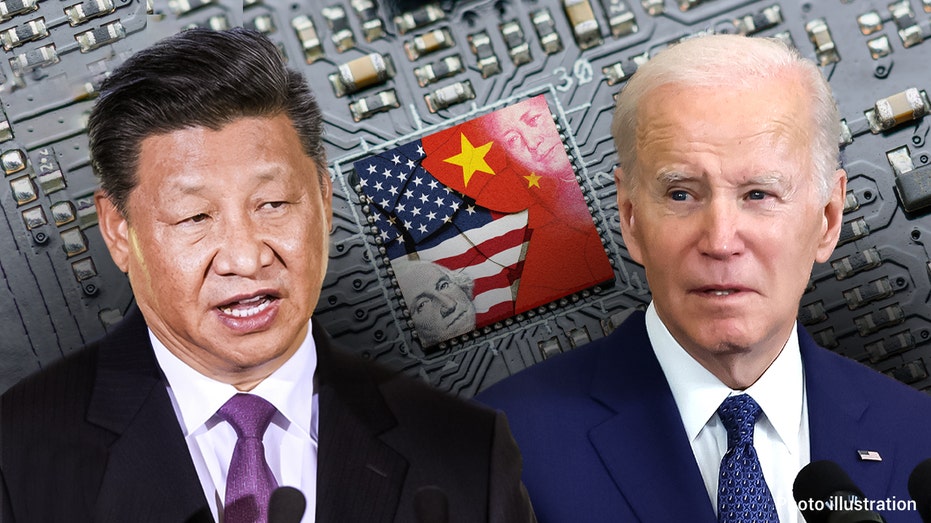
Despite export controls designed to isolate Huawei from the world's most advanced semiconductor technology, the company is projected to achieve a 60% increase in chip revenue in 2026, a far cry from the blow the U.S. administration had hoped for.
Following the 2023 restrictions, China directed state agencies to purchase hardware, chips, mobile devices and software from Huawei while investing over $1 billion in government grants. Three years later, analysts expect Huawei to close 2026 with approximately $12 billion in chip revenue, up from $7.5 billion in 2025.
The results have sparked debate over whether U.S. export controls have inadvertently strengthened Huawei or merely slowed China’s progress in advanced semiconductors. Many observers still regard Huawei as a formidable technology company that has conquered every market it has entered.
The United States first imposed restrictions on Huawei in 2019, blacklisting its devices from government use. Subsequent administrations tightened measures, banning sales and imports in 2022 and halting export licenses in 2023 on national security grounds. The policy effectively limited Huawei’s access to advanced computing chips and related technologies.
During the same period, China increased its government grants to Huawei, raising support from 2.5 billion yuan in 2021 to 6.5 billion yuan in 2022 and 7.3 billion yuan in 2023, before dipping to 3.9 billion yuan in 2025. These investments coincided with the development of the Ascend 910B chip, a milestone aimed at competing with leading semiconductor firms.
Huawei plans to advance technology by focusing on faster electrical signal movement and efficient shortcuts, a principle known as “Tau scaling law.” The company emphasizes collaboration with scientists, engineers, and industry partners worldwide to drive sustainable development in the semiconductor and electronics sectors.
Some lawmakers contend that export controls have forced China to offshore part of its production, increasing reliance on Taiwan. They argue that meeting domestic AI‑chip demand has become more difficult for Huawei, prompting it to seek alternative procurement routes.
Meanwhile, the United States maintains roughly 75 percent of the world’s AI computing power. Huawei has not yet responded to requests for comment.