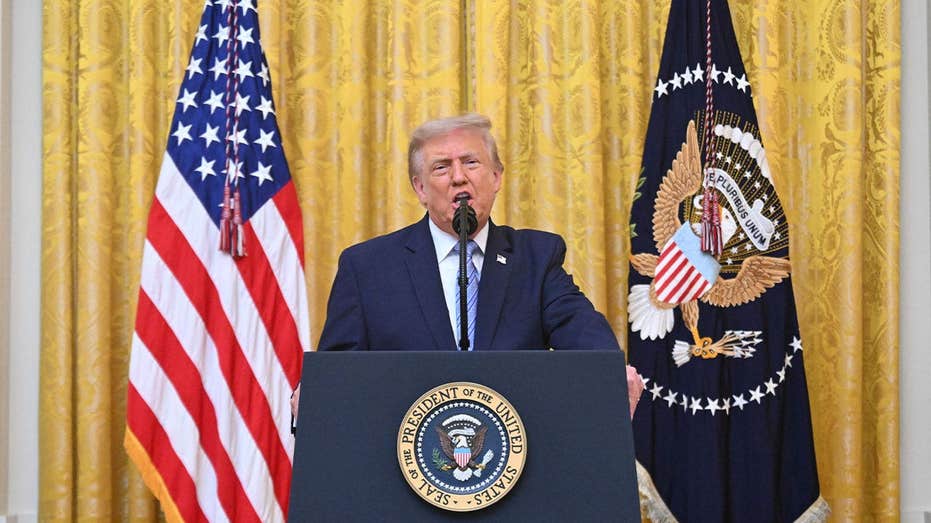
The president of the United States delivered a prime-time address on Thursday night, accusing China of aggressive interference in American electoral processes. The speech outlined allegations that Beijing conducted espionage operations targeting voter data, business leaders, and journalists to undermine the 2020 presidential election.
According to the president, China allegedly obtained millions of voter files containing personal information such as names, addresses, and political affiliations. Additional claims included efforts to sway business leaders against the administration and to identify journalists critical of the presidency, offering financial incentives to amplify negative coverage.
The White House released heavily redacted intelligence documents purporting to support these assertions, though verification efforts are expected to take weeks or months. The administration emphasized the need to safeguard electoral systems and protect sensitive citizen data amid ongoing concerns about foreign influence.
In response to the president’s remarks, the Department of Homeland Security announced plans to tighten restrictions on foreign student visas. The announcement signals a potential shift in policy, particularly regarding Chinese nationals enrolled in U.S. universities, where research and technology development are viewed as strategic priorities.
The president’s stance contrasts with previous positions on Chinese student visas. In August 2025, the administration had previously indicated acceptance of up to 600,000 Chinese students, citing continued policy alignment. However, the latest rhetoric suggests a reevaluation of this approach, with calls for significant reductions in visas for students from China.
Secretary of State Marco Rubio had previously advocated for revoking visas of Chinese nationals with ties to the Chinese Communist Party, particularly those in critical research fields. His earlier statements framed China as the nation’s foremost geopolitical adversary, emphasizing domestic measures to counter foreign influence as a priority.
The Chinese government has long prioritized access to U.S. educational institutions, viewing student exchanges as a strategic tool. President Xi Jinping, now in his third five-year term, has outlined ambitions to challenge U.S. global influence through technological advancement and ideological competition.
Experts warn that China’s focus on collecting vast data sets aims to shape public opinion, disrupt societal cohesion, and accelerate progress in areas such as artificial intelligence, aerospace, and quantum computing. The Department of Homeland Security highlighted concerns over “forever students” who remain enrolled indefinitely, potentially bypassing departure requirements.
The presence of hundreds of thousands of Chinese students in U.S. universities raises questions about oversight and national security. While many students seek academic opportunities, all applicants must undergo vetting by both the U.S. government and Chinese authorities, creating potential vulnerabilities in information sharing.
The president’s address marks a pivotal moment for bipartisan discussions on election security and countering foreign espionage. It also underscores the need for policies that balance openness with protecting American interests from exploitation by adversarial nations.