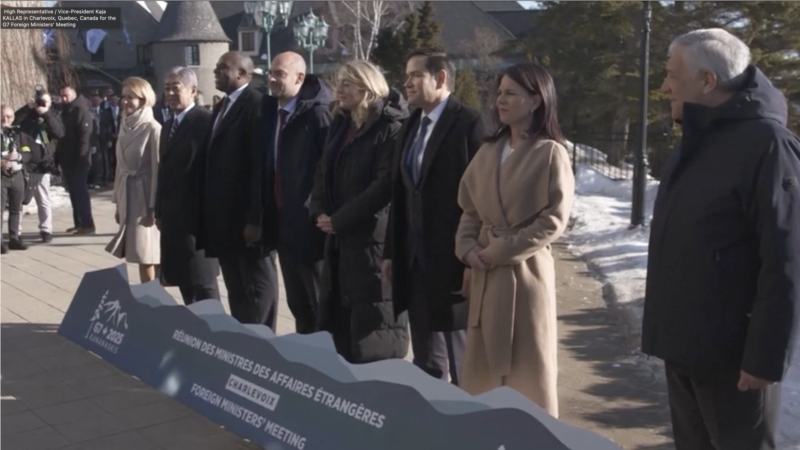
The Group of Seven foreign ministers gathered in Charlevoix, Quebec, to set priorities for the 50th anniversary of the alliance, emphasizing the pursuit of a just and lasting peace in Ukraine and the strengthening of security cooperation.
During the opening remarks, the Canadian foreign minister underscored peace and stability as top priorities, affirming a commitment to support Ukraine amid ongoing aggression.
She also highlighted maritime security concerns, citing threats from shadow fleets, dark vessels, and sabotage of critical undersea infrastructure.
The United States Secretary of State stated that a ceasefire could materialize quickly if the Kremlin agreed, urging G7 partners to focus on ending the conflict.
Separate talks in Jeddah saw Ukraine express readiness to accept a 30‑day interim ceasefire proposal presented by the United States.
The Ukrainian head of state confirmed a swift move toward peace, welcoming an air and sea ceasefire and indicating openness to extending the arrangement to land.
The Russian leader indicated support for the ceasefire proposal in principle, while noting that details still require negotiation.
The European Union foreign policy chief noted that Russia allocates a significant portion of its GDP to defense, whereas European nations are increasing their own defense spending.
Members of the G7 include Britain, Canada, France, Germany, Italy, Japan, and the United States.
The U.S. Secretary of State stressed the need for trusted monitors if a ceasefire is implemented, to oversee exchanges and small arms fire.
Other topics discussed by the ministers included China’s role in global security, Indo‑Pacific stability, and maritime security, with the conversations held behind closed doors.
A private meeting between the U.S. Secretary of State and the Japanese Foreign Minister is scheduled for Thursday.