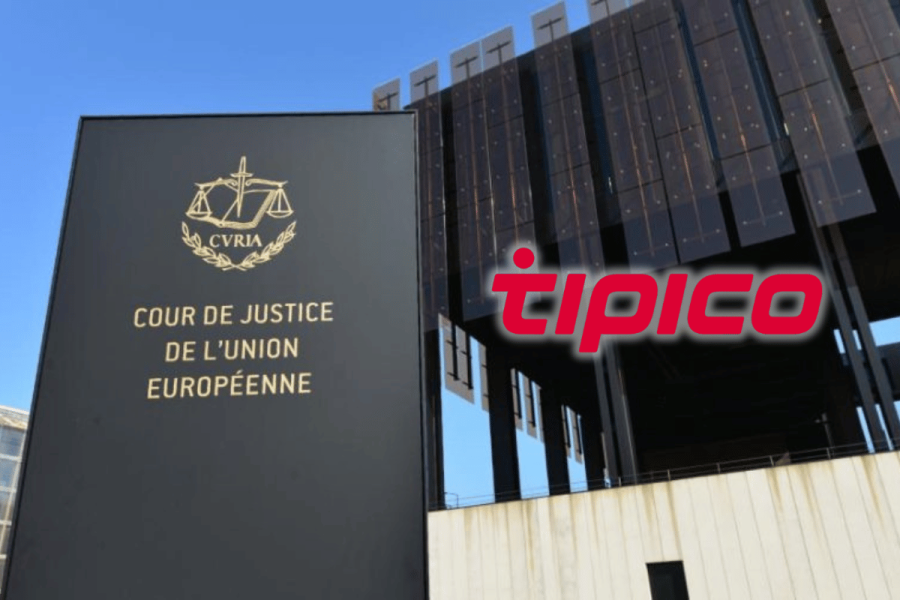
A seismic legal battle is unfolding in Germany, one poised to reshape the future of online gambling not just within the nation, but across the entire European Union. At the heart of the dispute lies case C-530/24,DK v Tipico Co. Ltd, a complex challenge centered on the recovery of substantial gambling losses.
The core question is deceptively simple: should Tipico, a major operator, be forced to refund wagers placed between 2013 and 2020? During this period, the company held a valid license issued in Malta, but crucially, lacked the necessary German authorization. This seemingly technical detail has ignited a legal firestorm.
The lawsuit isn’t merely about one individual’s losses. It’s a fundamental test of compatibility between German gambling laws and broader EU regulations, specifically Article 56 of the Treaty on the Functioning of the European Union. The implications are enormous, potentially impacting billions of euros in claims.
The plaintiff, DK, argued that contracts with Tipico were invalid due to the missing German license. Tipico countered with a powerful claim: Germany’s regulatory framework was excessively restrictive and fundamentally at odds with EU law. This impasse created a period of profound legal uncertainty for operators across Europe.
Germany’s 2012 State Treaty on Gambling dictates that any gambling contract without a German license is considered void. The intention was to protect consumers and combat illegal, unregulated operators. However, a critical flaw emerged in the system.
For eight long years, between 2012 and 2020, no new sports betting licenses were issued. A cap of just 20 licenses, combined with bureaucratic delays, effectively froze out new entrants, including established EU-based companies like Tipico. This created a paradoxical situation – a legal ban born not of intent, but of administrative failure.
The case escalated, reaching Germany’s Federal Court of Justice. Recognizing the far-reaching implications, the court deferred the dispute to the Court of Justice of the European Union (CJEU) in Luxembourg, seeking definitive clarification on the legal principles at play.
Experts predict a landmark ruling. One German lawyer stated that if the CJEU upholds the voiding of contracts regardless of licensing flaws, it would “reinforce the legal basis for player repayment claims covering long periods.” This could trigger a wave of mass litigation and dramatically increase the financial exposure of operators.
Conversely, a ruling favoring EU law could significantly weaken those claims, shifting the responsibility for the regulatory failures onto the German state itself. The focus would then be on Germany’s flawed procedures, rather than the operators who navigated the available pathways.
A related case, C-77/24,Wunner, recently saw the CJEU rule that claims for illegal online gambling losses are governed by the laws of the player’s home country – a precedent expected to influence theDK v Tipicooutcome.
The case is now under intense scrutiny from courts, operators, regulators, and legal specialists across Germany. The impending decision will dictate how countless pending cases are resolved and will define the boundaries of civil liability for past market participation.
Ultimately, this case exposes a fundamental contradiction: a regulatory system that was formally strict, yet procedurally inadequate. The CJEU must now decide who bears the consequences of this discrepancy. An opinion from the Advocate General is anticipated in early February, with a final judgment expected later this year.
The outcome ofDK v Tipicoremains uncertain, but one thing is clear: the decision from Luxembourg will be decisive, shaping the future of online gambling in Germany and sending ripples throughout the European Union.


