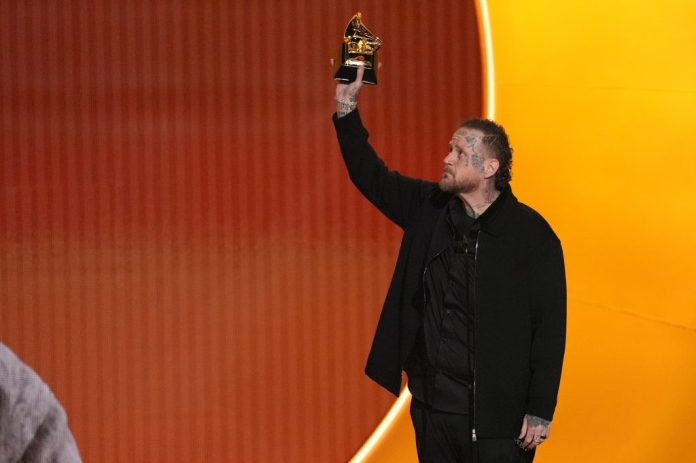
A wave of unexpected reverence washed over the Grammy Awards, sparked by musician Jelly Roll’s acceptance speech. Accepting the award for Best Contemporary Country Album, he didn’t focus on industry accolades, but on a past life defined by hardship and a profound belief in something greater.
Jelly Roll, born Jason DeFord, recounted a time when his world consisted of little more than a small Bible and a radio. These weren’t symbols of comfort, but lifelines – tools he believed held the power to fundamentally alter his trajectory. He spoke of a brokenness overcome, a transformation fueled by faith and music.
His words resonated with raw honesty: “Jesus is for everybody!” He passionately declared, dismantling any notion of exclusivity. He insisted that faith transcends political divides and record labels, offering a direct, personal connection available to all. His declaration ended with a heartfelt expression of love for a higher power.
The speech drew immediate praise, with one commentator describing it as “awesome” and profoundly “authentic.” It wasn’t polished or rehearsed, but a genuine outpouring from the heart, a sentiment so powerful it felt destined for a different stage – a Sunday morning church service.
Jelly Roll wasn’t alone in acknowledging faith during the ceremony. Other artists, including Bad Bunny, invoked God while addressing social issues. Billie Eilish offered a pointed statement on immigration, and SZA asserted a belief in divine governance over earthly authority.
However, these expressions of personal belief weren’t universally welcomed. One observer drew a parallel to a previous awards show moment, suggesting a disconnect between celebrity pronouncements and real-world realities. The argument centered on a perceived lack of understanding of the complexities faced by those working in law enforcement.
The critique suggested a privileged distance from the harsh realities of crime and security, implying that such commentary felt out of place at an event meant for entertainment. The focus, it was argued, should remain on the music, offering a temporary escape from the weight of the world.
This sentiment also cast a shadow over an upcoming Super Bowl halftime performance, hinting at potential similar statements. The controversy even reached the highest political levels, with a former president citing the artists’ anticipated expressions as a reason for his absence from the game.