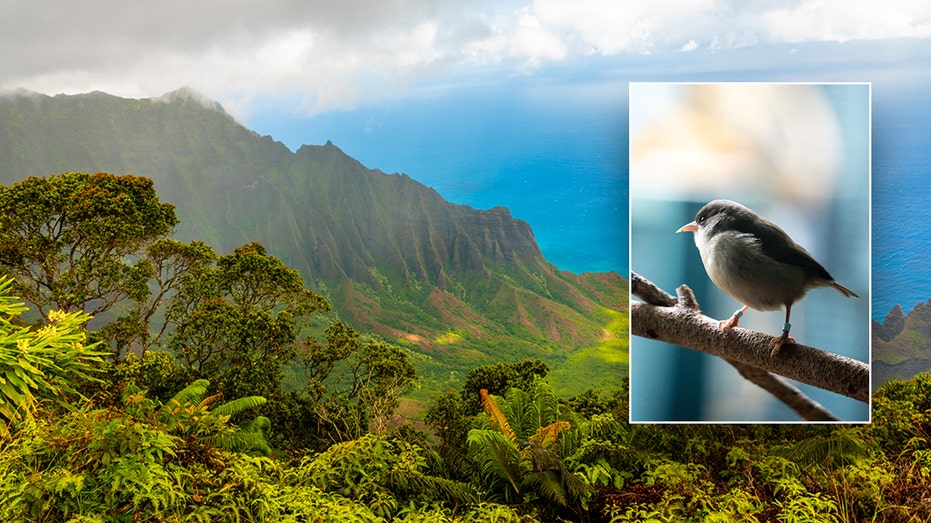
The silence in Hawaiʻi’s forests is growing, a chilling testament to a threat the islands never knew: the mosquito. These tiny, unwelcome invaders are pushing some of the most unique bird species on Earth towards the brink, accelerating a crisis of extinction with every buzzing wingbeat.
The ʻakikiki, a vibrant, honeycreeper native to Kauaʻi, is now gone from the wild, a stark warning of what’s to come. Avian malaria, carried by these mosquitoes, proved to be its undoing, a disease that native Hawaiian birds have no natural defenses against.
While the malaria affecting birds shares a family with the human version, it’s a distinct strain, posing no risk to people. The danger is entirely focused on the delicate ecosystems of the islands, and the birds that call them home.
The impact of avian malaria isn’t always immediate death. Even non-fatal infections can subtly erode a bird’s lifespan, shortening the protective caps on their DNA – called telomeres – with each bout of illness. This gradual weakening makes them increasingly vulnerable to other threats.
Researchers have been meticulously studying how these diseases spread, using canaries in controlled environments to understand transmission rates at different parasite levels. While not a perfect parallel to every wild species, these experiments provide crucial insights.
Pinpointing the exact amount of malaria-carrying saliva a mosquito delivers with each bite proved challenging, especially considering temperature fluctuations. Sophisticated models were developed to account for these variables, ensuring the most accurate possible data.
Tracking every single mosquito bite in the wild is, of course, impossible. Instead, scientists analyzed infection patterns, recognizing that a higher rate of infection within a species strongly suggests that mosquitoes are preferentially feeding on them.
The story unfolding in Hawaiʻi is a poignant reminder of how easily ecosystems can be disrupted by introduced species. The fight to save these birds isn’t just about protecting a species; it’s about preserving a unique piece of our planet’s natural heritage.