A seismic shift is underway in the world of talent representation. Casey Wasserman, the founder of a globally influential agency, has announced his departure following revelations within the recently released Epstein files.
The files detail decades-old correspondence between Wasserman and Ghislaine Maxwell, a key figure in Jeffrey Epstein’s crimes. These exchanges, characterized as flirtatious banter, surfaced as the Justice Department released another tranche of documents related to Epstein’s network.
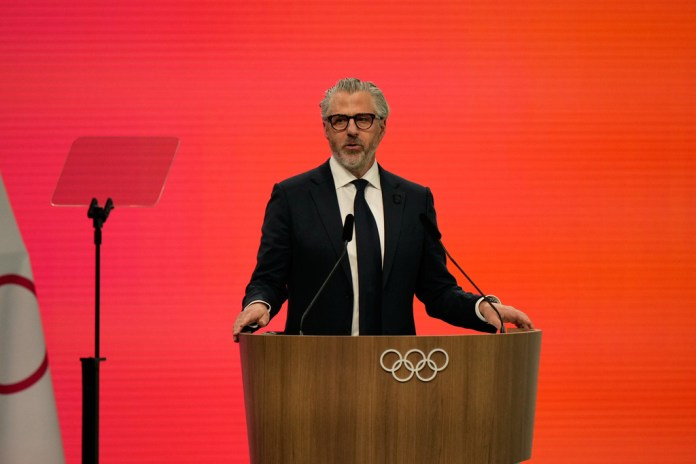
Wasserman framed his decision as a necessary step to avoid becoming a “distraction,” particularly as he prepares to chair the 2028 Los Angeles Olympics. He expressed deep regret to his 4,000 employees, acknowledging the discomfort caused by his past actions.
The fallout from the Epstein revelations has been swift and far-reaching. Several prominent artists, including singer Chappell Roan and soccer star Abby Wambach, severed ties with Wasserman’s agency in the wake of the document release.
Epstein’s network extended to the highest echelons of power, encompassing figures from politics, business, and entertainment. Former Presidents Clinton and Trump, tech titans like Bill Gates, and celebrated individuals such as Leonardo DiCaprio were all linked to the disgraced financier.
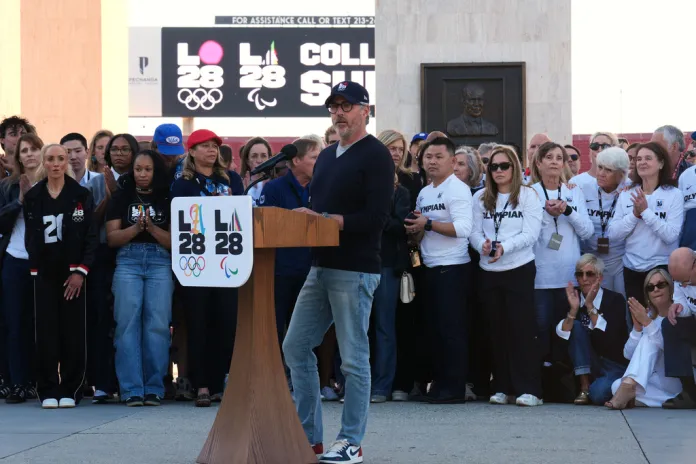
Despite the controversy, the 2028 Los Angeles Olympics committee has publicly backed Wasserman. Their internal review concluded that his interactions with Epstein and Maxwell were limited to a single humanitarian flight and the publicly known email exchanges.
That flight, arranged by the Clinton Foundation twenty-three years ago, occurred before the full extent of Epstein and Maxwell’s crimes was known. The committee emphasized Wasserman’s decade of strong leadership as justification for his continued role with the Games.
The emails themselves, dating back to 2003, reveal a troubling exchange. Wasserman directly solicited Maxwell, asking what he needed to do to see her in revealing attire – a message he has since apologized for.
Wasserman has consistently maintained that he never had a personal or business relationship with Epstein, reiterating his regret for the correspondence with Maxwell, which he says occurred before her crimes were exposed.
This situation underscores the enduring consequences of association, even in the absence of direct wrongdoing. The reverberations from Epstein’s crimes continue to reshape the landscape of power and influence.