The pronouncements from former U.S. President Donald Trump continue to defy expectation, escalating in both peculiarity and intensity. Recent weeks have witnessed a series of outbursts that reveal a disturbing pattern of impulsive decision-making and a startling lack of consistency.
One particularly bizarre claim involved Canada’s recent trade agreement with China. Trump asserted, with little grounding in reality, that the deal would lead to the complete abolition of ice hockey in Canada and the permanent cancellation of the Stanley Cup. This outlandish suggestion, while seemingly absurd, hinted at deeper anxieties regarding the evolving geopolitical landscape.
Beyond the hockey claim, Trump leveled accusations against Canada, alleging unfair trade practices and demanding concessions related to the newly constructed Gordie Howe Bridge. He threatened to block the bridge’s opening, claiming the United States received “Absolutely NOTHING!” in return for allowing its construction.
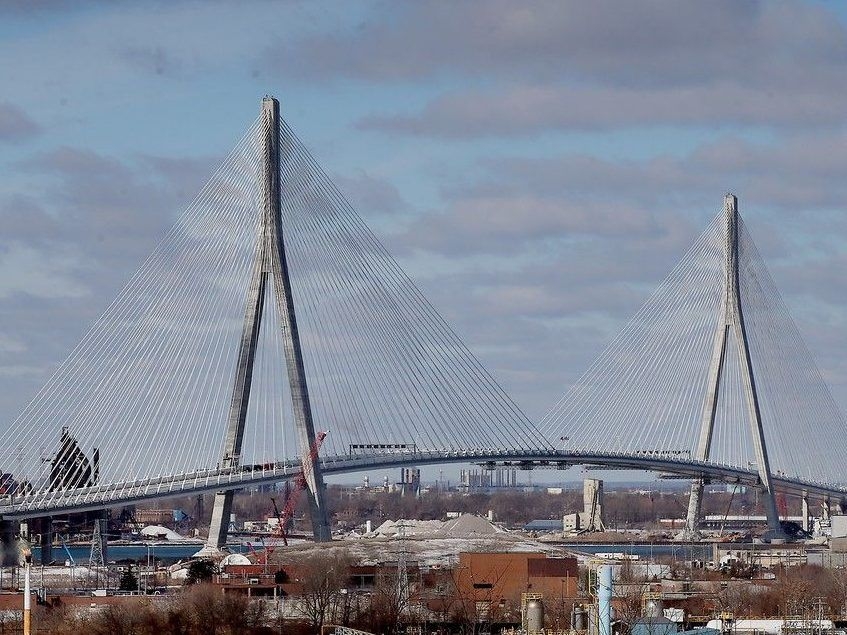
The reality, however, painted a vastly different picture. The entire $6.4-billion project was entirely funded by Canada, a fact negotiated with the State of Michigan. The construction process utilized American workers and materials in proportions comparable to their Canadian counterparts, effectively debunking Trump’s claims of exploitation.
This outburst wasn’t born of principle, but of influence. Reports surfaced indicating that Matthew Moroun, the billionaire owner of the competing Ambassador Bridge, actively lobbied Trump’s Commerce Secretary, Howard Lutnick, to halt the new bridge’s opening. The Ambassador Bridge generates substantial revenue for the Moroun family through tolls.
Hours after Moroun’s lobbying efforts, Trump launched his tirade against Canada, demanding a share of the new bridge. This sequence of events strongly suggests that Trump’s actions were driven by personal interests rather than national policy.
This incident is emblematic of a broader pattern of behavior. Trump demonstrates a remarkable willingness to abandon previously held positions, shifting stances with alarming ease. He operates with the impulsivity of someone driven by immediate gratification, lacking foresight or self-control.
This isn’t isolated. A string of recent actions – from imposing national-emergency tariffs to firing officials who delivered unfavorable reports, to demanding landmarks be named in his honor – reveal a consistent disregard for established norms and a penchant for erratic behavior.
These actions aren’t the calculated moves of a strategic mastermind, but rather the outbursts of someone with a limited attention span and a tendency towards bullying. The pattern suggests a fundamental instability in his approach to leadership and decision-making.
The cumulative effect of these incidents underscores a troubling truth: the former president is not guided by a coherent ideology or long-term vision, but by fleeting impulses and the influence of those seeking personal gain.