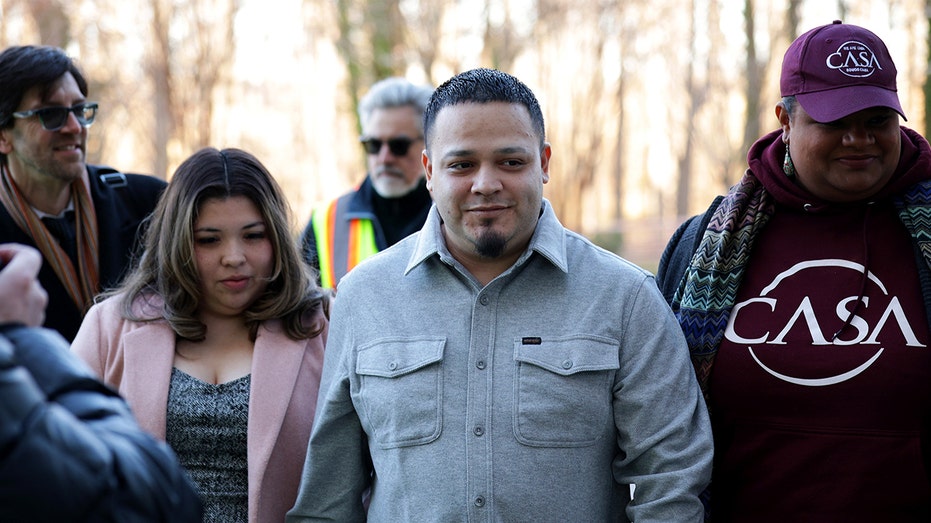
A federal judge has delivered a significant blow to attempts to re-arrest Kilmar Abrego Garcia, a Salvadoran migrant caught in a complex legal battle. Just days before a crucial court date in Nashville, Judge Paula Xinis blocked the government from returning him to immigration custody, a decision rooted in concerns over a pattern of questionable actions.
The judge didn’t simply maintain a temporary hold; she transformed a previous emergency order into a longer-term injunction. Her reasoning was stark: the administration offered no credible evidence of genuine plans to deport Abrego Garcia to a third country, instead resorting to what she described as “empty threats” aimed at nations in Africa where successful removal was highly improbable.
This ruling directly impacts a separate, critical hearing scheduled for next week. Abrego Garcia will now be able to fully participate in a defense arguing that the criminal charges against him are the result of “vindictive” and selective prosecution – a claim that has already gained traction with another federal judge.
Judge Xinis’s order meticulously details the government’s repeated failures to secure Abrego Garcia’s removal. Over months, officials pursued removal to Liberia, Eswatini, Uganda, and even Ghana, all without obtaining the necessary legal authorization. The judge emphasized the government had “done nothing” to demonstrate his continued detention aligns with due process.
The case began to unravel in March when Abrego Garcia was initially deported to El Salvador, a direct violation of a 2019 court order. Officials later admitted this was an “administrative error,” prompting an immediate order for his return to the U.S. He was subsequently re-detained in Nashville on human smuggling charges stemming from a 2022 traffic stop.
Adding another layer of complexity, the Justice Department revealed it initiated the criminal investigation and presented it to a grand jury *concurrently* with Abrego Garcia’s detention in El Salvador – while simultaneously arguing to the court that the U.S. had no power to compel his return. This timing has fueled accusations of improper motives.
The upcoming hearing before Judge Waverly Crenshaw will center on the motion to dismiss the criminal case. Crenshaw previously acknowledged a “reasonable likelihood” that the charges were brought in retaliation for prior legal challenges, demanding internal documents and testimony from government officials to investigate the decision-making process.
The administration has signaled its intent to fight the judge’s rulings, with officials expressing strong disagreement and accusing the court of overstepping its authority. Despite these objections, Abrego Garcia remains free under strict release conditions, and his fight for justice continues in Nashville.