Queen Elizabeth II’s affection for Prince Andrew was well-known, a bond that marked him as a favourite son. Yet, that closeness would become a source of immense turmoil for the monarchy, overshadowed by a deepening scandal that ultimately led to his downfall.
His association with Jeffrey Epstein, the convicted sex offender, proved catastrophic. What began as a friendship spiralled into a crisis, transforming Andrew from a celebrated royal figure into a pariah within his own family and a stain on the House of Windsor.
Born Prince Andrew Albert Christian Edward in 1960, he once stood second in line to the throne, a position of privilege that seemed destined for greatness. Before Prince William’s birth, the weight of future kingship rested, in part, on his young shoulders.
He briefly experienced life outside the royal sphere as an exchange student at Lakefield College School in Canada, a fleeting glimpse into a world beyond palace walls. However, the path expected of him lay elsewhere – a life of service and duty.
Andrew embraced a military career, entering the Britannia Royal Naval College at age nineteen. He distinguished himself as a pilot, bravely serving during the Falklands War, flying daring helicopter missions in the South Atlantic. This service initially earned him favour and a prominent role within the royal household.
His mother recognized his dedication, appointing him her personal assistant in 1994. Two years later, he was bestowed with the prestigious titles of Duke of York, Earl of Inverness, and Baron Killyleagh, elevating his public profile and solidifying his position.
Marriage to Sarah Ferguson in 1986 further amplified his visibility, and together they welcomed daughters Beatrice and Eugenie. For a time, it appeared Andrew had achieved a perfect balance of duty and family life.
But the façade began to crumble in 1992, as the royal family endured a tumultuous year of scandal, famously dubbed “annus horribilis” by Queen Elizabeth. The separation of Andrew and Sarah was just the beginning of a series of damaging revelations.
Though divorced in 1996, Andrew and Sarah maintained a close friendship, a complex dynamic that played out under intense public scrutiny. He continued to serve in the navy for another five years, eventually transitioning to a role as a Special Representative for International Trade and Investment.
This new position, however, would become another source of controversy. The resurfacing of his ties to Jeffrey Epstein in 2011 forced his resignation, raising serious questions about his judgment and associations. Reports also surfaced of questionable meetings with figures from authoritarian regimes.
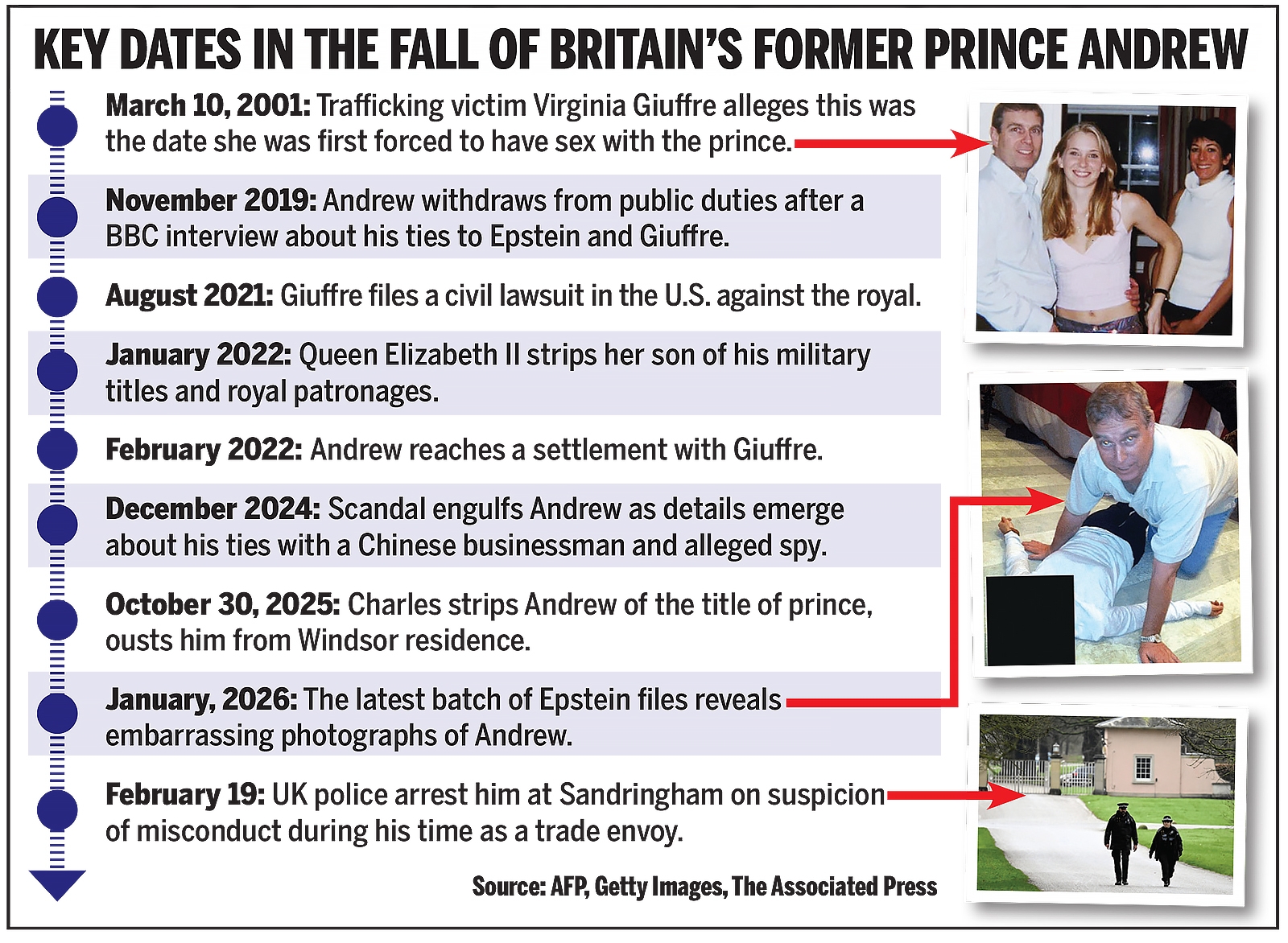
The accusations escalated dramatically in 2015 when Virginia Giuffre alleged sexual assault at the hands of the former prince when she was a minor. These claims, initially dismissed, would relentlessly pursue him for years to come.
A disastrous BBC interview in 2019 proved to be a turning point. Andrew’s attempts to defend himself and downplay his friendship with Epstein only served to fuel the firestorm of criticism. His responses were widely condemned as tone-deaf and unconvincing.
Giuffre filed a civil lawsuit in 2021, forcing Andrew into a legal battle that threatened to irrevocably damage the monarchy. Facing mounting pressure and a judge’s refusal to dismiss the case, he ultimately settled with Giuffre for a substantial sum.
The death of Queen Elizabeth in September 2022 marked a new chapter, but not one of redemption. Years of scandal had taken their toll, leading to his withdrawal from public royal duties in October 2025.
King Charles swiftly acted to distance the monarchy from the ongoing controversy, stripping Andrew of his title and requesting he vacate Royal Lodge. He was relegated to a more secluded life on the Sandringham estate.
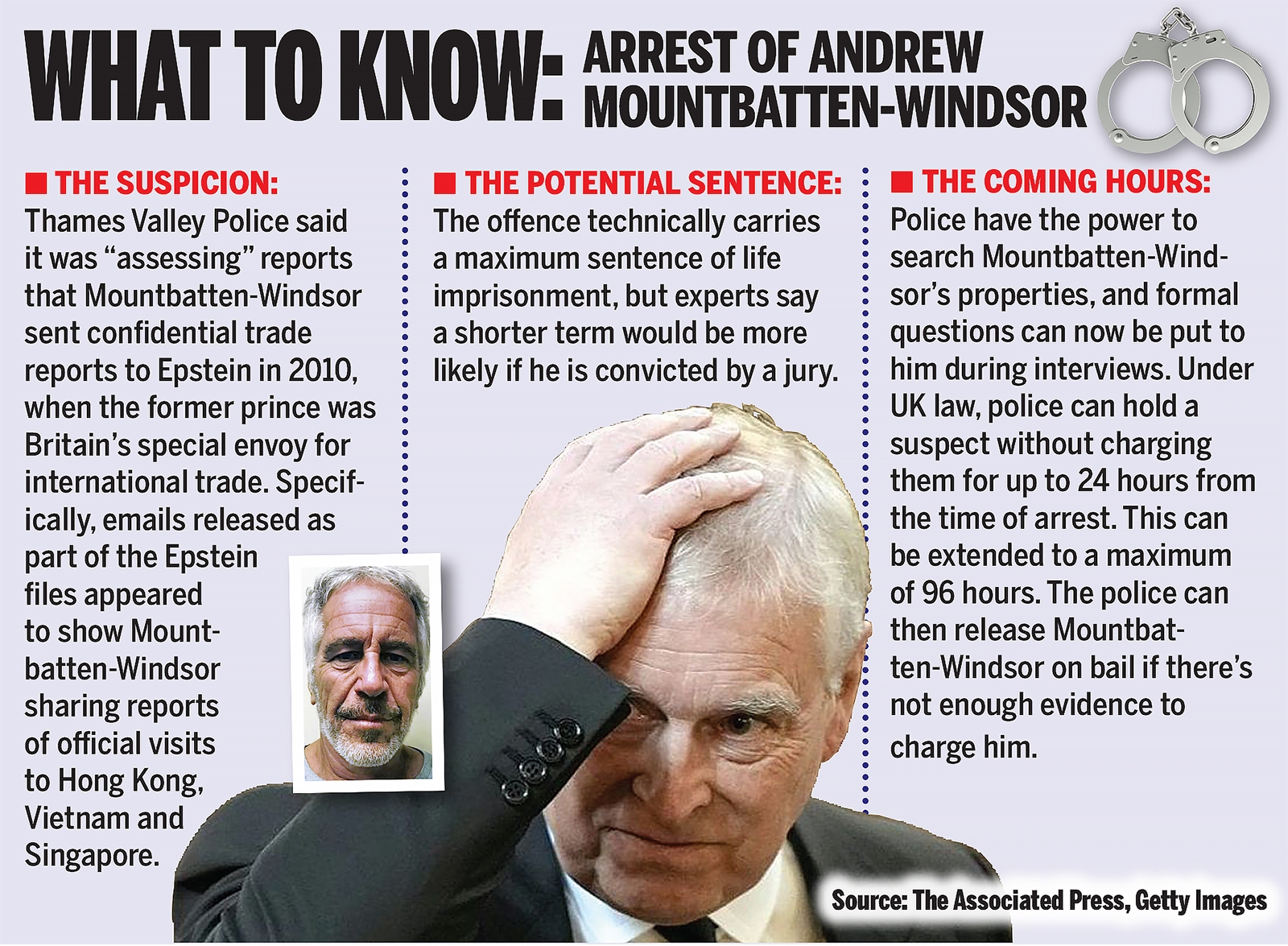
The release of further Epstein files by the U.S. Department of Justice accelerated this process, prompting an immediate relocation. Then, on his 66th birthday, history was made – Andrew became the first senior royal in modern times to be detained by police.
The arrest, stemming from an investigation into potential misconduct during his time as a trade representative, represents a stunning fall from grace. It is a moment that will forever be etched in the annals of the British monarchy, a stark reminder of the consequences of association and the enduring power of accountability.