A Texas courtroom witnessed a moment decades in the making: four men, wrongly accused, were formally declared innocent in the horrific 1991 Austin yogurt shop murders. The ruling brought a close to a legal odyssey that nearly resulted in an execution and unjustly branded innocent men as killers for a quarter of a century.
Judge Dayna Blazey, addressing a packed courtroom, delivered the long-awaited verdict. “You are innocent,” she stated, emphasizing it wasn’t simply a legal maneuver, but “an obligation to the rule of law and the obligation to the dignity of the individual.” The atmosphere was thick with emotion, a culmination of years of anguish and unwavering hope.
The declaration follows a stunning breakthrough by cold case detectives who linked the brutal killings to Robert Eugene Brashers, a serial offender who died during a 1999 police standoff. Two of the exonerated men, Michael Scott and Forrest Welborn, were present, their families offering silent support as prosecutors acknowledged the grave error made years ago.
Robert Springsteen, who spent years on death row, was not in court. Maurice Pierce, who also suffered years of wrongful imprisonment, tragically died in 2010 following a confrontation with police. The weight of the past hung heavy as Travis County officials admitted a devastating mistake. “Over 25 years ago, the state prosecuted four innocent men… We could not have been more wrong,” stated a county prosecutor.
The official finding of “actual innocence” opens a path toward restitution for the men and their families, a small measure of recompense for the years stolen and the enduring stain on their reputations. Phil Scott, Michael Scott’s father, spoke with raw emotion: “My son’s name has finally been cleared… Son, be proud.”
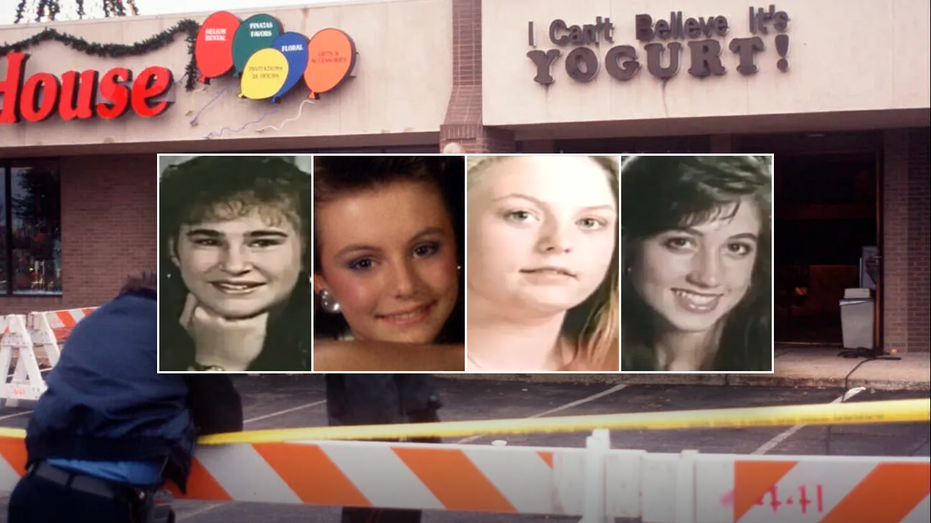
The original crime scene was a nightmare. Firefighters responding to a blaze at the I Can’t Believe It’s Yogurt shop on December 6, 1991, discovered the bodies of four young girls – Eliza Thomas, 17, and sisters Jennifer, 17, and Sarah Harbison, 15, along with Sarah’s friend Amy Ayers, 13. Each had been shot in the head.
Investigators believed the girls were bound, possibly sexually assaulted, and the fire deliberately set to conceal evidence. A relentless investigation followed, chasing countless leads and yielding several false confessions. In 1999, the four men were arrested, all teenagers at the time, and their lives irrevocably altered.
Springsteen and Scott were convicted based on confessions they consistently maintained were coerced. Those convictions were later overturned. Welborn was arrested but never indicted by a grand jury. Pierce spent three years in prison before charges were dropped. Despite the crumbling case, the shadow of suspicion lingered for years.
Advances in DNA technology in 2009 finally pointed away from the four men, identifying another suspect. Yet, the case remained cold until renewed scrutiny in 2025 brought it back into the spotlight. The possibility that Springsteen could have been executed loomed large in the minds of those fighting for justice.
Last September, the Austin Police Department announced a breakthrough. New DNA testing and ballistics evidence definitively linked Brashers to the murders. DNA found under Amy Ayers’ fingernails proved the crucial connection, finally revealing the true perpetrator.
Brashers, already linked to other violent crimes across multiple states, died by suicide during a standoff with police in 1999. Investigators discovered he was driving a stolen truck when apprehended near El Paso, carrying a handgun that matched the weapon used in the yogurt shop killings.
The years of uncertainty took a devastating toll. Scott spoke of losing his marriage, his youth, and the chance to build a family. Welborn’s attorney described a life marked by lost friendships and homelessness. Pierce’s daughter, Marisa, directed her grief towards the investigators who continued to pursue her father even after his release, a pursuit she believes contributed to his death.
“Daddy, you have your name back,” Marisa Pierce declared, a poignant testament to the enduring power of truth. The case serves as a stark reminder of the fragility of justice and the profound consequences of wrongful conviction, finally offering a measure of peace to families haunted by tragedy for over three decades.