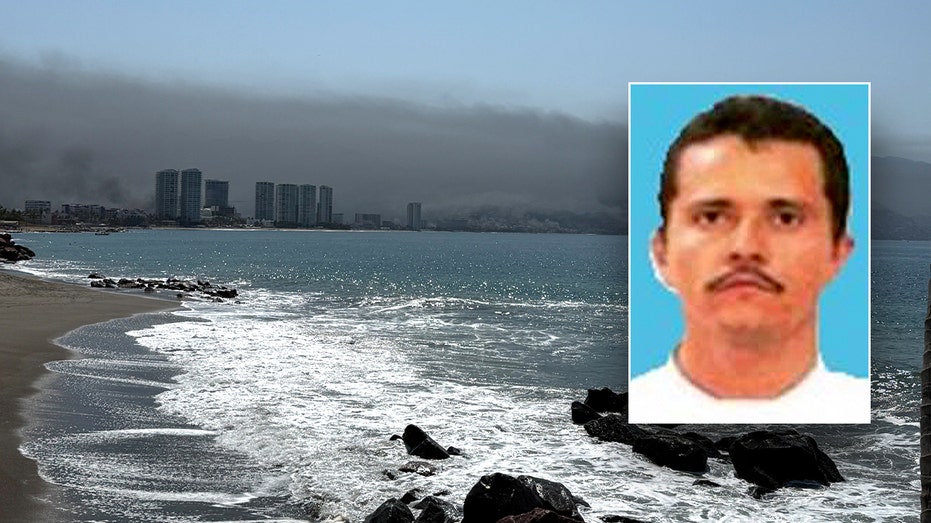
The man known as “El Mencho,” recently at the center of a massive manhunt, wasn’t born a kingpin. His story began decades earlier, not in the mountains of Mexico, but on the streets of San Francisco, a young man already walking a dangerous path.
At just 19 years old, Nemesio Rubén Oseguera Cervantes first encountered the American justice system. Arrested in 1986 for attempting to sell crystal methamphetamine, he was swiftly deported, a seemingly minor setback in a life rapidly spiraling into criminality.
But deportation proved no deterrent. Three years later, Oseguera was back in the United States, again facing arrest. This led to a second expulsion, a pattern emerging that hinted at a relentless determination to operate beyond the reach of the law.
The cycle continued in 1992, this time with his brother involved. Both were arrested for heroin sales to undercover officers, resulting in federal prison time. Upon release, another deportation followed, seemingly failing to contain his ambition.
Oseguera’s trajectory took an unexpected turn with a brief period as a Mexican State Police officer. This experience, however, proved a stepping stone, not a reformation, as he soon gravitated towards the Milenio Cartel, quickly ascending its ranks.
By 2009, Oseguera had grown powerful enough to break away, forging his own organization: the Cartel Jalisco Nueva Generación, or CJNG. This marked the true birth of “El Mencho” as a dominant force in the Mexican drug trade.
For years, he commanded CJNG, building a reputation for brutal efficiency and audacious displays of power. A $15 million bounty was placed on his head, solidifying his status as one of the world’s most wanted criminals.
Recent operations by Mexican forces, aided by U.S. intelligence, finally brought his reign to an end. The culmination of years of pursuit, this operation highlights the growing collaboration between the two nations in the fight against fentanyl trafficking.
Those who tracked him described Oseguera as “public enemy No. 1,” a leader commanding an “army of thousands.” His cartel wasn’t shy about demonstrating its strength, even resorting to attacks on Mexican security forces with military-grade weaponry.
The CJNG became notorious for its brazen tactics, including a 2015 assault in Jalisco where cartel members downed a military helicopter with rocket-propelled grenades. This act of defiance underscored the cartel’s willingness to challenge the authority of the state.
Beyond violence, CJNG skillfully employed social media and public displays of force to cultivate an image of invincibility, solidifying its position as one of Mexico’s most feared and powerful criminal organizations.
The story of “El Mencho” is a chilling illustration of how a life of crime, beginning with small offenses, can escalate into a legacy of violence and power, leaving a lasting impact on both sides of the border.