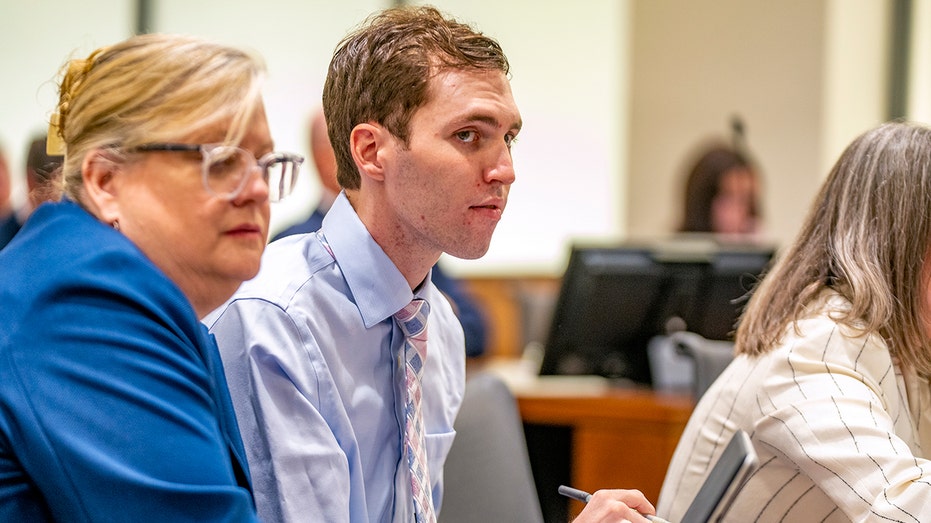
The courtroom held its breath as the judge delivered his ruling, a decision that will directly impact the fate of Tyler Robinson, accused in the shocking assassination of Charlie Kirk last September. Judge Graf firmly denied the defense’s motion to disqualify the county prosecutors, a move that keeps the current team firmly in control of the high-profile case.
Robinson’s defense centered on a potentially crippling conflict of interest: the child of one of the prosecuting attorneys was present at Utah Valley University on the day Kirk was killed. They argued this created an undeniable bias, a shadow hanging over the pursuit of justice. The defense team believed this proximity compromised the impartiality of the entire prosecution.
However, Judge Graf wasn’t swayed. He stated the defense failed to demonstrate a factual basis for a conflict, or even the *appearance* of impropriety, that rose to a constitutional level. This wasn’t a simple disagreement; it was a fundamental challenge to the integrity of the prosecution, and the judge found it lacking.
Previous hearings had already begun to unravel the complexities of the case. Defense attorney Richard Novak aggressively questioned Utah County Attorney Jeff Gray, pressing for details on the surprisingly swift decision to pursue the death penalty – a declaration made almost immediately after Robinson’s arrest.
Testimony from a senior prosecutor, known only as “Prosecutor A,” revealed the internal deliberations within the office. While no specific recollection of a conversation regarding the child’s presence could be recalled, it was acknowledged that Gray routinely consulted senior colleagues on capital punishment cases.
The prosecution maintained a resolute stance: even *if* a conflict existed regarding the prosecutor whose child witnessed the event, it wouldn’t invalidate the entire team’s involvement. They argued that the sheer number of witnesses – thousands, in fact – diluted any potential impact, and the child didn’t even have a clear view of the shooter.
Investigators reinforced this claim. A lead investigator with the Utah State Bureau of Investigation testified that over forty eyewitness statements failed to identify the shooter, adding another layer of uncertainty to the already fraught situation. The details, or lack thereof, painted a confusing picture of the event.
Significantly, Judge Graf stated he was accepting the defense’s claims as true *for the purpose of this motion*. This means he wasn’t necessarily ruling on the facts themselves, but on whether, *assuming* the defense’s version of events was accurate, a conflict of interest still existed. His answer was a definitive no.
The case now moves forward with the original prosecution team intact, setting the stage for what promises to be a deeply scrutinized and emotionally charged trial. The question of fairness, and the shadow of potential bias, will undoubtedly linger throughout the proceedings.