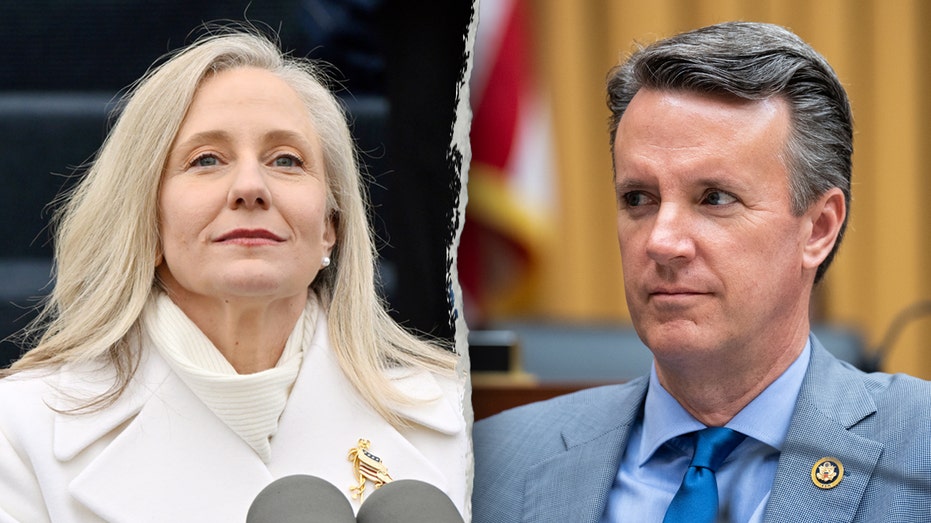
A quiet shift in Virginia politics has ignited a fierce debate, revealing a calculated strategy behind Governor Abigail Spanberger’s rise within the Democratic Party. A high-ranking Republican alleges her newfound prominence, culminating in being chosen to deliver the response to the State of the Union address, is directly tied to her support for a controversial redrawing of the state’s congressional districts.
The proposed map, championed by Virginia Senate Leader L. Louise Lucas and House Speaker Don Scott, dramatically alters the political landscape. It threatens to dismantle the current 6-5 Republican-to-Democrat congressional balance, potentially leaving only one southwestern Virginia district safely in Republican hands. A constitutional amendment to enact these changes is heading for a vote in April.
Representative Ben Cline, whose district is squarely in the crosshairs of this redistricting plan, argues Spanberger’s current stance is a stark departure from her previous public condemnations of partisan gerrymandering. He believes her support is a calculated move to gain favor with national Democratic leaders, including figures like Barack Obama and Hakeem Jeffries.
Cline paints a picture of a governor willing to compromise principles for political advancement. He recalls a time when Spanberger, as a congresswoman, actively championed Virginia’s agricultural interests. Now, he claims, her support for the new map effectively dismantles the most agriculture-based district in the state, dividing it amongst Northern Virginia’s Democratic strongholds.
The impact on local farmers is particularly concerning, Cline asserts. The new districts would strip them of a unified voice in Washington, forcing them to navigate a fragmented political landscape and lobby representatives from vastly different areas. He views this as a betrayal of the communities she once pledged to represent.
Beyond the map itself, concerns are mounting over the language used to present the amendment to voters. Opponents, including Delegate Wren Williams, argue the phrase “restore fairness” is deliberately misleading, masking the plan’s inherently partisan nature and potential to solidify Democratic control.
The redistricting effort is just one facet of a broader wave of change sweeping through Virginia, according to Cline. He points to Spanberger’s decision to withdraw from a cooperative agreement with state police and ICE, a move he characterizes as turning Virginia into a “sanctuary state” for individuals who may have committed crimes.
Under the proposed map, Cline’s current district would be fractured into five separate districts, a deliberate reshaping designed to dilute Republican representation. The new districts themselves are described as geographically convoluted, drawing comparisons to districts previously deemed unconstitutional for their irregular shapes.
The situation has sparked outrage among Cline’s constituents, who feel Spanberger has abandoned the promises made during her campaign. Many believe her shift in policy will be met with resistance at the polls on April 21st, as voters decide whether to approve the controversial redistricting amendment.
The unfolding drama in Virginia underscores a fundamental question about political ambition and the compromises leaders are willing to make to achieve it. It’s a story of shifting allegiances, broken promises, and a battle for control of the state’s political future.