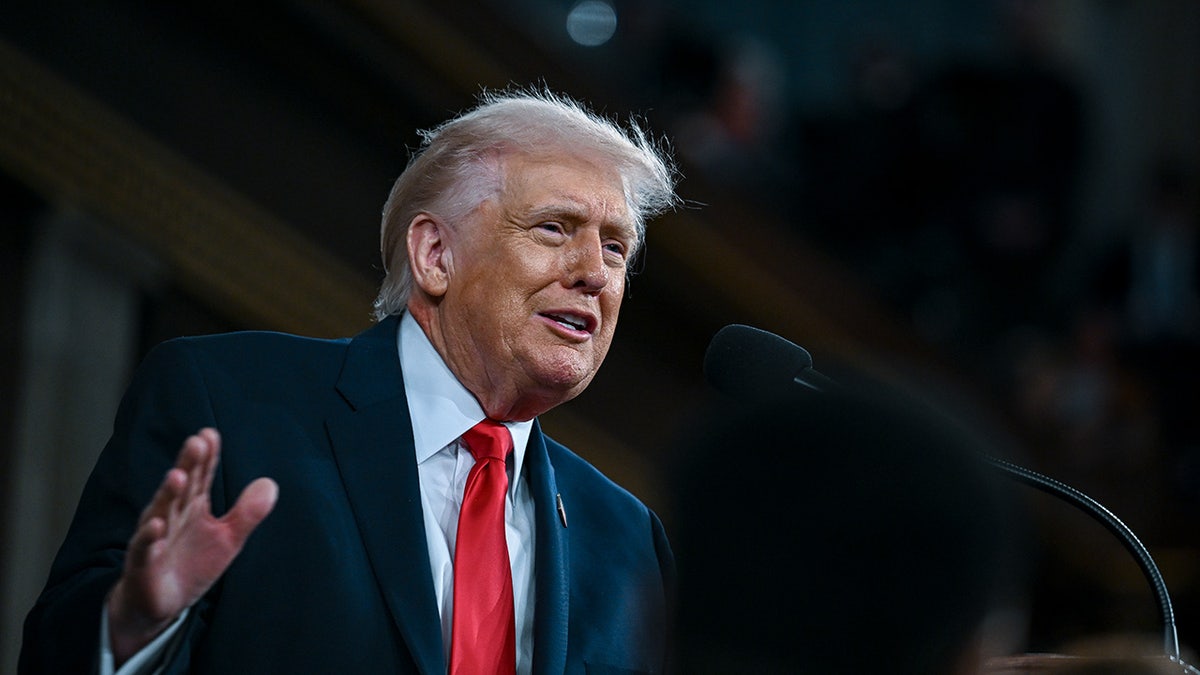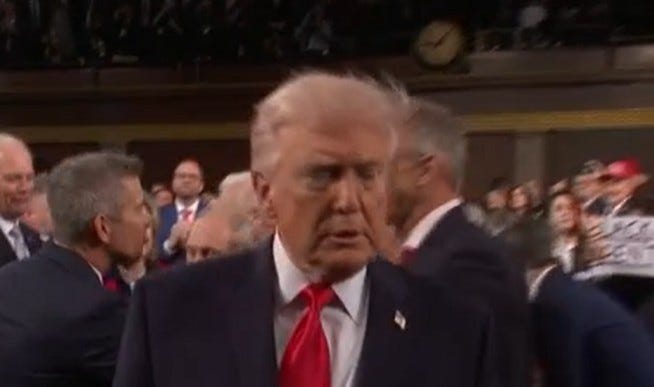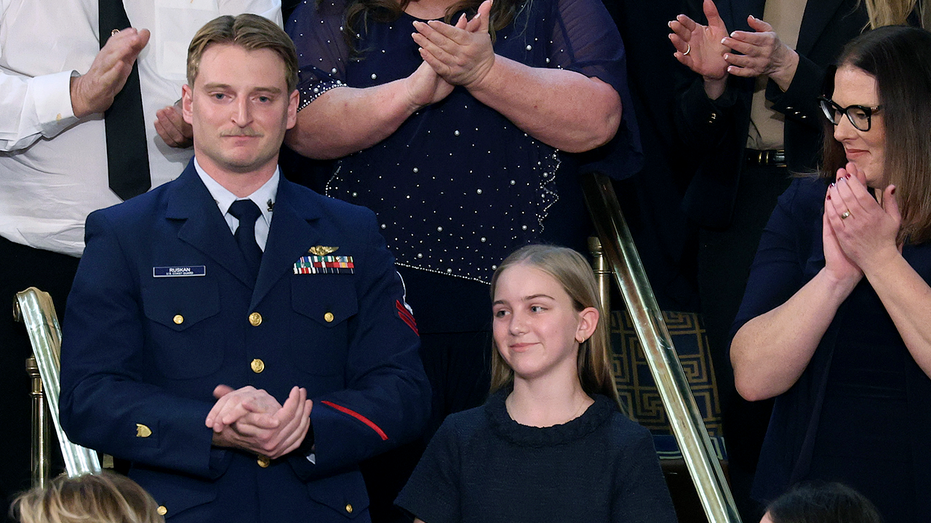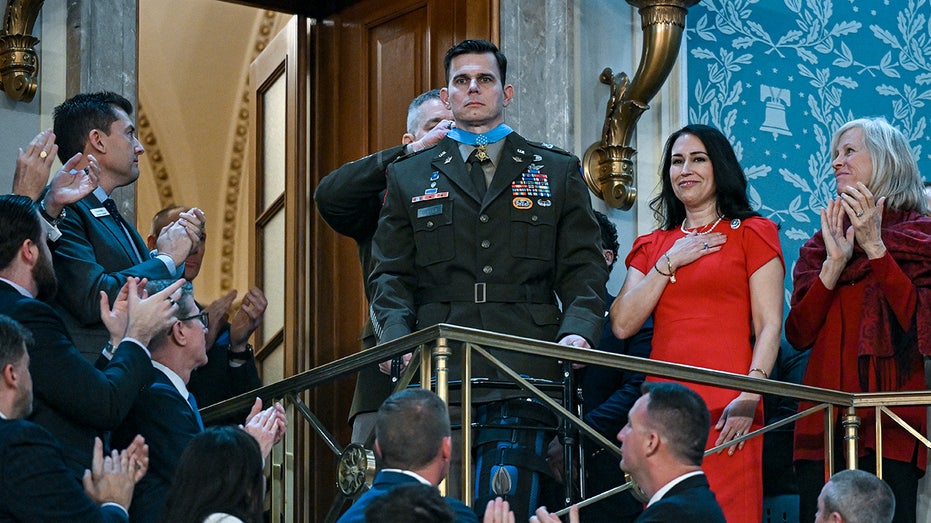
The hall fell silent as President Trump turned his attention to valor, not of policy, but of pure, unwavering courage. He chose the State of the Union address to honor two men whose stories redefined bravery, bringing the weight of their sacrifices into the heart of the nation’s capital.
Chief Warrant Officer Eric Slover’s story began with a clandestine mission – a high-stakes raid targeting Venezuelan leader Nicolás Maduro. Piloting a Chinook helicopter under the cloak of darkness, Slover carried a team of U.S. forces directly into a fortress of enemy defenses. The air crackled with anticipation, and then, with gunfire.
A hail of machine gun fire erupted, tearing into the aircraft from multiple positions. Slover, despite the immediate and brutal assault, maintained control. Four agonizing shots ripped through the helicopter, shredding his leg, yet he fought to keep the mission alive, knowing the lives of his team depended on his resolve.
The president described a scene of desperate struggle, blood pouring down the aisle as Slover battled to keep the Chinook airborne. His ability to persevere, to ignore the searing pain and focus on the task at hand, was the single point of failure or success for the entire operation. It was a testament to a warrior’s spirit.
Slover, still visibly recovering from his devastating wounds, sat alongside his wife, Amy, as the nation’s highest military honor was bestowed upon him. The applause was a wave of gratitude, a collective acknowledgment of the price he paid for his unwavering dedication.
The ceremony then shifted to a different era, a different conflict, but the same extraordinary heroism. Captain E. Royce Williams, a centenarian Korean War veteran, received the Medal of Honor for a battle long shrouded in secrecy.
In 1952, flying a single F9F Panther jet off the USS Oriskany, Williams faced an impossible challenge: four Soviet MiG-15 fighters. Outnumbered and flying an aircraft considered inferior, he engaged the enemy in a 35-minute aerial dogfight over the Sea of Japan.
Against all odds, Williams shot down all four MiG-15s, a feat of aerial combat skill and sheer determination. The U.S. government, fearing escalation with the Soviet Union – which hadn’t officially entered the war – kept the encounter classified for decades.
Only after declassification did the full scope of Williams’ valor become known, leading to the long-overdue recognition with the Medal of Honor. His story is a reminder that some acts of courage remain hidden for years, waiting for their moment to be revealed.
The back-to-back presentations weren’t merely ceremonies; they were a powerful statement. They underscored a deep respect for military service and the sacrifices made by those who defend the nation, resonating deeply within the chamber and beyond.