The halls of Congress held a quiet tension following the President’s address, a silence not born of agreement, but of careful calculation. Legal minds and political commentators didn’t immediately dissect the speech itself, instead focusing on the shifting legal landscape and the power dynamics it revealed.
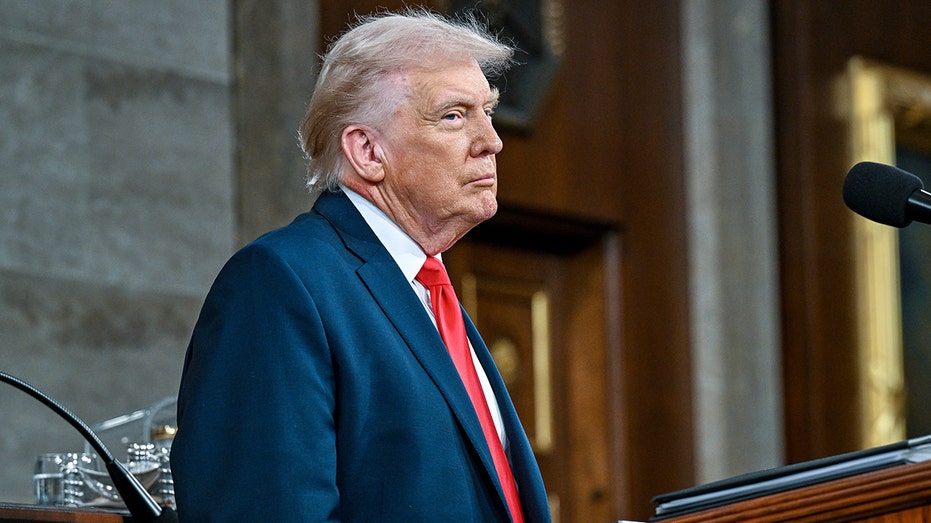
A central point of contention stemmed from the Supreme Court’s recent decision invalidating the President’s use of a decades-old emergency law to impose tariffs. The President, in a surprisingly measured tone, labeled the ruling “unfortunate,” swiftly pivoting to emphasize newly announced import fees under a different statute – Section 122 of the U.S. Trade Act of 1974.
He asserted that nations previously exploiting the U.S. were now contributing “hundreds of billions of dollars” thanks to these tariffs, framing them as vital for the nation’s economic survival. The President suggested these countries would comply, fearing even harsher measures if they didn’t, a veiled threat hanging in the air.
The courtroom drama played out visibly within the chamber itself. Four of the nine justices present – including Chief Justice Roberts and Justice Barrett, both of whom had ruled against the President’s initial tariff approach – listened intently. The atmosphere was thick with unspoken legal implications.
This shift to Section 122, however, isn’t without its own legal challenges. Experts are questioning whether the statute truly applies to the current economic situation, pointing out the U.S. doesn’t currently face the “fundamental international payments problems” required for its invocation.
One economist noted the U.S. easily finances its trade deficits, rendering the justification for these tariffs questionable. Others highlighted that even the President’s own legal team previously argued Section 122 wasn’t a substitute for the invalidated emergency law.
Opposition leaders have already signaled a firm stance against extending the tariffs beyond the initial 150-day period. They argue these tariffs are directly responsible for rising costs of essential goods, impacting American families already struggling with economic pressures.
Beyond trade, the President highlighted a significant decrease in violent crime, claiming the U.S. murder rate reached a 125-year low in the previous year. Data cited suggests a record-breaking drop in homicides across major cities, a claim his administration is eager to amplify.
While reactions to the speech remain divided, even some across the political spectrum acknowledged the President’s unwavering belief in American exceptionalism. One strategist noted the President consistently projects an image of strength – protecting cities, bolstering the economy, and confronting threats both foreign and domestic.
The State of the Union wasn’t simply a recitation of policy; it was a carefully constructed narrative, a demonstration of power, and a clear signal of battles yet to come. The legal and political ramifications of the President’s words will undoubtedly unfold in the weeks and months ahead.