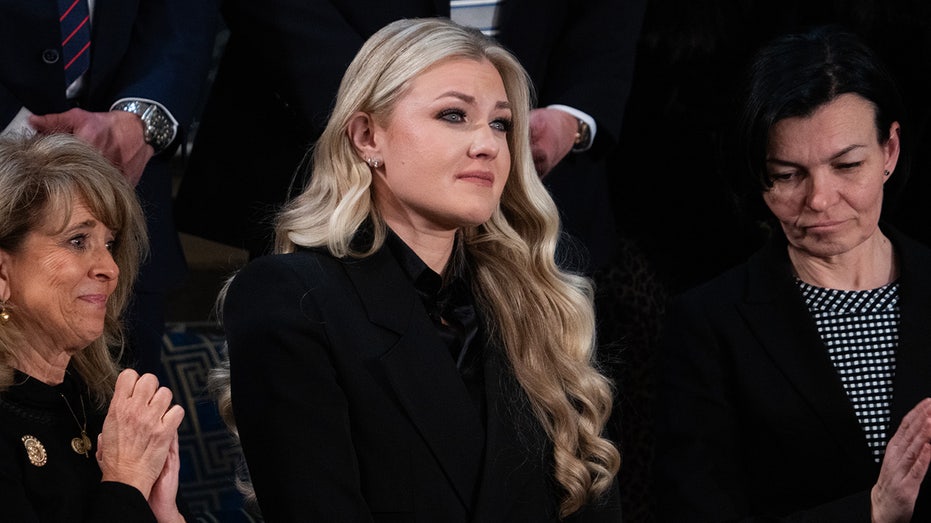
A century of life culminated in a moment of profound recognition. Last night, during the State of the Union Address, 100-year-old Captain Elmer Royce Williams received the Medal of Honor, the nation’s highest military distinction. First Lady Melania Trump carefully placed the medal around his neck, a gesture met with a humble smile from a man who repeatedly answered his country’s call.
The Pentagon continued the honors today, formally inducting Captain Williams into the Hall of Heroes. Secretary of War Pete Hegseth, Secretary of the Navy John Phelan, and Chief of Naval Operations Adm. Daryl Caudle presided over the ceremony, a testament to a lifetime of unwavering service and extraordinary courage.
The Medal of Honor recognizes actions taken on November 18, 1952, during the Korean War. Flying an F9F-5 Panther from the USS Oriskany, Captain Williams and his squadron encountered a squadron of enemy MiG-15 fighters. The ensuing aerial battle would etch his name into the annals of naval aviation.

Facing the initial attack, Williams skillfully maneuvered his aircraft, then relentlessly pursued the enemy. He scored direct hits on a MiG-15, sending it spiraling into the sea. A second MiG-15, heavily damaged by his fire, was forced to withdraw from the fight, smoking and crippled.
Despite taking a direct hit that severely damaged his own aircraft, Williams refused to yield. He expertly evaded further attacks while continuing to direct the dogfight, demonstrating remarkable composure under fire. Finding refuge in a cloud bank, he managed a miraculous landing back on the Oriskany in his nearly uncontrollable jet.
His exceptional airmanship and selfless bravery resulted in the destruction of three enemy aircraft and significant damage to a fourth. Beyond the aerial victories, his actions undoubtedly saved the lives of countless sailors within Task Force 77, securing his place as a true hero.

Born in Wilmot, South Dakota, Williams’ dedication to service began early. He enlisted in the U.S. Army at just 16 years old, completing basic training before finishing high school. His ambition led him to the Naval Aviation Cadet program, where he began flight training in 1943.
Williams mastered a variety of aircraft, including the F9F-5 Panther, and served with distinction throughout the Korean and Vietnam Wars. He flew 70 missions during the Korean conflict and over 110 more in the A-4 Skyhawk and F-4 Phantom from the USS Kitty Hawk during the Vietnam War.
His career continued to ascend, culminating in a command role aboard the USS El Dorado from 1969 to 1971. Captain Elmer Royce Williams ultimately retired from the Navy in 1980, leaving behind a legacy of courage, skill, and unwavering devotion to duty – a legacy now fully and deservedly honored.