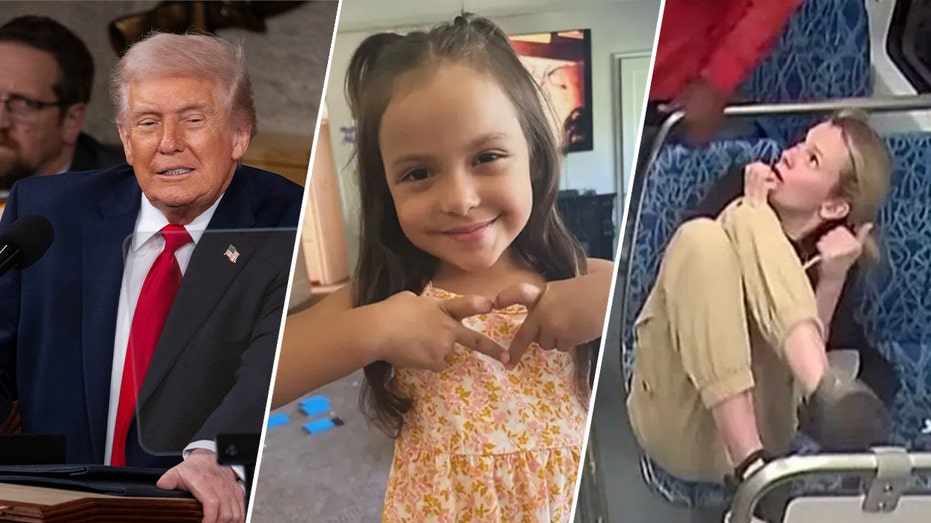
The chamber fell silent as President Trump began to speak of loss, not in abstract terms, but through the faces of those present. He didn’t offer statistics or policy points, but instead, introduced Americans to Iryna Zarutska, a young woman who sought refuge from war only to find a terrifying end.
Iryna, just 23, had escaped the brutal conflict in Ukraine, hoping for a peaceful life with family in North Carolina. That hope was shattered on a Charlotte light rail, brutally extinguished by a repeat offender released without bail. The image, Trump recounted, of Iryna’s terror-stricken face in her final moments, would forever be etched in the memories of those on that train.
Her mother, Anna Zarutska, sat in the gallery, a testament to unimaginable grief. The President pledged, directly to her, a solemn promise: justice for Iryna, a vow delivered with unwavering conviction.
The weight of loss continued as Trump turned to the story of Charlie Kirk, a man whose life was cut short by violence. He spoke of Erika Kirk, Charlie’s wife, who stood as a symbol of enduring love and unwavering belief. Her husband, he stated, was “martyred for his beliefs.”
Sixteen-year-old Lizbeth Medina’s bright future was stolen in a horrific act of violence. Found in her bathtub, stabbed twenty-five times, her life was brutally ended by an individual in the country illegally. Her mother, Jacqueline, was present, a stark reminder of the devastating consequences of open borders.
The President described the scene of unimaginable heartbreak, a mother discovering her daughter’s lifeless body on what should have been a joyous occasion – the town’s Christmas parade. Lizbeth never made it to the parade, her light extinguished by a preventable tragedy.
Five-year-old Dalilah Coleman’s story was one of resilience against impossible odds. Struck by an 18-wheeler driven by an undocumented immigrant, doctors predicted she would never walk, talk, or eat again. Yet, against all expectations, Dalilah, accompanied by her father, now attends first grade, a beacon of hope and determination.
Trump paused, acknowledging Dalilah and her father, calling her an inspiration. Her presence was a powerful rebuke to those who would dismiss the human cost of unchecked immigration.
The address then turned to the courage of those who defend the nation, specifically, National Guard specialists Sarah Beckstrom and Andrew Wolfe. Both were ambushed and shot in Washington, D.C., while on patrol, victims of a senseless act of violence.
Sarah Beckstrom, a 20-year-old who had volunteered to extend her deployment, was fatally shot in the head by an individual from Afghanistan. Trump described the attacker as a “terrorist monster” who targeted her simply for wearing the uniform of the United States.
Her parents, Gary and Emily Beckstrom, were present, their grief a palpable presence in the room. The President spoke of Sarah as a “true American patriot,” a young woman whose life was a testament to service and sacrifice.
Staff Sergeant Andrew Wolfe, also shot in the head, defied expectations and is recovering. The President highlighted the sheer improbability of their survival, both men facing seemingly insurmountable odds. Their story was a testament to the strength of the human spirit and the dedication of medical professionals.
Each story, individually heartbreaking, collectively painted a stark picture of loss and the urgent need for justice. The President’s address wasn’t a political speech; it was a lament for lives cut short, a promise to those left behind, and a call for a safer nation.