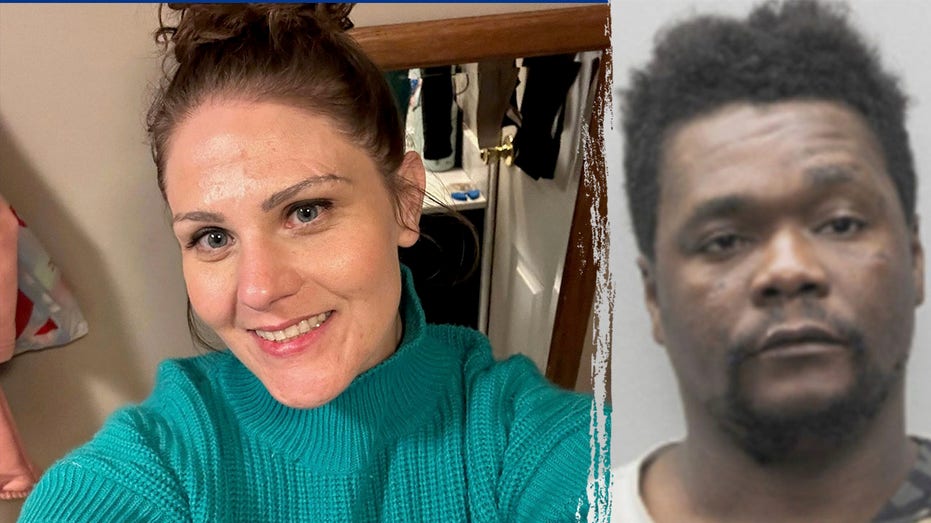
The Monday night stillness of a Fairfax County bus stop shattered with a brutal act of violence, claiming the life of Stephanie Minter, a 41-year-old woman from Fredericksburg. Officers arriving at Richmond Highway and Arlington Drive found Minter suffering from devastating stab wounds, and despite their efforts, she was pronounced dead at the scene.
Within 24 hours, Abdul Jalloh, 32, was in custody, initially arrested for shoplifting at a local liquor store – an employee’s quick 911 call setting in motion a chain of events that would reveal a far darker truth. Surveillance footage quickly connected Jalloh to Minter, both seen disembarking from the same bus moments before the attack.
Investigators are now grappling with the agonizing question of motive, searching for answers to what sparked such a horrific act. The details remain elusive, shrouded in a chilling mystery that has left the community reeling.
But Jalloh’s arrest wasn’t a surprise to the system. A deep dive into court records revealed a disturbing pattern: over a dozen prior arrests in northern Virginia, a litany of offenses ranging from petty larceny to malicious wounding. Yet, time and again, charges were dropped, allowing him to return to the streets.
Fairfax County officials acknowledge they were acutely aware of the risk Jalloh presented. They successfully convicted him in 2023 for malicious wounding and consistently sought to keep him detained with each subsequent encounter with law enforcement. However, the legal system’s constraints proved frustratingly limiting.
A particularly troubling aspect of Jalloh’s history is his apparent targeting of vulnerable individuals – those without a fixed address. In numerous cases, prosecutors were unable to proceed due to the inability to locate or contact victims, a heartbreaking obstacle to justice.
Stephanie Minter is remembered not as a statistic, but as a vibrant spirit, a “happy, jolly” person who brought light to those around her. Her obituary paints a portrait of a woman who radiated positivity, a “beam of light in dark places” now tragically extinguished.
The case has ignited a fierce debate about the revolving door of the criminal justice system and the challenges of balancing public safety with individual rights. It’s a conversation born of grief and a desperate search for ways to prevent such tragedies from happening again.