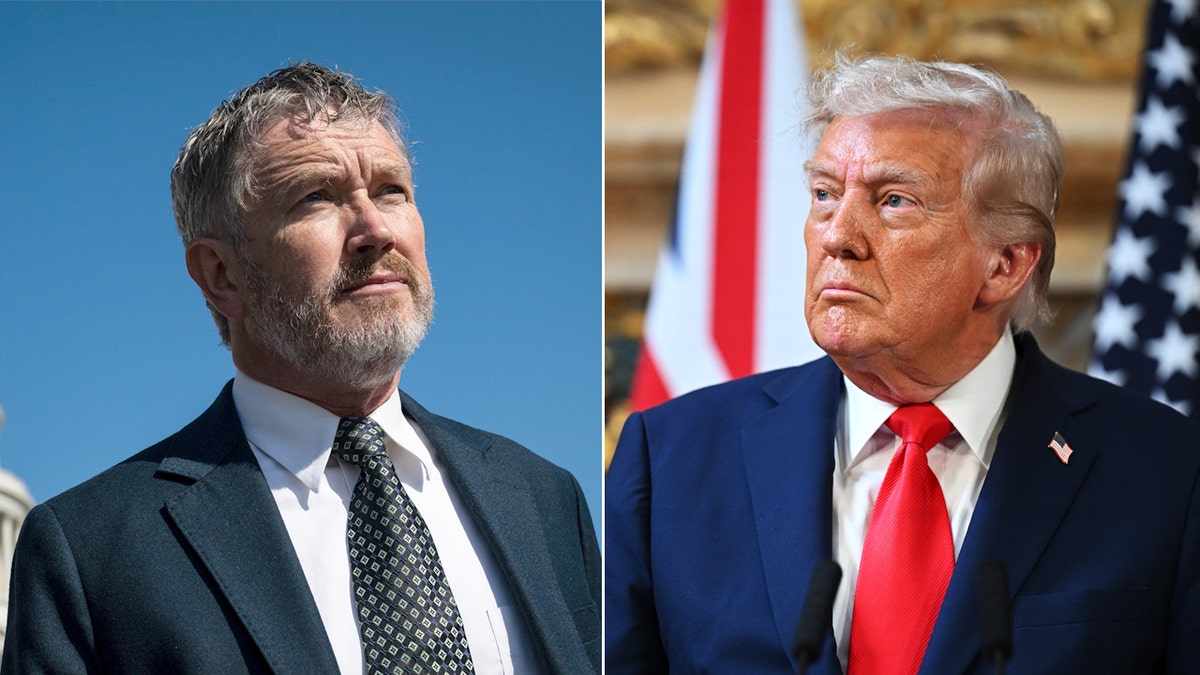
A shadow of conflict has fallen over the Middle East, as the United States, under former President Trump, initiated strikes against Iranian military targets. This action, dubbed Operation Epic Fury, unfolded without the traditional check of congressional approval, immediately igniting a fierce debate over presidential power and the path to war.
The constitutional question is stark: does the President have the authority to commit acts of war without a declaration from Congress? Representative Thomas Massie, a long-time Republican voice of dissent, joined a bipartisan group known as the “Gang of Eight” in opposing the strikes, publicly rebuking what he termed “acts of war unauthorized by Congress.” He insisted this was not “America First,” a core tenet of Trump’s political philosophy.
The situation is further complicated by a history of animosity. Trump himself has repeatedly referenced Iran’s past targeting of him, recalling threats made in retaliation for the killing of Qasem Soleimani in 2020. He framed the current operation as a shift in roles: “I was the hunted, now I am the hunter.”
While the administration maintains the strikes targeted military sites and ballistic missile capabilities posing an “imminent threat,” and deliberately avoided targeting Iranian leadership, Israel is reportedly pursuing a different course. This raises concerns about a widening conflict and the potential for unintended consequences.
The “Gang of Eight” – key congressional leaders from both parties – were reportedly briefed by Secretary of State Marco Rubio prior to the operation, a practice that was notably absent during a previous, sensitive operation to extract a Venezuelan leader. Concerns about leaks and the safety of personnel were cited then, fueling distrust and highlighting the delicate balance between secrecy and accountability.
Critics within Congress, like Representative Jim Himes, warn of a “war of choice” with no clear endgame, echoing fears that military action in the region often spirals out of control. Senator Mark Warner voiced similar concerns, questioning whether the administration has learned from past mistakes and demanding clarity on the operation’s objectives and strategy.
The debate isn’t solely about authority; it’s about strategy and risk. Some, like Senator Roger Wicker, applaud the “decisive action” against a dangerous regime, emphasizing the need to prevent Iran from acquiring nuclear weapons. Others, like Senator Tim Kaine, decry the strikes as a “colossal mistake,” fearing a repeat of past failures and a costly escalation of conflict.
The call for congressional action is growing louder. Resolutions are being prepared to reassert Congress’s constitutional authority over war powers, demanding a clear justification and a defined end state for the operation. The stakes are immense, and the future of U.S. involvement in the region hangs in the balance.
The core question remains: can the United States navigate this volatile situation without being drawn into another protracted and costly war? The answer, it seems, will depend on a delicate interplay of military strategy, diplomatic maneuvering, and a renewed commitment to constitutional principles.