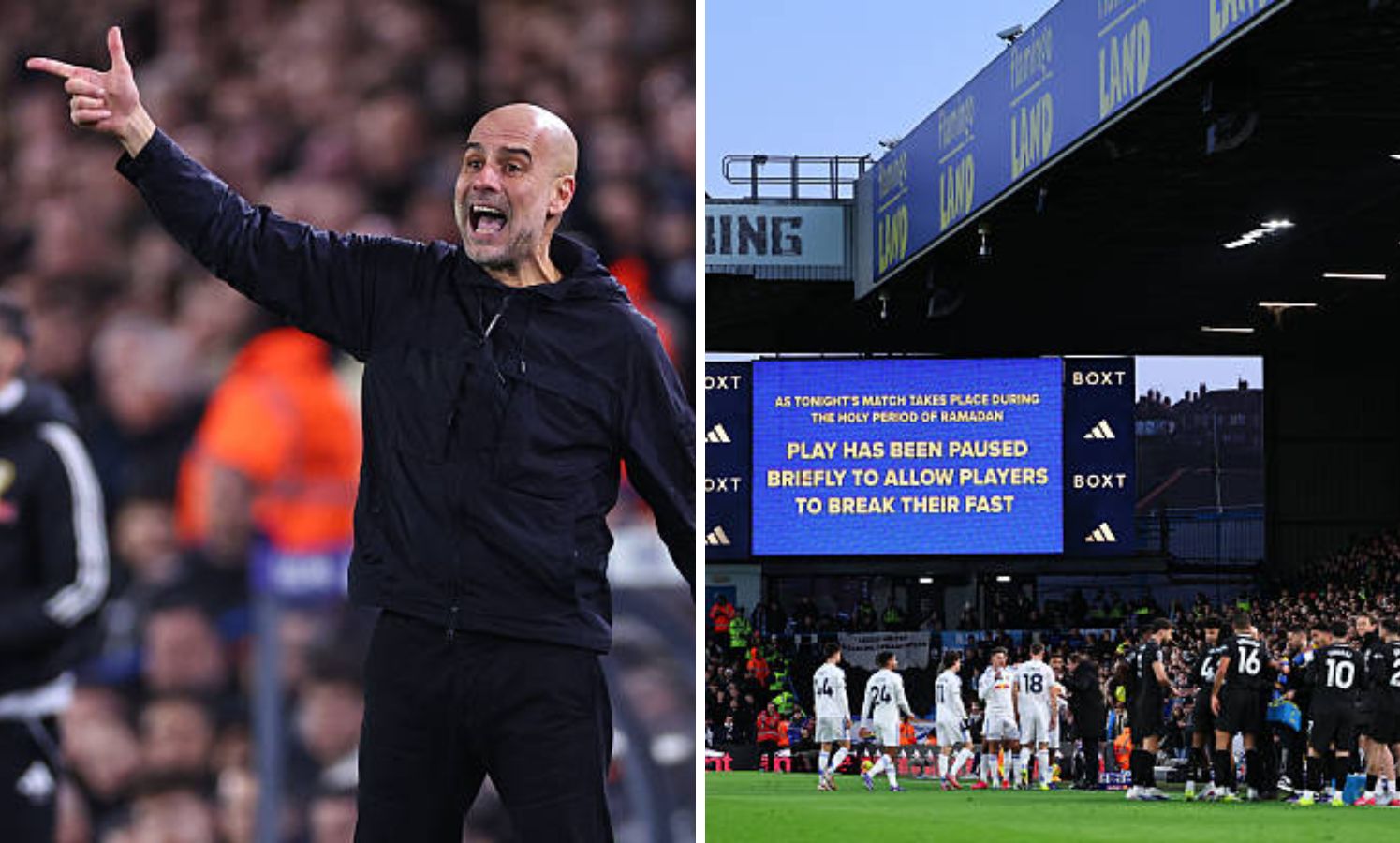
A wave of disapproval echoed through Elland Road during Saturday’s Premier League match between Leeds United and Manchester City. As the sun set, referee Peter Bankes signaled a pause in play – a moment intended for quiet observance, but met with a chorus of boos.
The interruption allowed three Manchester City players – Rayan Cherki, Rayan Ait-Nouri, and Omar Marmoush – to briefly break their fast, observing the Islamic tradition of Ramadan. They quickly took sustenance on the touchline, a practice now formally recognized within the league’s regulations.
However, a section of the Leeds United crowd responded with jeers and offensive chants, a jarring display of negativity that prompted a message on the stadium screens reminding fans of the reason for the pause. The incident immediately sparked widespread condemnation.

Manchester City manager Pep Guardiola addressed the reaction with a firm call for respect. He emphasized the importance of acknowledging religions and celebrating diversity in a world increasingly marked by conflict and division.
Guardiola acknowledged the rule allowing for the brief break, stating it wasn’t a decision made by his team but by the Premier League itself. He expressed regret that such a provision would be met with hostility, stating simply, “It is what it is, unfortunately.”
Leeds United’s assistant manager, Edmund Riemer, admitted he hadn’t fully registered the booing during the heat of the game, but expressed disappointment that it occurred at all. The focus, he stated, remained on the match itself.

The organization Kick It Out released a statement expressing “massive disappointment” at the fans’ behavior, particularly given the clear explanation provided on the stadium screens. They highlighted the protocol’s importance in fostering inclusivity for Muslim players and communities.
The incident serves as a stark reminder that despite progress, significant work remains in educating fans and promoting acceptance within football. It underscores the ongoing challenge of creating a truly welcoming environment for all, regardless of faith or background.
The established protocol for pausing play during Ramadan has existed for several years, aiming to accommodate the religious obligations of Muslim athletes. This latest event reveals a troubling undercurrent of intolerance that threatens to undermine those efforts.