A wave of explosions shattered the fragile peace of the Middle East on Sunday, escalating a conflict that had already reached a boiling point. The attacks followed a joint U.S.-Israeli operation that resulted in the death of Iran’s Supreme Leader, Ayatollah Ali Khamenei, and several other high-ranking officials, triggering a furious response from Tehran.
Iran unleashed a barrage of missiles and drones targeting Israel and numerous U.S. military installations across the region. The assault was a direct retaliation for the loss of its supreme leader, a figurehead of hardline ideology, and signaled a dangerous escalation in hostilities.
The most devastating strike occurred in Beit Shemesh, Israel, a town just west of Jerusalem. A missile impacted a building where civilians were seeking shelter, claiming the lives of eight people and injuring over twenty others. Israeli officials confirmed that while many incoming projectiles were intercepted, this direct hit resulted in tragic loss of life.
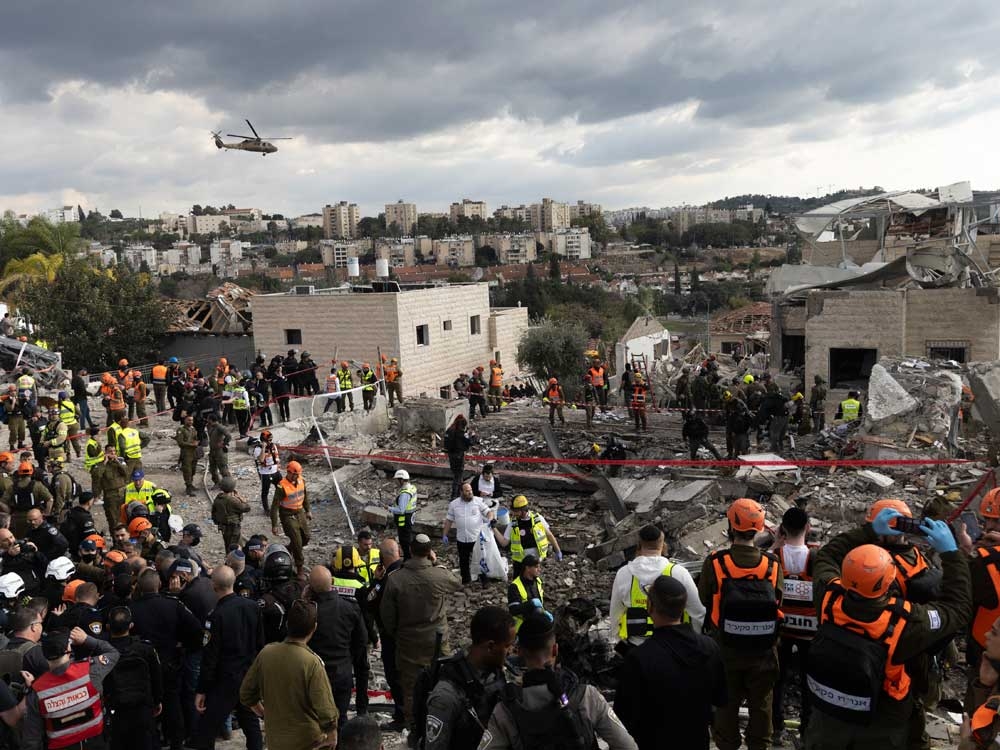
The Israel Defence Forces publicly accused Iran of deliberately targeting civilians in Beit Shemesh, emphasizing the intentionality behind the attack. Authorities reported a total of at least ten fatalities and more than 120 injuries across Israel as a result of the repeated Iranian barrages.
Simultaneously, Iran’s Islamic Revolutionary Guard Corps launched attacks against U.S. bases in Bahrain, Iraq, Jordan, Kuwait, Oman, Qatar, Saudi Arabia, and the United Arab Emirates. These coordinated strikes demonstrated the breadth of Iran’s reach and its determination to respond forcefully.
Iranian state media claimed that the USS Abraham Lincoln, a U.S. aircraft carrier positioned near Iranian shores, was targeted with four ballistic missiles. However, U.S. Central Command swiftly refuted these claims, stating the missiles fell far short of their intended target and posed no threat to the warship.
Despite the missed target, the attacks resulted in casualties elsewhere. One person was killed in Abu Dhabi, the capital of the United Arab Emirates, and another in Kuwait. Dozens more were injured in strikes throughout the region, painting a grim picture of widespread disruption and violence.
The U.S. military also suffered losses during “Operation Epic Fury,” the operation that led to the death of Ayatollah Khamenei. Three American service members were killed and five others seriously wounded, with additional personnel sustaining minor injuries.
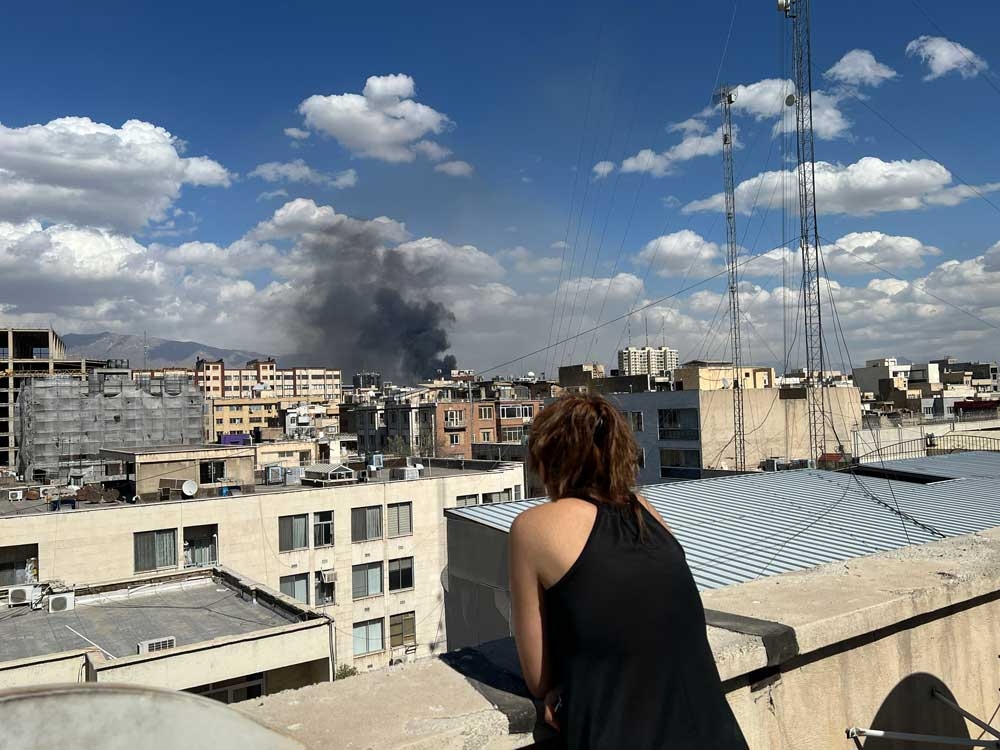
In Tehran, the streets emptied as residents sought refuge from intense airstrikes. Witnesses described massive plumes of smoke rising from an area containing government buildings, indicating significant damage and ongoing conflict within the Iranian capital. Iranian authorities reported over 200 deaths since the beginning of the U.S. and Israeli strikes.
Following the death of the Supreme Leader, a new leadership council has begun its work in Iran, according to President Masoud Pezeshkian. Foreign Minister Abbas Araghchi announced that a new supreme leader would be selected within the next one to two days, signaling a transition of power amidst the chaos.
The escalating conflict has had a significant impact on civilian air travel. Thousands of flights across the Middle East have been cancelled as countries closed their airspace, disrupting travel plans for countless individuals. Over 2,400 flights were cancelled by Sunday morning, including routes operated by major airlines like Air Canada.