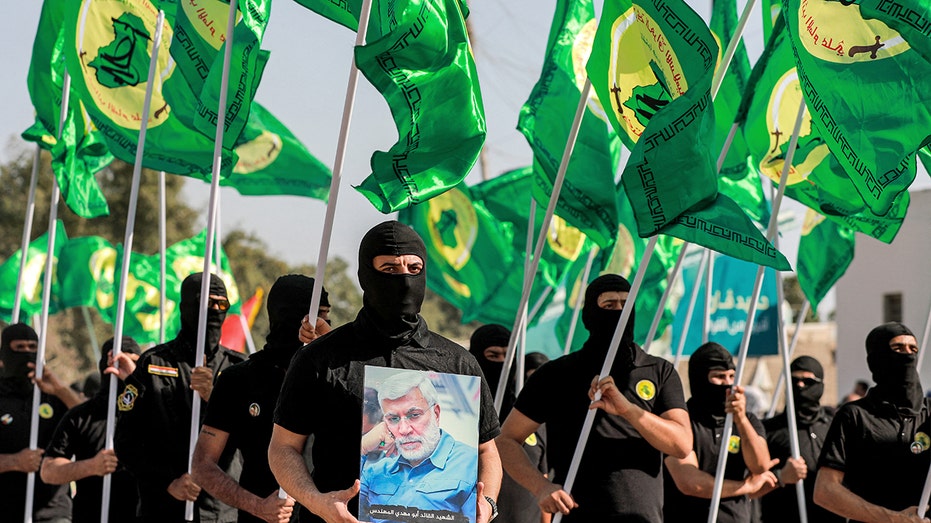
A shadow war is escalating across the Middle East, with Iraq increasingly becoming a launchpad for attacks against Israel. Since the outbreak of the recent conflict, multiple unmanned aerial vehicles have been dispatched from Iraqi territory, targeting Israel with the intent of disrupting and dismantling Iran’s nuclear and terrorist infrastructure.
Israeli defense forces report a remarkably high success rate in intercepting these Iranian drones before they reach their targets. However, the origin of these attacks points to a disturbing trend: the growing influence of Iran-backed militias operating within Iraq, specifically the Popular Mobilization Forces (PMF), an umbrella organization of Shiite groups.
One Iraqi Kurdish official paints a stark picture, stating that Iraq has effectively become a tool for Iranian ambitions. He sees no separation between the PMF and the Iraqi state itself, highlighting how these groups are funded by the government, integrated into official positions, and now actively participating in regional conflict.
The consequences of this escalating tension are already being felt on the ground. A recent drone strike narrowly missed a community center serving 1,000 Catholic children in Iraqi Kurdistan, forcing the closure of schools and universities. The Chaldean Archbishop of Erbil pleaded for prayers, describing the attack as a near miracle that no one was injured.
Experts believe Kata'ib Hezbollah, a prominent PMF faction, was likely responsible for the attack on the Catholic school, though other affiliated militias could also be involved. These groups operate with a disturbing level of coordination, seamlessly launching drones to achieve their objectives.
The attacks aren’t limited to religious or civilian targets. An oil field operated by a U.S. energy firm in Iraqi Kurdistan was also struck, igniting a fire and halting production. This expansion of targets – from U.S. military bases to vital energy interests – signals a dangerous escalation in the conflict.
The financial lifeline supporting these militias is a key component of the problem. A former Iraqi official claims the PMF receives over $3 billion annually from the Iraqi government, with the total budget potentially exceeding $10 billion when all expenses are considered – the equivalent of a small nation’s entire economy.
The solution, according to this official, lies with the United States. He argues that sanctions against the Iraqi government and a suspension of oil revenue transfers are necessary to cut off the funding that fuels these attacks. Every rocket and drone launched against regional stability, he asserts, is effectively paid for by Baghdad.
When pressed for comment, Iranian officials remained silent, declining to address the allegations of their involvement. Meanwhile, the Iraqi Prime Minister publicly states his government will not allow Iraq to be drawn into war, a claim that rings hollow given the mounting evidence of state-sponsored militia activity.
Despite past promises to disarm these groups, Iraq’s government has consistently sent mixed signals, even acknowledging the PMF as a crucial force in defending the country. This ambiguity allows the militias to operate with impunity, further destabilizing the region and threatening international interests.
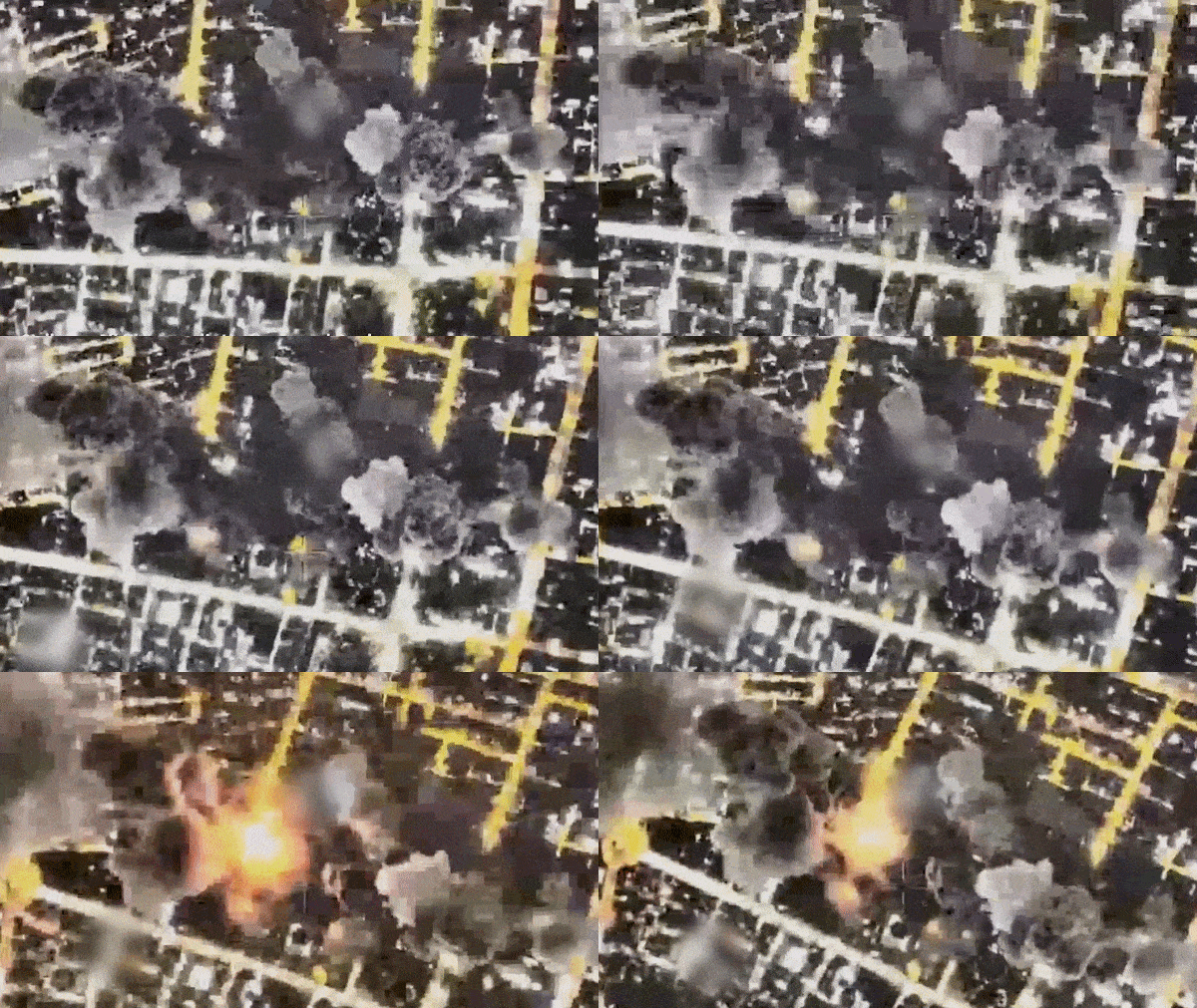
Recent military actions targeting a senior Kataeb Hezbollah officer south of Baghdad have only intensified the situation. The PMF has vowed retaliation, threatening to strike the interests of European nations that have supported strikes against Iran and its proxies, signaling a widening of the conflict’s scope.