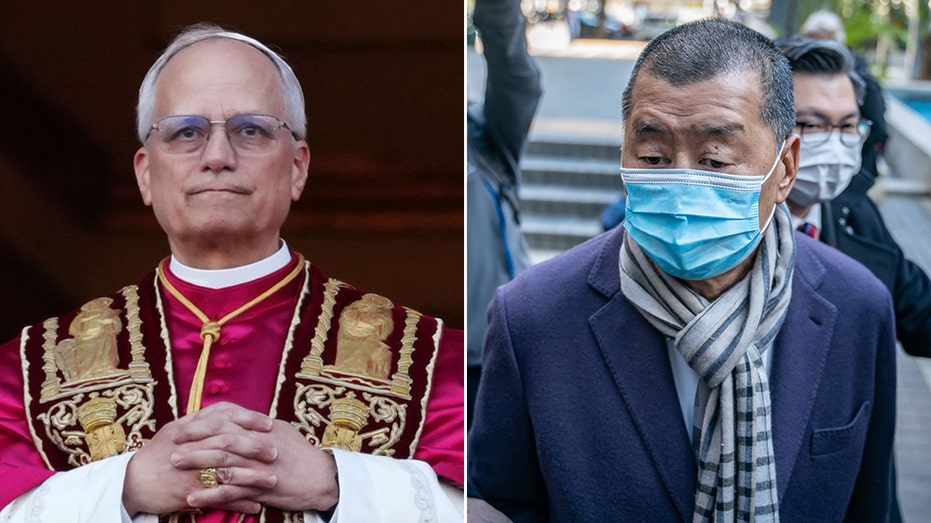
A silence descended from the Vatican this week as Pope Leo XIV declined to directly address the twenty-year sentence handed down to Jimmy Lai, a prominent democracy activist in Hong Kong. Speaking to reporters in Italy, the American-born pontiff offered a simple, yet poignant response: “I can’t comment.” His words hung in the air, a stark contrast to the gravity of the situation unfolding thousands of miles away.
Lai, a devout Catholic and the founder of the now-defunct Apple Daily newspaper, received the harsh sentence last month under Beijing’s sweeping 2020 national security law. The law, implemented after months of pro-democracy protests, effectively criminalized dissent and dramatically altered Hong Kong’s legal landscape. His conviction marks a pivotal moment, signaling a willingness by Beijing to suppress voices advocating for fundamental freedoms.
The protests of 2019, ignited by fears of eroding autonomy, shook Hong Kong and drew international attention. They were a powerful expression of a city grappling with its future under increasing Chinese influence. Lai became a central figure, his newspaper a platform for pro-democracy voices, and his subsequent arrests and detention a chilling demonstration of the new reality.
Founded in 1995, while Hong Kong was still under British rule, Apple Daily quickly became a cornerstone of independent journalism in the region. Its closure, following a raid in 2020, represented a significant blow to press freedom and a clear warning to others. The silencing of this once-vibrant publication underscored the tightening grip on Hong Kong’s liberties.
The international community has reacted with condemnation. U.S. Secretary of State Marco Rubio labeled the conviction “unjust and tragic,” emphasizing Beijing’s extreme measures to stifle dissent. He urged authorities to grant Lai humanitarian parole, highlighting the activist’s age and vulnerability.
Even former President Donald Trump publicly appealed to Chinese President Xi Jinping for Lai’s release, acknowledging the activist’s declining health. He described Lai as “not well” and expressed hope for a favorable outcome, a rare direct plea from a world leader.
Pope Leo XIV, while choosing not to comment directly on the sentence, offered a prayerful sentiment: “Let’s pray for less hatred and more peace and work for authentic dialogue.” It was a call for compassion and understanding, a plea for a resolution rooted in respect and reconciliation, even amidst a deeply complex and troubling situation.