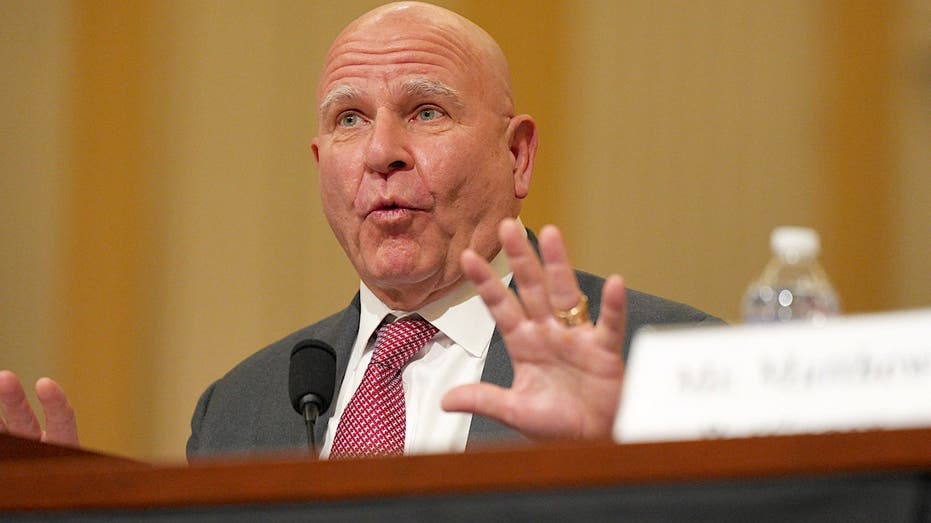
The U.S. counterintelligence capabilities have fallen far behind threats from China and Russia, a former White House national security advisor warned during a House Intelligence Committee hearing.
Former national security advisor H.R. McMaster accused Washington of being "extraordinarily negligent" during the decades after the Sept. 11 attacks, saying the country's intense focus on counterterrorism had diverted attention from hostile nation-states.
McMaster pointed to Russian President Vladimir Putin's effort to restore Russia's global power and China's entry into the World Trade Organization, which helped fuel Beijing's economic rise and allowed China to expand its military, intelligence services, and influence operations.
The committee heard testimony that Russia and China are taking advantage of America's guard being down, using U.S. companies and private equity firms to "do all the battlefield artificial intelligence" for the People's Liberation Army (PLA) in China, according to McMaster.
The United States has been "infiltrated" by PLA scientists and others who are there to extract intellectual property and technical expertise, according to McMaster, who warned that the U.S. is being "racing to catch up" and has a lot of work to do.
Additional witnesses echoed McMaster's warning, arguing that institutions created after 9/11 remain too focused on terrorism to confront espionage, influence campaigns, and cyber operations conducted by hostile governments.
National security expert Seth G. Jones said that organizations, including the National Counterterrorism Center, joint terrorism task forces, and state fusion centers, helped improve information sharing after 9/11, but are not sufficiently equipped to identify and disrupt state-backed operations inside the United States.
Many state and local entities do not even know what to look for when it comes to identifying these operations, Jones said, adding that the U.S. is not prepared for this intelligence challenge inside its own borders.
Frank Cilluffo, director of the McCrary Institute for Cyber and Critical Infrastructure Security at Auburn University, testified that the government must move beyond merely sharing information and begin coordinating operations with private industry and state and local authorities.
The modern counterintelligence threat is no longer limited to traditional "spy versus spy" activity, Cilluffo said, with foreign intelligence services increasingly targeting technology companies, infrastructure operators, and other private organizations that possess valuable data and emerging capabilities.
The hearing was part of a bipartisan review of the 9/11 Commission's recommendations and whether the intelligence community is prepared for newer threats, including artificial intelligence, cyberattacks, foreign influence operations, drones, and economic coercion.