IoT technology is transforming the way fleet operators manage their vehicles, and a recent announcement from Telit Cinterion highlights the growing importance of high-bandwidth video connectivity in the industry.
The company's NExT IoT eSIM solutions are being used by FleetSafe.ai in an AI video telematics deployment for the 2026 British Truck Racing Championship. This deployment equips trucks with FleetSafe.ai's AI-powered in-cab and external cameras, supporting live video streaming, driver behavior monitoring, fatigue monitoring, and analytics.
The motorsport setting may seem unusual, but it creates an environment that is particularly demanding for a connected video system. The high-speed movement of assets, continuous video data, and varying network conditions make it an ideal test case for the capabilities of Telit Cinterion's NExT solution.
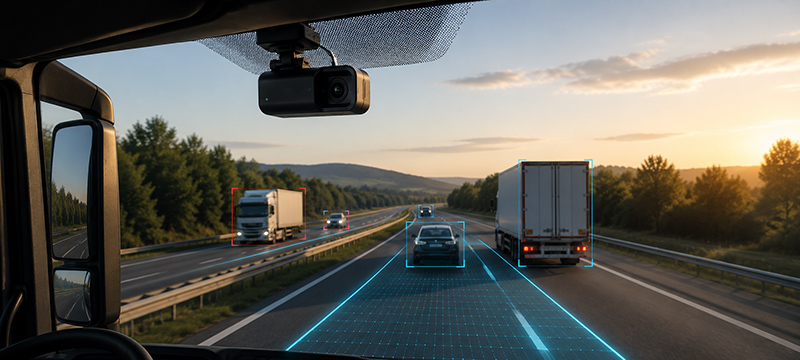
What sets this announcement apart from typical telematics connectivity announcements is the focus on the managed eSIM and connectivity control layer for high-bandwidth video workloads. Telit Cinterion's NExT IoT eSIM supports multiprofile technology, which maintains coverage and data flow by switching between operator profiles based on location, predefined rules, and cost.
The use of multiprofile technology is crucial in video telematics, where data usage becomes an operational variable that must be monitored. A camera system that streams continuously or unexpectedly changes consumption patterns can affect cost, performance, and support processes, making session diagnostics and anomaly alerts essential.
The implications of this announcement are significant for IoT providers and fleet technology buyers. For OEMs and device makers building camera-based fleet systems, the need to treat connectivity management as part of product design is clear. Video telematics devices are not comparable to low-power trackers where connectivity failures may be resolved after the fact.
Connectivity providers may see this deployment as an example of how eSIM management is moving closer to application performance, while offering policy control, profile selection, and operational visibility at the device level. For system integrators and fleet technology vendors, the benefit is potentially simpler commercial and technical administration.
Enterprises evaluating AI video telematics should also note the trade-off implicit in this type of architecture. High-bandwidth safety applications can provide richer visibility into driver behavior and incidents, but they put more pressure on cellular reliability, data policy design, and usage monitoring than traditional telematics. The FleetSafe.ai deployment shows how vendors are addressing that pressure through managed eSIM orchestration.


