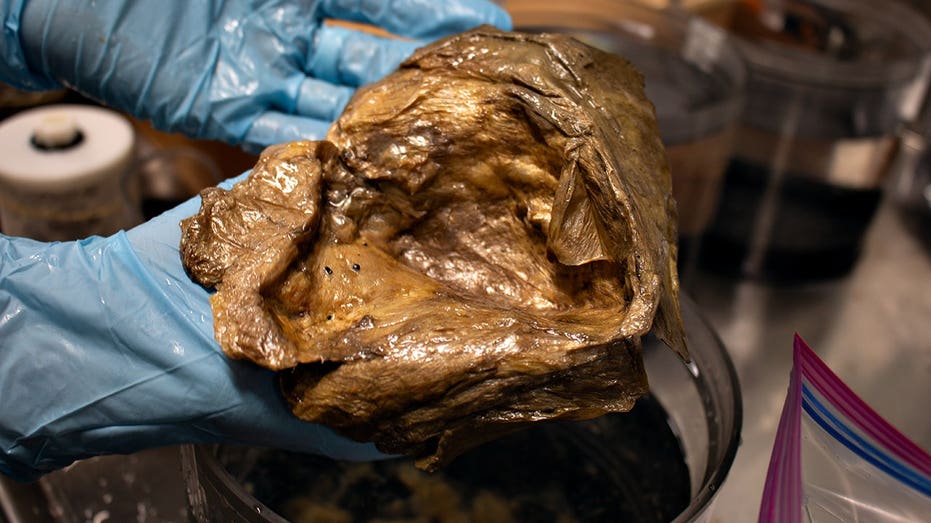
The mysterious golden orb retrieved from over 2 miles beneath the Gulf of Alaska has finally been identified after a yearslong scientific investigation.
Researchers with NOAA used a remotely operated vehicle to explore approximately 3,250 meters deep, where they encountered a strange, mound-shaped mass with a small opening attached to a rock.
The unusual find sparked widespread speculation, with scientists initially unsure what they were looking at, wondering if it could be an egg case, a dead sponge, or something that had crawled in or out of it.
However, closer analysis revealed the object to be made of fibrous layers packed with stinging cells, pointing to a connection with cnidarians, the group that includes corals and anemones.
A team of experts from various fields, including morphological, genetic, deep-sea, and bioinformatics, was brought together to solve the mystery, which proved to be a complex one.
The identification of the "golden orb" as a remnant of a rarely seen giant deep-sea anemone, specifically part of the organism that anchored it to the ocean floor, has provided new insights into the diversity of life in the deep ocean.
The discovery highlights the importance of continued exploration and research into the deep ocean, which holds many secrets and mysteries waiting to be unlocked.
Captain William Mowitt, acting director of NOAA Ocean Exploration, emphasized the significance of this and other discoveries in the deep ocean, which can drive economic growth, strengthen national security, and sustain the planet.


