The Soracom Platform has made a significant move in the IoT market, commercially releasing its SGP.32-compatible IoT eSIMs and Connectivity Hypervisor orchestration capability. This advancement is pivotal for IoT fleets that require remote SIM profile control across regions, operators, and long device lifecycles.
The SIM has evolved beyond being a mere connectivity component, becoming a crucial aspect of lifecycle management. Devices are often manufactured in one country, activated in another, moved across borders, and kept in service long after commercial roaming arrangements or regulatory conditions have changed.
The significance of Soracom's announcement lies in the use of SGP.32, a GSMA remote SIM provisioning standard designed for IoT. This standard addresses the limitations of earlier eSIM approaches, which created a mismatch for many deployments. SGP.32 supports devices operating without screens or local user interaction, while allowing enterprises to manage which profiles are active and when.
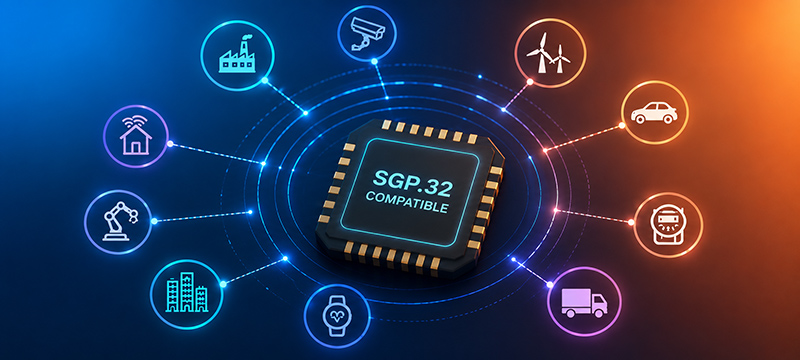
Soracom's implementation combines SGP.32-compatible IoT eSIMs with its Connectivity Hypervisor, which uses SGP.32 eSIM IoT Manager functionality to add, remove, manage, and switch between multiple operator profiles on remote SIMs and eSIMs. The system can work with third-party mobile network operator profiles and is built on standard eUICC, eIM, and SM-DP+ components.
The key distinction in Soracom's release is its focus on orchestration: the ability to manage multiple profiles through an API and console, and to link remote SIM provisioning with automation rules based on deployment region, regulatory requirement, or application need.
This orchestration capability is crucial because SGP.32 by itself does not remove the operational complexity of managing large fleets. Enterprises still need a control layer for policy, activation, profile switching, and exceptions. Soracom's built-in fallback to a Soracom profile is a practical detail, ensuring that devices retain connectivity rather than fail the profile transition.
The release has significant implications for IoT buyers and partners. For OEMs, the most immediate value is SKU simplification and the possibility of shipping devices before the final connectivity profile is fixed. For enterprises and industrial users, the appeal is more operational, allowing fleet managers to treat connectivity profiles as managed assets with switching linked to geography, regulation, or application requirements.
Connectivity providers and mobile operators may read the announcement differently, as SGP.32 gives enterprise customers more direct control over profile selection. However, platforms like Soracom's still require operator profile integration to expose lifecycle management, usage monitoring, and fleet management features in a unified way.
The commercial availability of Soracom's SGP.32-compatible IoT eSIMs and Connectivity Hypervisor reflects a broader shift in cellular IoT, where remote provisioning is moving from a telecom back-office function into the enterprise IoT operations stack. This advancement gives device owners a more flexible mechanism for managing connectivity across long-lived, unattended fleets.


