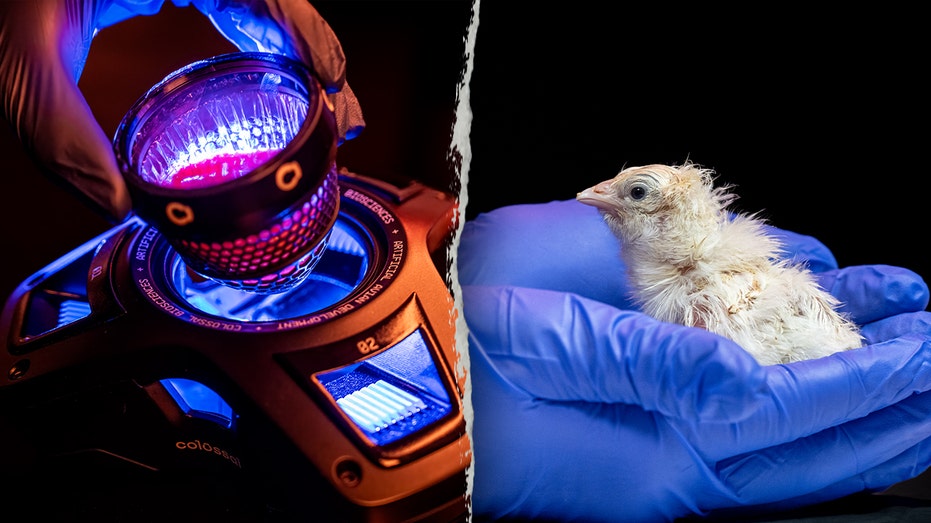
A Texas-based company has made a groundbreaking discovery in the field of avian reproduction, successfully hatching live chicks from artificial eggs for the first time.
Using a reusable titanium egg lined with a bioengineered membrane, scientists at the company were able to mimic the oxygen transfer of a natural shell, allowing 26 healthy chickens to hatch and develop from embryo to birth.
The technology, which can be used in standard incubators, has the potential to improve hatch rates for endangered birds and support the company's broader efforts to bring back extinct species.
The company's CEO and co-founder, Ben Lamm, stated that the artificial egg is not just an imitation of nature, but rather an innovative re-engineering of it.
The company plans to conduct additional testing using emu and ostrich eggs before scaling the technology further, with the goal of eventually reviving the dodo and giant moa, a massive flightless bird that once roamed New Zealand.
The moa, which could weigh up to 500 pounds, is being pursued as a revival project in partnership with New Zealand's Ngāi Tahu Research Centre and filmmaker Peter Jackson, an investor in the company.
The company believes the moa could return by the early 2030s, while the dodo could be revived within four or five years, according to Dr. Beth Shapiro, the company's chief science officer, who noted that the artificial egg changes the avian reproductive toolkit.


