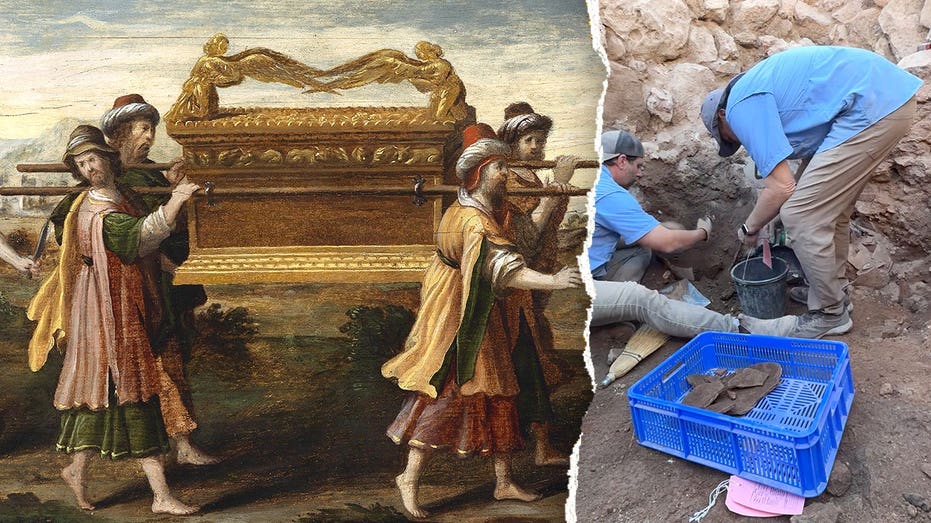
The discovery of ancient food remains at a biblical site in the West Bank has provided archaeologists with a unique glimpse into the daily lives of people from thousands of years ago.
The remains were found at Tel Shiloh, an archaeological site that is traditionally identified as the location of the Ark of the Covenant, a sacred object from the Bible.
The discovery was made beneath an Israelite-period ritual deposit and adjacent to an ancient Canaanite fortification wall, with two of the jars containing olives and a third holding lentils, according to archaeobotanical analysis.
One of the vessels contained some 500 burned olive pits, which were likely preserved in oil before they were burned thousands of years ago, said the excavation director, who noted that the olives were a staple of the Mediterranean diet.
The team believes that some sort of accident started a fire, which ended up preserving the olives for thousands of years, and they plan to expand excavations next year to determine whether the jars were stored in a kitchen, storage room or another part of the ancient settlement.
In addition to the jars containing food remains, the team excavated an Israelite-period ritual deposit containing roughly 10,000 animal bones, pottery vessels and eight gold and silver objects, including pendants and earrings.
The deposit was not an ordinary garbage pit, but a favissa, where the remains of sacrificial offerings were deliberately buried rather than discarded with everyday waste.
The excavation team was able to carefully uncover the jars, which were buried beneath a thick layer of debris, and they were able to leave them intact to preserve the site for future study.
The discovery of the ancient food remains and the ritual deposit has provided archaeologists with valuable insights into the daily lives and practices of people from thousands of years ago, and they look forward to continuing their research in the coming year.