The post-Thanksgiving rush turned into a nightmare for tens of thousands of air travelers as a wave of cancellations and delays swept across the nation. While the initial getaway proved relatively smooth, the return journey was anything but, leaving many stranded and disrupting holiday plans.
Sunday emerged as the busiest day in air travel history, with the Transportation Security Administration screening over 3.1 million passengers. Yet, this record volume was overshadowed by mounting chaos as airlines struggled to recover from a weekend of severe disruptions.
The worst of the problems unfolded over the weekend, with more than 3,200 flights canceled and a staggering 23,000 delayed between Saturday and Monday. Even as Monday progressed, over 320 flights were canceled and nearly 3,000 more faced delays by midday.
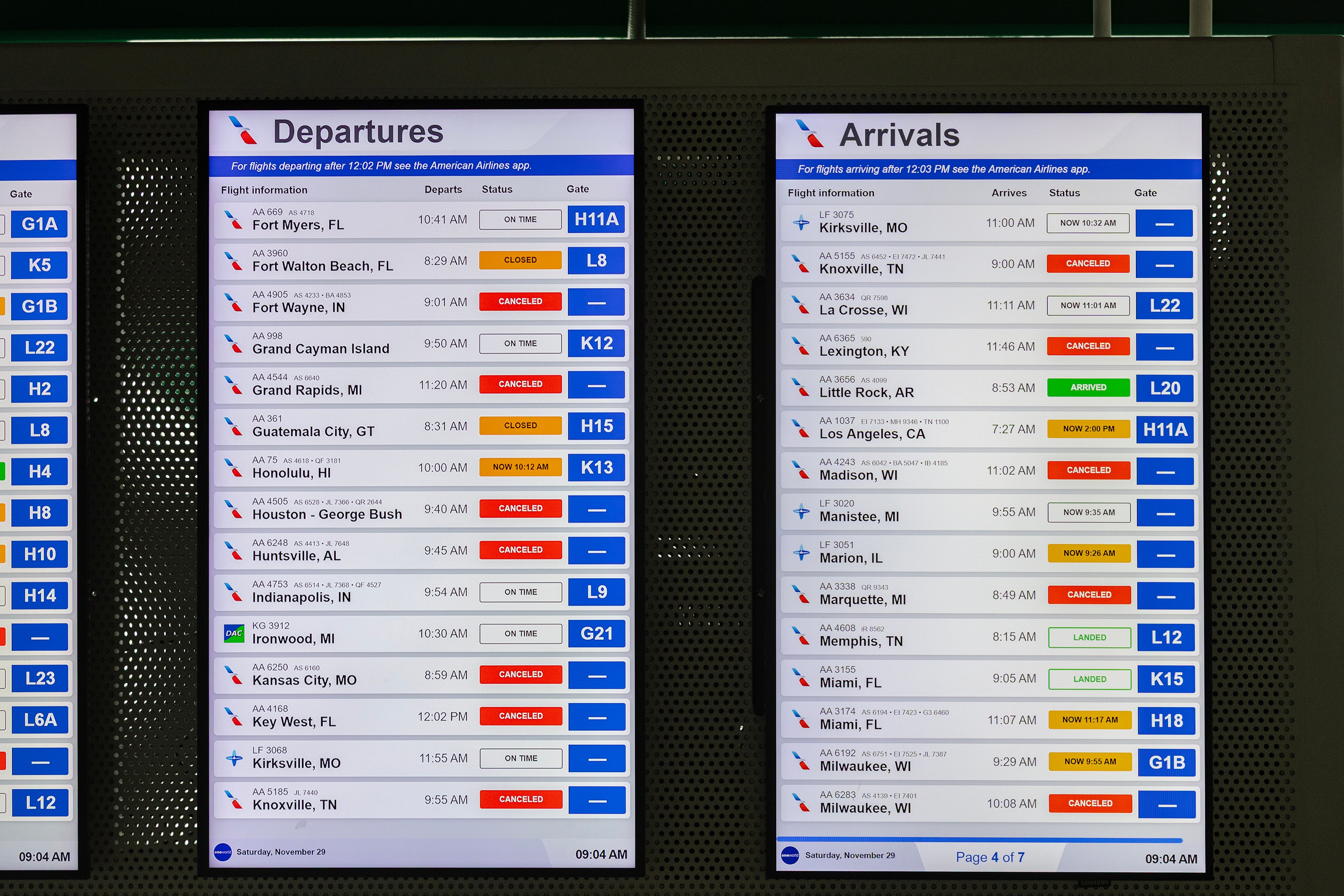
Midwestern airports bore the brunt of the disruptions. Chicago’s O’Hare International Airport experienced a significant impact, with 64 departures and arrivals canceled, though representing a relatively small percentage of the day’s overall schedule. Midway Airport in Chicago also saw substantial cancellations.
Saturday marked the peak of the crisis, with nearly 2,000 U.S. flights canceled. At O’Hare, almost half of all scheduled flights were scrapped, while Midway saw roughly 40% of its flights removed from the board. The ripple effects extended far beyond these major hubs.
Though the initial storm system had moved out by Sunday, the repercussions lingered. Nearly 13,000 flights were delayed, and over 1,000 were canceled, demonstrating the fragility of the air travel network when faced with widespread disruption.
The impact wasn’t limited to major cities. Airports across the Midwest, including those in St. Louis, Omaha, Des Moines, and Cedar Rapids, experienced significant disruptions. Even smaller regional airports felt the strain, with some seeing a majority of their flights canceled on Saturday.
Eastern Iowa Airport, for example, saw a dramatic improvement on Sunday, but still faced cancellations. Airports in Green Bay, Madison, Traverse City, and Davenport also reported substantial disruptions throughout the weekend.
While conditions began to improve on Monday, travelers were warned to remain vigilant. Forecasts predicted further wintry weather moving across the Midwest and Northeast, suggesting the potential for continued disruptions throughout the week.
The weekend’s events highlighted the vulnerability of air travel to even localized weather events, and the cascading effects that can impact the entire system, leaving countless passengers stranded and scrambling to adjust their travel plans.