A quiet crisis is brewing in the world of personal computers. The essential building blocks – DRAM and flash memory – are becoming increasingly scarce, and the ripple effects are about to hit consumers directly in their wallets.
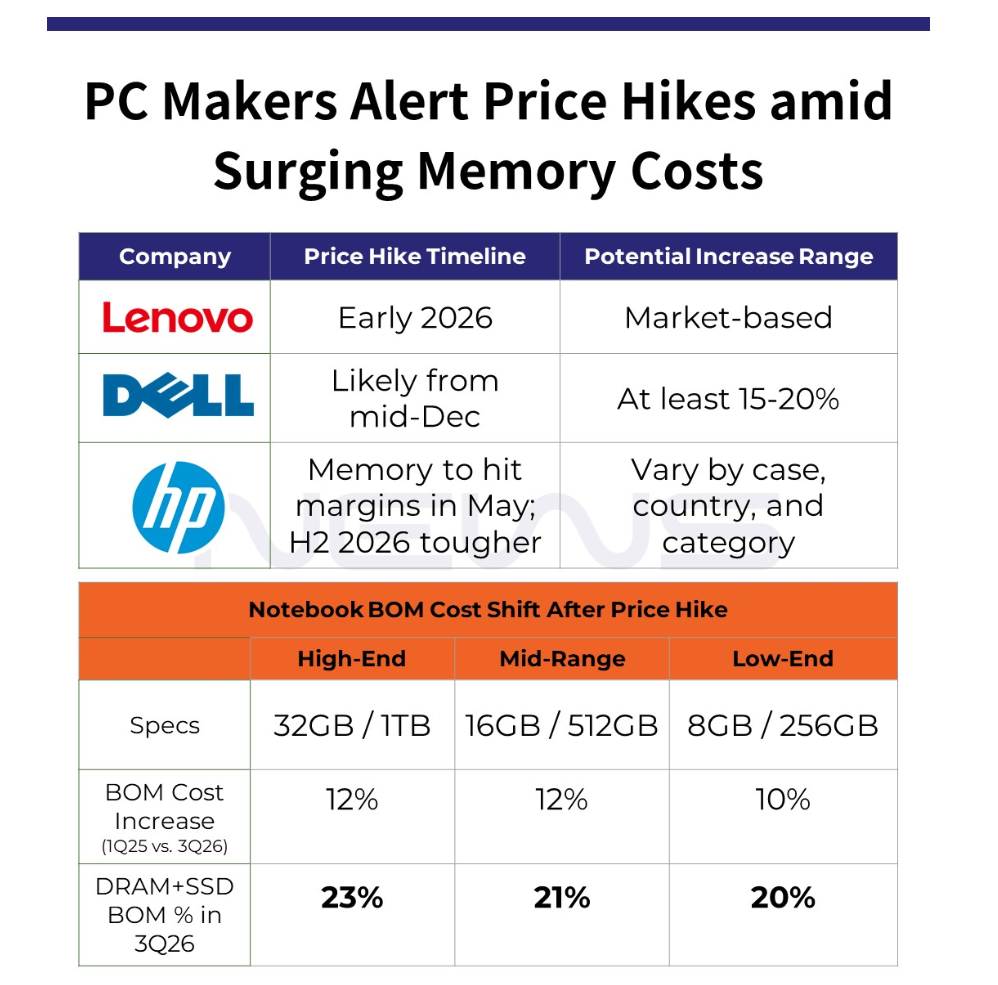
Leading PC manufacturers, including Dell and Lenovo, are preparing to increase prices, a direct response to the soaring costs of these critical components. Notices have already been dispatched to customers, signaling an unavoidable shift in the market.
Dell is poised to implement price hikes of 15 to 20 percent as early as mid-December. While Lenovo’s adjustments won’t be felt until January, the message is clear: the era of stable PC pricing is coming to an end.
The root of the problem lies in the insatiable demand from the rapidly expanding artificial intelligence sector. AI hyperscalers, fueled by venture capital, are aggressively acquiring vast quantities of high-speed RAM and SSD storage to power their massive data centers.
Unlike CPUs, where manufacturers can clearly delineate between consumer and enterprise supplies, DRAM and storage are caught in a free-for-all. The AI industry’s relentless purchasing is effectively draining the supply available for traditional PC production.
This isn’t a temporary blip. DRAM manufacturers are now prioritizing long-term contracts, refusing to offer short-term “spot” pricing. This leaves smaller vendors scrambling to secure the memory they need, creating a precarious situation throughout the supply chain.
The impact extends beyond just price tags. Expect to see a downgrade in standard PC configurations. TrendForce predicts that even high-end machines slated for 2026 may ship with only 32GB of RAM and a 1TB SSD – a significant reduction from the 64GB/2TB typically found in premium systems.
The squeeze on components is already prompting action. Prebuilt PC maker CyberPower recently announced price increases, and it’s highly likely that other manufacturers will follow suit as they grapple with the escalating costs and limited availability.
This isn’t simply about paying more for the same machine; it’s about getting less for your money. The future of PC hardware is being reshaped by the demands of a different industry, and consumers are about to feel the consequences.