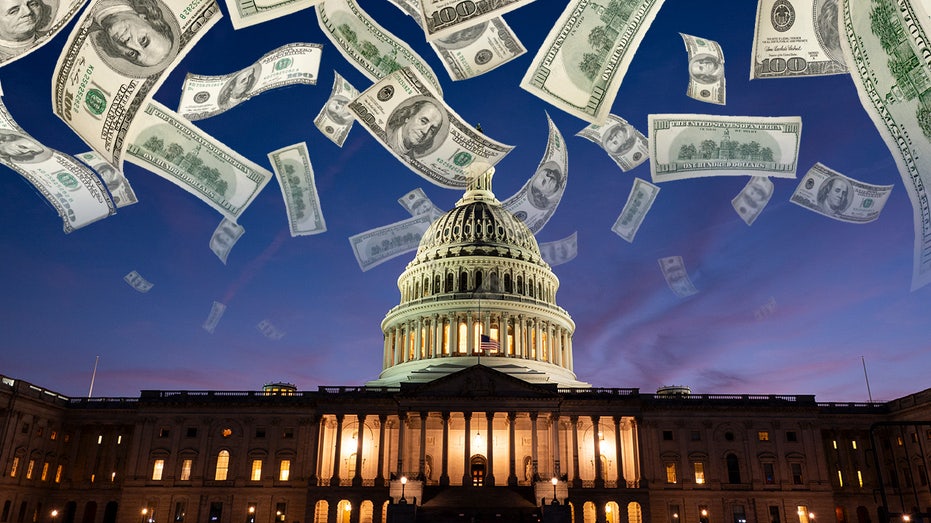
A quiet crisis is unfolding across America, one where the weight of government spending feels increasingly disconnected from the reality of everyday life. Despite unprecedented levels of federal expenditure on citizens, the feeling of financial strain persists, leaving many wondering where the money is truly going.
New analysis reveals a staggering truth: per capita government spending – the amount spent on each person in the United States – has exploded by 9,800% since 1916. A century ago, the federal government spent roughly $208 per person, adjusted for today’s dollars. Now, that figure has ballooned to over $20,474.
This isn’t simply inflation at work. The numbers paint a picture of exponential growth, an “almost uninterrupted” climb that dwarfs any parallel increase in tangible improvements to the average American’s financial well-being. In the current fiscal year, the federal government is projected to spend a record $7.035 trillion.
Consider a family of four. The government’s per capita spending equates to approximately $82,000 annually – a figure alarmingly close to the median household income of $83,730. This means the government is effectively spending nearly as much *on* each family as that family earns.
The comparison becomes even starker when looking at basic necessities. The federal government spends more per person than the average American family spends annually on both their mortgage and groceries combined. Current estimates place average grocery bills between $12,000 and $20,000, while the average mortgage payment hovers around $28,000.
Past attempts to rein in spending, even those with high-profile backing, have yielded limited results. Efforts to streamline government efficiency, while saving approximately $150 billion, were overshadowed by the sheer scale of mandatory spending on programs like Medicare and Social Security, which totaled nearly $2.4 trillion in 2024 alone.
The growth isn’t always tied to increased services. In some cases, agencies have actually *reduced* staffing levels while simultaneously experiencing massive budget increases. The Department of Education, for example, has seen its spending surge by 749% since 2000, despite a decrease in personnel.
A significant portion of this spending is now locked into servicing the national debt, a burden that falls squarely on the shoulders of taxpayers. But the question remains: is the nation receiving a commensurate return on its investment? Are quality of life, affordability, and innovation truly improving alongside this unprecedented expenditure?
The core issue isn’t simply the amount of money being spent, but the lack of transparency and accountability surrounding it. A deeper examination of federal spending is crucial, demanding scrutiny of every dollar allocated and a relentless pursuit of waste, fraud, and abuse.
Taxpayers deserve to understand where their money is going and to see tangible benefits from the government’s vast financial resources. The pursuit of “more bang for the buck” isn’t just a matter of fiscal responsibility; it’s a matter of restoring trust and ensuring a sustainable future for all Americans.