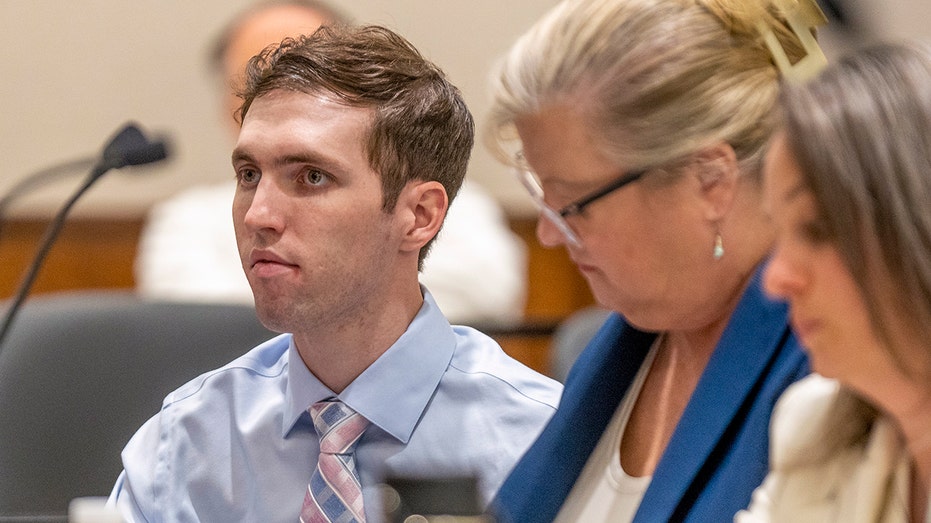
The courtroom in Provo, Utah, held a palpable tension as Tyler Robinson, accused of a shocking crime, made his first personal appearance before a judge. The 22-year-old faces an aggravated murder charge, with prosecutors seeking the ultimate penalty – death – for the shooting that stunned the state. Robinson, dressed in a shirt, tie, and slacks, entered the room with a visible security presence, his gaze meeting his mother’s tearful eyes.
The central battleground of this case isn’t just about guilt or innocence, but about transparency. A fierce debate rages over whether the trial should remain open to the public and the media. Robinson’s defense argues that intense media scrutiny will irrevocably taint the jury pool, making a fair trial impossible. They fear a pre-judgment fueled by constant coverage.
The judge briefly halted the proceedings, ordering the media out after concerns were raised about images of Robinson in shackles being broadcast. While the press was ultimately allowed to return, a stern warning was issued: any further violations of previous orders would result in the immediate termination of the livestream. The judge acknowledged the delicate balance between public access and the defendant’s constitutional rights.
Legal experts suggest this openness is a double-edged sword. While extensive coverage could intimidate witnesses or expose vulnerabilities in the defense’s strategy, it also provides the only ethical avenue for the defense to present potentially favorable information about Robinson to the public. A carefully managed media presence could become a crucial part of their strategy.
The case has largely unfolded behind closed doors until now, prompting a coalition of media organizations to demand greater transparency. The widow of the victim has echoed this call, asserting the public deserves to witness the proceedings firsthand. The fight for access isn’t simply about journalistic privilege; it’s about public trust and accountability.
Adding to the complexity, digitally altered images of Robinson have already circulated on social media, fueling misinformation and potentially poisoning public opinion. The defense team points to this as evidence of the dangers of an open trial, highlighting the ease with which narratives can be manipulated.
Selecting an impartial jury will be a monumental task. The case is deeply polarizing, and finding individuals who haven’t already formed an opinion – or been exposed to the relentless news cycle – will be exceptionally difficult. If convicted, the trial could unfold in two phases: determining guilt, and then deciding on a sentence, potentially adding further layers of complexity.
The stakes are incredibly high, extending beyond the courtroom. This case is a test of the justice system’s ability to navigate the challenges of the modern media landscape, balancing the fundamental rights of the accused with the public’s right to know. The coming weeks will reveal whether transparency can truly serve justice in this high-profile and emotionally charged trial.