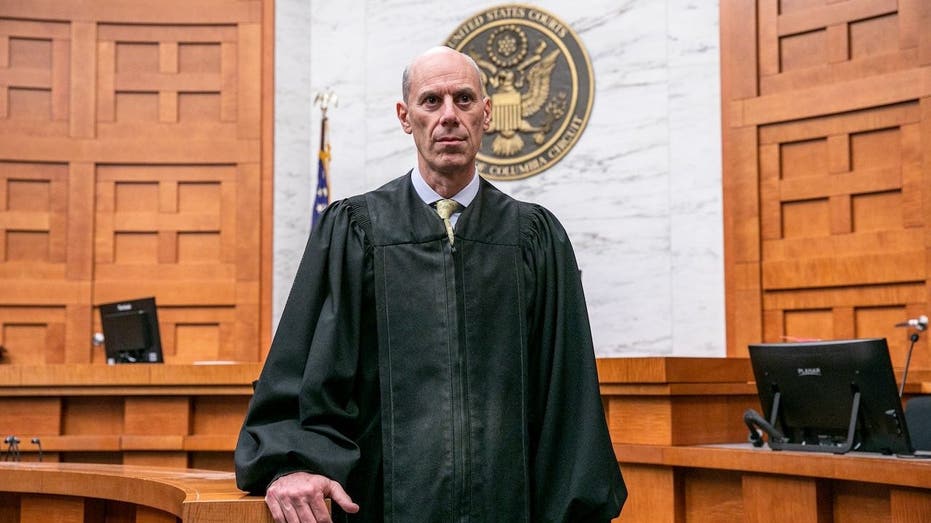
A dramatic legal battle escalated Friday as a federal appeals court temporarily intervened in a contempt inquiry targeting the previous administration. The move halts, for now, proceedings ordered by a U.S. District Judge investigating whether senior officials deliberately defied a court order regarding the deportation of Venezuelan migrants.
The core of the dispute centers on the administration’s use of the 1798 Alien Enemies Act to deport hundreds of individuals to El Salvador in March. Judge James Boasberg had sought testimony from key government figures to determine if the deportations continued *after* a direct order to halt them, potentially constituting a willful violation of the court’s authority.
Judges on the D.C. Circuit Court of Appeals granted a temporary stay, citing the need for time to consider the administration’s appeal. This isn’t a ruling on the merits of the case, they emphasized, but a pause to allow for careful deliberation. The immediate effect is to postpone scheduled testimony from two current and former Justice Department employees.
The administration fiercely objected to the inquiry, labeling it “idiosyncratic and misguided” and arguing it overstepped the court’s jurisdictional boundaries. They urgently requested the appeals court block the testimony, claiming it threatened the separation of powers and attorney-client privilege.
Adding another layer of tension, the administration also requested the case be reassigned, accusing Judge Boasberg of “retaliation and harassment.” They painted a picture of a looming “circus” and an unnecessary conflict between branches of government if the inquiry continued unchecked.
This isn’t a new argument. Justice Department lawyers have consistently maintained that criminal contempt falls squarely within the executive branch’s authority – the power to investigate and prosecute crimes. They argued the court’s involvement was an intrusion into core executive functions.
Judge Boasberg, however, believed witness testimony was crucial to understanding the decision-making process behind the deportations. He specifically requested the appearance of Drew Ensign, a deputy assistant attorney general, and Erez Reuveni, a former Justice Department lawyer who has publicly criticized the administration’s disregard for court orders.
The inquiry was reignited after a previous ruling was vacated and sent back to Boasberg, prompting new disclosures about the government’s handling of the March flights. The administration signaled its intention to fight every step of the process, seeking protective orders for privileged information and limitations on the scope of questioning.
Court filings revealed that the authorization to transfer the migrants came from a high-ranking official, acting on legal advice from both the Justice Department and the Department of Homeland Security. While the judge declined to immediately compel testimony from that official, the possibility remains open as the investigation unfolds.
The legal maneuvering is almost certain to draw further criticism from some Republicans and the former president, who has repeatedly labeled Judge Boasberg an “activist judge.” Yet, Boasberg has remained resolute, stating his commitment to a swift resolution and a pursuit of justice.
“This has been sitting for a long time,” Boasberg stated, “and I believe justice requires me to move promptly on this.” The government, he added, is free to cooperate to whatever extent it chooses, but the inquiry will proceed.


