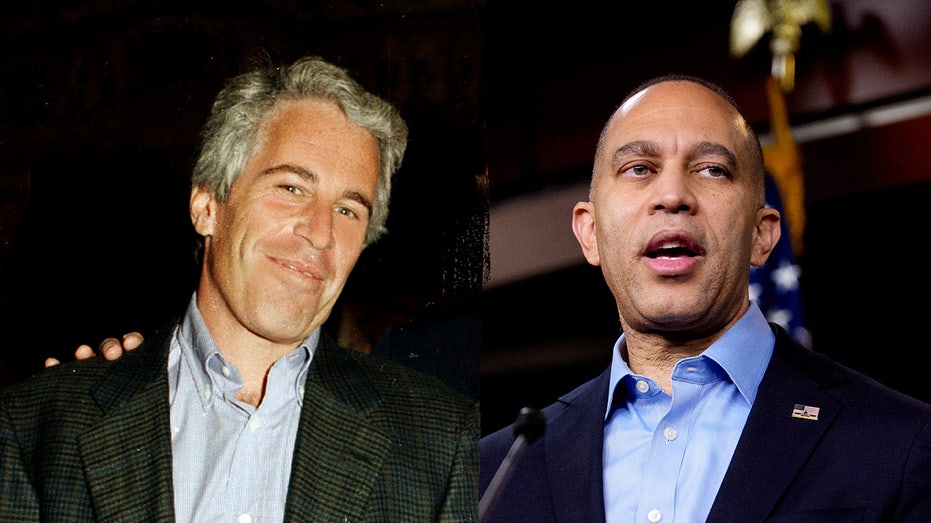
As the deadline looms for the Justice Department to release a trove of Jeffrey Epstein case files, a political firestorm is intensifying. The impending release, less than a week away, has ignited a renewed focus on the case, fracturing the Republican Party and providing Democrats with a potent, politically charged issue.
On Friday, House Democrats unveiled a series of 19 photographs from Epstein’s estate, images that prominently feature President Donald Trump and other well-known figures. The White House swiftly condemned the release, dismissing it as a calculated “Democrat hoax” designed to inflict political damage.
Democrats argue that Trump actively sought to suppress these files after entering office, fueled by his past association with Epstein before the allegations of sex trafficking surfaced. They contend the case has a renewed urgency given Trump’s prior relationship with the convicted sex offender.
Republicans vehemently disagree, asserting that Democrats had unfettered access to the documents throughout the Biden administration’s term and failed to act on any damaging information. They accuse Democrats of hypocrisy and belated interest in a case they previously overlooked.
Representative Jamie Raskin, a key Democrat on the House Judiciary Committee, countered these claims, pointing to investigations dating back to 2019 concerning former Labor Secretary Alex Acosta’s handling of Epstein’s controversial 2008 plea deal. He insists the Democratic position has remained consistent.
Raskin alleges that the Trump administration deliberately halted the federal investigation into Epstein’s associates and initiated a “massive redaction project” to conceal evidence of Trump’s connections. The forthcoming release is expected to be heavily redacted, with explanations provided for each omission.
Democrats maintain their unwavering commitment to investigating Epstein’s co-conspirators and achieving full transparency for the victims. House Minority Leader Hakeem Jeffries echoed this sentiment, demanding “the truth, the whole truth, and nothing but the truth” be revealed to the American public.
This surge in Democratic focus follows years of more sporadic interest, a pattern some attribute to the sensitivity surrounding Ghislaine Maxwell’s sex trafficking trial and ongoing litigation pursued by Epstein’s victims. However, the current unified push coincides with internal struggles within the Republican Party over the issue.
The release of previously public files in February, overseen by Attorney General Pam Bondi, backfired spectacularly, enraging Trump’s base who anticipated groundbreaking revelations. The DOJ initially resisted further disclosures, citing court orders and victim privacy, and claiming no basis for new charges.
Under mounting pressure, Trump ultimately signed a transparency bill last month mandating the release of all Epstein-related records within 30 days. Ironically, this bill was championed by Representative Marjorie Taylor Greene, a staunch Trump ally whose support subsequently fractured over the issue.
The Epstein saga continues to haunt the administration, as some of Trump’s allies, now in positions of power within the DOJ, previously promoted the existence of incriminating, non-public files – including a purported “list” of Epstein’s clients. These claims, however, have yet to materialize.
House Speaker Mike Johnson has faced accusations of deliberately delaying votes on Epstein transparency legislation by keeping the House in recess. He countered that Democrats had shown little interest in the case during their four years in power, accusing them of seeking political cover.
The House Oversight Committee is at the center of the controversy, actively subpoenaing, reviewing, and releasing Epstein-related records from both the DOJ and Epstein’s estate. The release of Friday’s photographs sparked a fierce exchange, with Republicans accusing Democrats of selectively presenting information to create a “fake hoax.”


