The HP OmniBook 5 16 presents a curious case. Listed at a seemingly premium $1,199.99, it initially feels out of step with the competitive laptop market. Yet, a closer look reveals a different story – this machine frequently surfaces at significantly lower prices, transforming it into a potentially compelling buy.
The core of the issue lies within the Intel Core Ultra 7 255U processor. Despite the “Ultra 7” branding, this chip doesn’t deliver the performance leap one might expect. It features 12 cores, but only two are dedicated to handling demanding tasks, and it lacks the graphical punch of Intel’s Arc graphics.
Under the hood, the OmniBook 5 16 boasts a typical configuration for a mid-range Windows laptop: an Intel Core Ultra 7 255U, 16GB of RAM, and a 512GB solid state drive. However, the integrated Intel Graphics, rather than the more powerful Arc graphics, limits its capabilities in visually intensive applications.

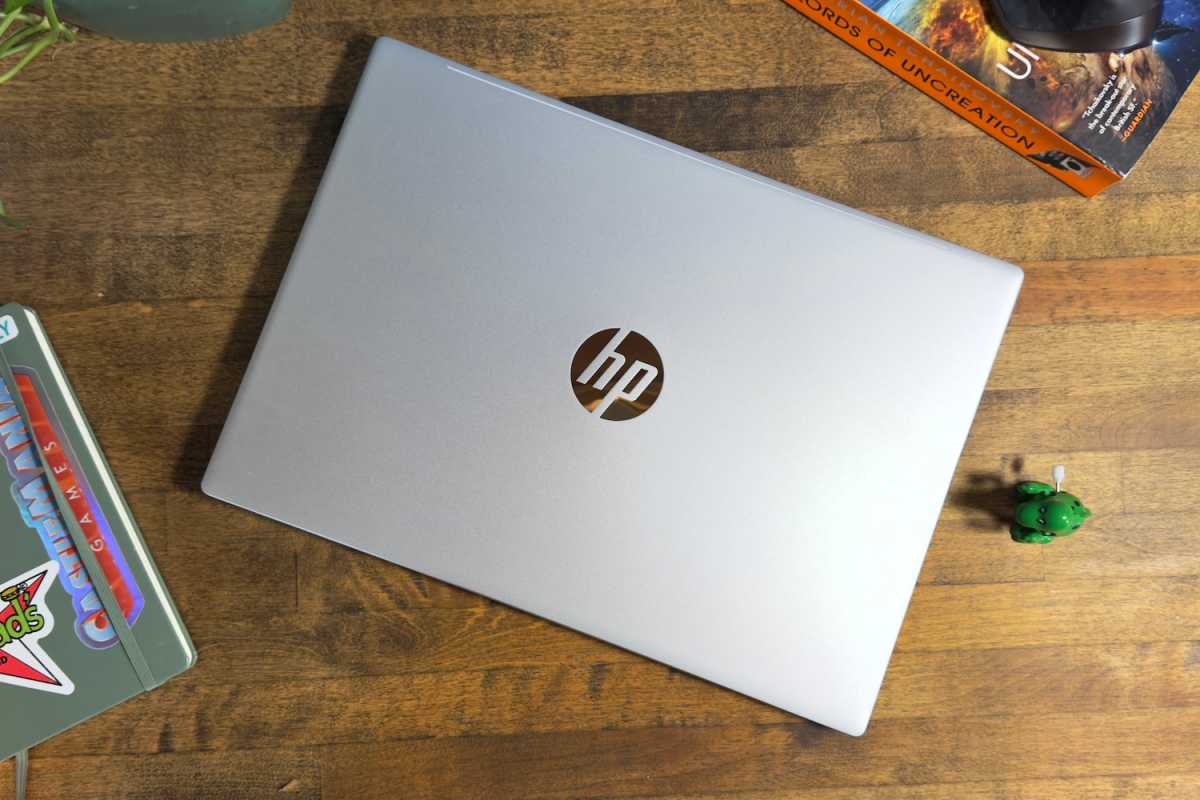
The laptop’s design is understated, favoring practicality over extravagance. Constructed primarily from plastic with a light silver finish, it’s a familiar aesthetic for budget-friendly Windows machines. Minimal branding – a chrome HP logo and a subtle OmniBook 5 badge – contribute to its clean appearance.
Despite its simple design, the OmniBook 5 16 feels surprisingly solid for its price point. The chassis materials are respectable, and there’s minimal flex in the display lid or interior. While not as rigid as its smaller sibling, the OmniBook 5 14, it offers a reassuring build quality.
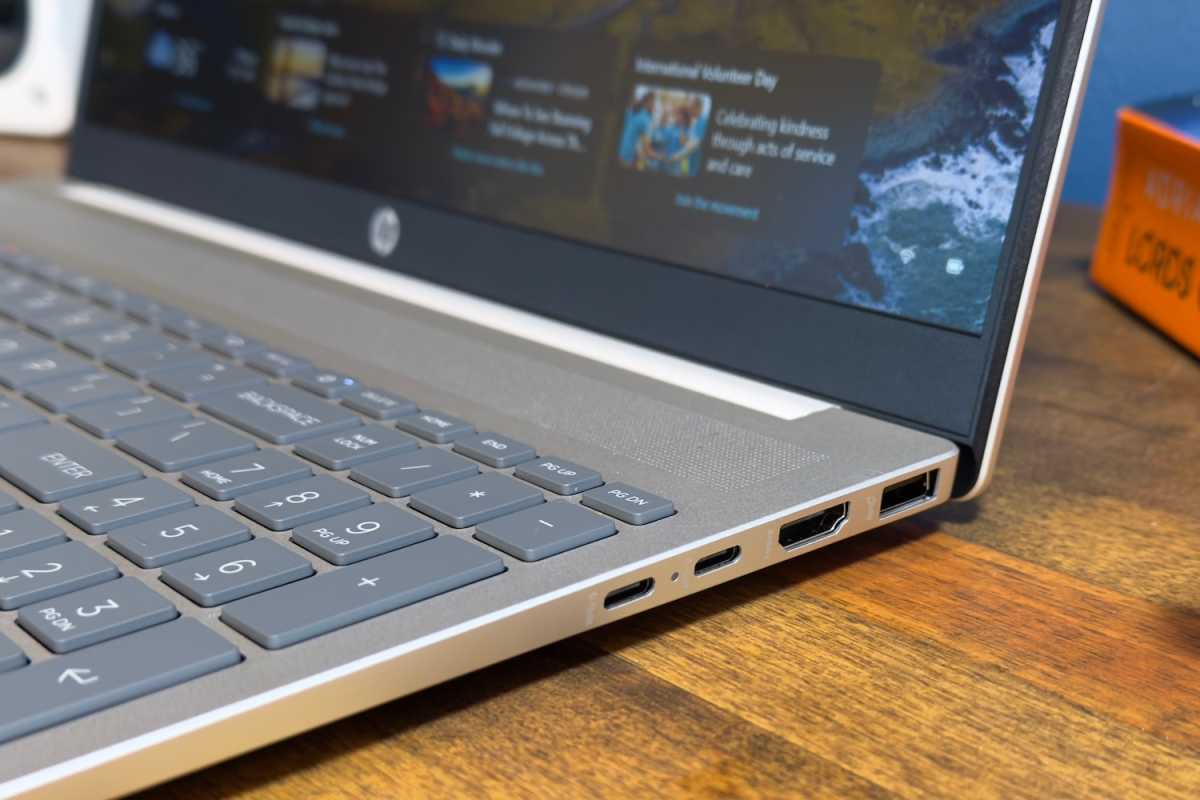
Typing on the OmniBook 5 16 is a genuinely pleasant experience. The keyboard layout is spacious, with generously sized keys – only the Tab, Caps Lock, and Control keys feel slightly cramped. A dedicated numpad adds further convenience, and the key travel provides a satisfying tactile response.
The touchpad, however, is less impressive. Measuring just under four and three-quarters inches wide and a little over three inches deep, it feels somewhat constrained for a 16-inch laptop. While usable, multi-touch gestures can feel cramped due to the limited surface area.
The 16-inch IPS-LCD display delivers a sharp enough image with acceptable color performance. However, it struggles with contrast, resulting in washed-out dark scenes in movies and games. Brightness is adequate in most situations, but direct sunlight can easily overwhelm the screen.
While functional, the display is overshadowed by the growing prevalence of OLED screens, even in more affordable laptops. Some OmniBook 5 16 variants, particularly those powered by Qualcomm Snapdragon X processors, offer the vibrant colors and deep blacks of OLED technology.

Audio quality is surprisingly good for an inexpensive laptop. The user-facing speakers provide reasonable volume and clarity, exceeding expectations for the price range. While not a replacement for dedicated speakers, they’re perfectly adequate for casual listening.
A 1080p webcam ensures clear video calls, delivering a reasonably sharp and vibrant image. The dual-array microphone captures clean, loud audio, further enhancing the communication experience. Windows Hello facial recognition adds a convenient layer of security and ease of use.
Connectivity is well-rounded, with two USB-A ports, two USB-C ports, HDMI 2.1, and a 3.5mm combo audio jack. The USB-C ports support data transfer rates up to 10Gbps, DisplayPort, and Power Delivery for charging.

Wireless connectivity relies on Wi-Fi 6E and Bluetooth 5.3, which provide adequate performance for most users. However, some competitors are beginning to offer Wi-Fi 7, offering a glimpse into the future of wireless technology.
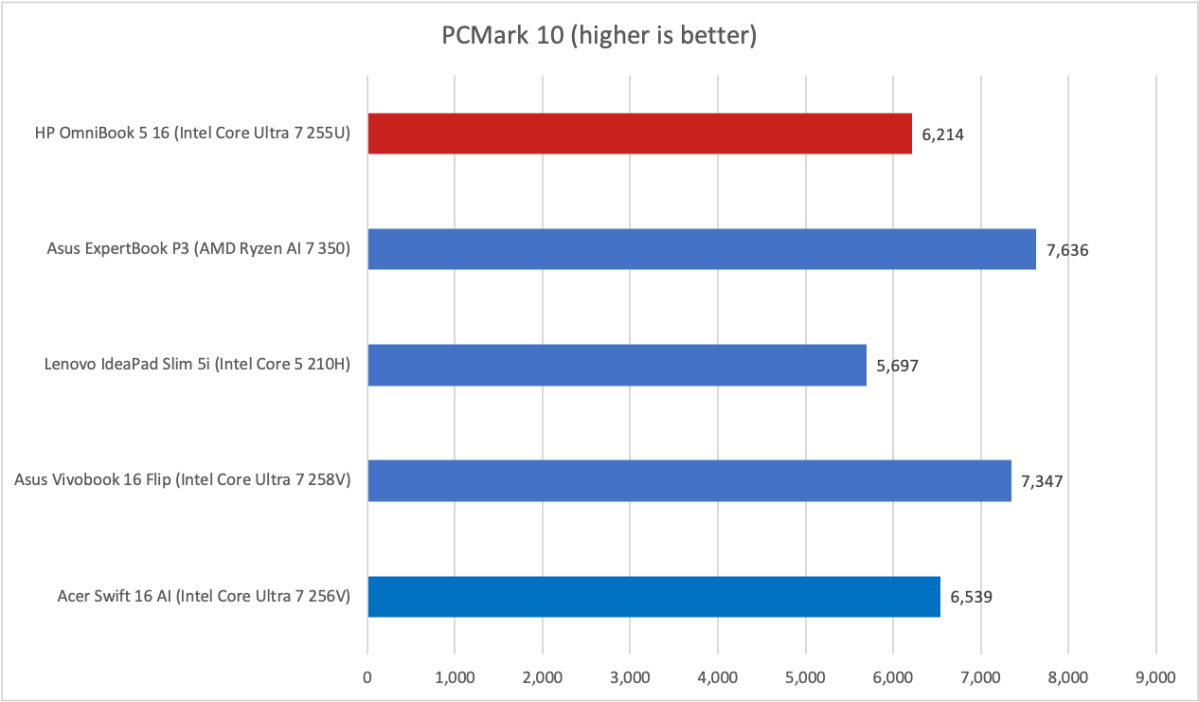
Performance testing reveals the limitations of the Intel Core Ultra 7 255U. While it performs adequately in basic tasks, it struggles to keep pace with more powerful processors like the Intel Core Ultra 7 258V and AMD Ryzen AI 7 350. The chip’s limited number of performance cores hinders its ability to handle demanding workloads.
Graphics performance is similarly constrained by the integrated Intel Graphics. It falls short of dedicated graphics solutions like the Intel Arc 140V and AMD Radeon 860M, making it less suitable for gaming or graphically intensive applications. However, it does outperform some competitors with similar integrated graphics.
Battery life is a moderate 12 hours and 30 minutes in standard testing. While not exceptional, it’s sufficient for a full workday. The 59 watt-hour battery is smaller than those found in some competing models, impacting overall endurance.
Portability is acceptable for a 16-inch laptop. Weighing in at under four pounds and measuring less than three-quarters of an inch thick, it’s manageable for travel. However, it may not fit comfortably in smaller bags.
Ultimately, the HP OmniBook 5 16 with Intel Core Ultra 7 255U is a sensible choice for those seeking a well-rounded 16-inch laptop at an affordable price. Its frequent discounts make it a compelling option, but it’s crucial to consider the specific configuration. The AMD and Qualcomm variants offer potentially superior features, such as OLED displays.